- September 15, 2026

-
-
Loading
Loading

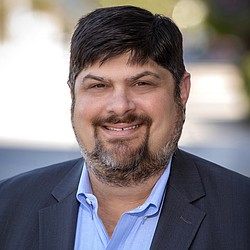
Brock Leach’s business school friends at the University of Chicago would jokingly say they were mad at him when job offers came rolling in: He always got the plum offers, while the others would often be stuck with courtesy rejection letters.
“He would get a job offer every time he was interviewed," says one of those friends, Julie, of those heady days in the early 1980s. The pair, friends at first, would go on to date each other and then get married, in 1982. “Brock was always a big picture person and someone who always knew where he was going. He was a very strategic thinker, and people saw that.”
Brock would go on to lead a big and full life, where, among other roles, starting with husband and father, he was president and CEO of Frito-Lay North America and CEO of Tropicana Products in Bradenton; a committed philanthropist, mostly to education, social justice and equal opportunity causes; and, in a unique career move that began in his late 40s, an influential minister.
Brock died May 25 at his home in Sarasota after a four-month battle with Glioblastoma, an aggressive brain tumor. He was 67.
From work to nonprofits, Julie Leach says her husband had the same philosophy: don’t do it alone. “He loved engaging with a group of people to solve problems,” she says. “He always thought more people in a room were better.”
Organizations Leach supported, with time and funds, include the Education Foundation of Sarasota County, the Sarasota African American Cultural Coalition, the Preventive Medicine Research Institute, Children First, Habitat for Humanity, the Unitarian Universalist Service Committee and Protect Our Defenders.

Many in the Sarasota-Manatee nonprofit community reacted to Leach’s death with social media comments on his wide and deep impact on people and organizations.
Jenny Sumner Carswell, a project manager at Tampa General Hospital, writes on Facebook that “to know Brock Leach was to know the world still has hope…Brock was a visionary who uniquely brought the business model to advocate for underserved populations. He helped people believe in themselves. Advocacy was deep in his bones, and his kindness was next level. He was a beloved colleague and friend who helped spearhead the redesign of Tampa General Hospital’s Clinical Pastoral Education program.”
On a LinkedIn post, Nelle Miller, president and CEO of All Faiths Food Bank and a longtime nonprofit leader in the community, writes that “Brock's voice and heart will forever encourage us to follow what calls. To draw on the good that is in us all and to use it to open a path for others to rise up. Brock was a brilliant, good, kind and gentle, humble human.”
Brock Hutchison Leach was born Dec. 30, 1958, in Pontiac, Michigan, to Beth and Clayton Leach. As a young boy, his family lived in Wiesbaden, Germany, before returning to Michigan. Later came high school and college in Colorado, then his MBA from the University of Chicago.
Those job offers Julie Leach says came easy to Brock multiplied. He began his corporate career as assistant product manager on the Lays potato chip brand, then worked his way up in PepsiCo’s Frito-Lay North America division. In 1999 he was named president and CEO of the company’s Bradenton-based Tropicana unit, and the family moved to Sarasota. In 2002, Leach took on a new role: chief innovation officer for all of PepsiCo, where he helped develop new strategies with the company to promote health and wellness. Julie says that was Brock’s favorite role with the company.
Then, in 2006, after nearly 25 years with PepsiCo, Brock says, “I’m 48. If I don’t do this now, I never will," recalled Julie.
This meant chasing his next dream of becoming a minister. Through a life-changing experience with a congregationalist minister in high school, Brock believed his calling was to pursue a career in religious leadership. He earned a Master of Divinity degree from Meadville-Lombard Seminary in Chicago and was ordained as a Unitarian Universalist minister in 2011. Later, he returned to school at Boston University, graduating with a Doctor of Ministry in 2024.
After his ordination, he served for four years as vice president of strategy, mission and innovation at the Unitarian Universalist Service Committee in Cambridge, Massachusetts. But his greatest religious passion, according to his official obituary, was to develop “innovative forms of religious community that would meet the human need for spiritual vitality. He spent his final years and months mentoring young religious leaders to identify their sense of personal calling and promote new religious communities.”
Julie says her husband was also a dedicated husband and father, rearranging schedules to be at home for bathtime when the kids were younger — they raised a son and a daughter together — or helping one move across the country for college. “I always envied how he could just drop his work (mindset) and be totally focused on our family,” she says. “I could never do that.”