Opinion

Fort Myers Beach wants post-Ian recovery on pre-Ian terms — that won't work

Developers being labeled villainous on Fort Myers Beach is inaccurate says one loval broker — and hurting the town's post-hurricane recovery, not helping it.


  • By
  • | 5:00 a.m. June 2, 2026
  • | 2 Free Articles Remaining!
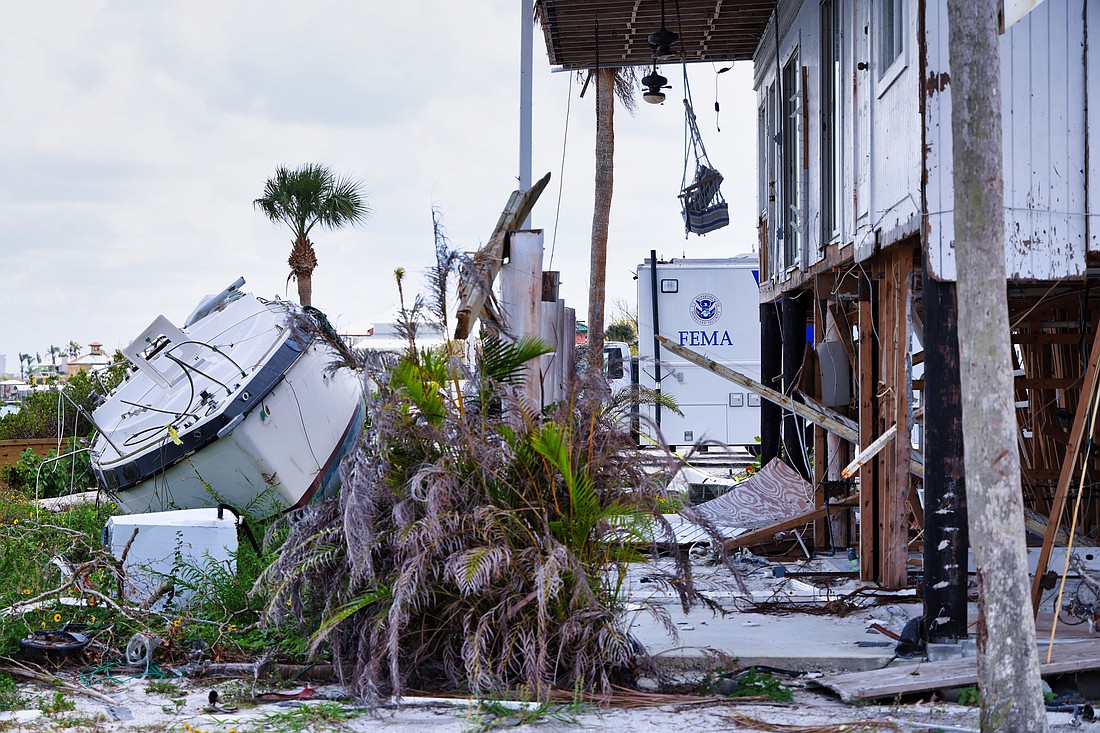
Hurricane Ian caused widespread damage in Lee County, including this part of Fort Myers Beach in a 2023 photo.
Photo by Stefania Pifferi
  • Opinion
  • Share

There’s a truth about Fort Myers Beach that everyone sees, but few are willing to say publicly. Everybody says they want recovery. Everybody says they want the island rebuilt after Hurricane Ian. They want stronger infrastructure, restored tourism, new businesses, resiliency improvements and a stable tax base that can support the future of the island. 

But when an experienced, well-capitalized developer actually steps forward with a real proposal capable of delivering meaningful investment, the process turns into a political obstacle course.

The recent Local Planning Agency (LPA) denial recommendation involving the proposed Outrigger redevelopment by London Bay should concern anyone paying attention to the long-term future of Fort Myers Beach. Not because every project deserves approval. They don’t. And not because residents shouldn’t have concerns over height, density, traffic or compatibility. Those are fair discussions, but the concerns should be because of the message this sends to the rest of the investment and development world.

London Bay is not some unknown out-of-state group chasing a speculative flip. This is a developer with a proven Southwest Florida track record that has already delivered successful projects on Fort Myers Beach itself, like Grandview at Bay Beach, and many others throughout the region. It understands the market, the economics and the reality of building on a coastal barrier island in 2026. And the reality is that rebuilding today is dramatically different than it was 20 years ago.

Construction costs have exploded. Insurance costs have exploded. Storm resiliency requirements, infrastructure standards, flood mitigation systems, parking structures and financing costs have fundamentally changed what projects need to look like in order to work financially.

That’s not greed. That’s math.

If the expectation is that developers should absorb all of those realities while simultaneously reducing density, reducing scale, extending timelines, and navigating years of political uncertainty, eventually capital simply leaves for markets with clearer paths forward. That should concern everyone because Fort Myers Beach still desperately needs economic momentum.

The Town continues dealing with post-Ian financial pressure, infrastructure obligations and ongoing discussions surrounding long-term revenue stability. Recovery is expensive, and maintaining public infrastructure, beach access, resiliency improvements, roads, parks and public safety requires a growing tax base to support it.

Tourism remains the economic engine of the island, whether people like hearing that or not. Hotel rooms matter. Visitors matter. Hospitality investment matters. Commercial activity matters.

At LSI Cos., we spend every day talking to groups around the country about Fort Myers Beach and Southwest Florida. We actively work to bring serious developers and investors to the region who have a long-term vision, capital and the ability to actually execute transformational projects.

Those conversations are getting harder.

Not because people don’t believe in the island. They do. The demand for Fort Myers Beach is undeniable, and its long-term potential remains incredibly strong. The concern is whether meaningful projects can realistically survive the entitlement and political environment without getting buried in years of indecision, shifting expectations and ideological infighting about what Fort Myers Beach is in 2026 vs. what it was when many of the developments we know and love were first constructed.

Developers across the country are watching this process unfold. They are watching whether Fort Myers Beach truly wants investment or simply likes the idea of investment until a real proposal shows up. And if a respected hometown developer with experience, capital and an existing track record on the island struggles to gain momentum on a major redevelopment effort, every outside group looking at Fort Myers Beach starts asking the same question: “If they can’t get through, why would we even try?”

Nobody is asking Fort Myers Beach to approve every tall building that comes along. But there has to be a middle ground between reckless overdevelopment and regulatory paralysis. Because if the island continues making transformational redevelopment nearly impossible, the outcome probably isn’t some perfectly preserved version of Old Florida magically reappearing. The outcome is more likely to be stalled sites, delayed recovery, fragmented reinvestment and capital quietly choosing other coastal markets willing to move forward. It's time for a mentality shift on the island, where new development activity is embraced — not villainized.


Justin Thibaut is the president, CEO and qualifying broker for LSI Companies, Inc., a real estate brokerage firm that brokers transactions throughout Southwest Florida, including on Fort Myers Beach. As a lifelong Lee County resident, Justin Thibaut has a personal stake in the future of Fort Myers Beach.


Latest News

Sponsored Content