- September 22, 2026

-
-
Loading
Loading
Gov. Ron DeSantis has spent years making affordability a central part of his agenda. He pushed insurance reforms, championed housing reforms, signed the Live Local Act and repeatedly argued that Florida’s rising cost of living is one of the biggest challenges facing working families.
That is what makes Florida’s proposed property tax amendment so fascinating.
This debate is no longer simply about taxes. It is about housing.
More specifically, it is about whether Florida is creating incentives to build the starter homes it desperately needs or creating incentives to avoid them.
Most of the debate has focused on the immediate effects of the amendment: how much homeowners save; how much local governments lose; and whether Tallahassee eventually backfills local budgets. Those are important questions. They are first-order questions.

The more important question is what happens next.
Taxes are the first-order effect. Housing is the second-order effect. And second-order effects are usually where public policy succeeds or fails.
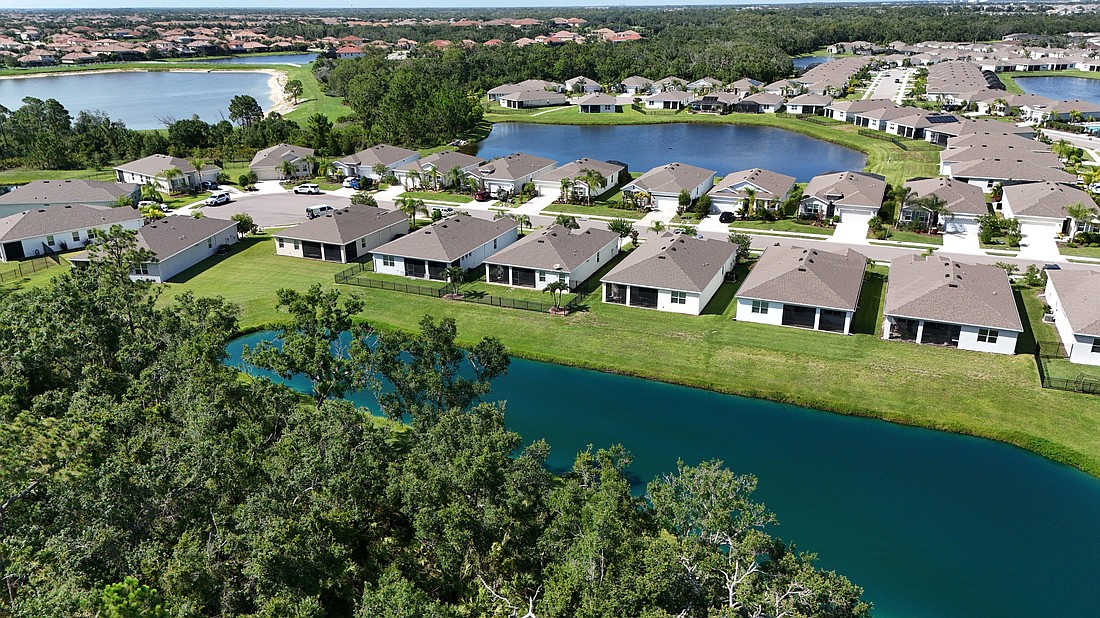
Florida does not have a luxury housing shortage. It has a starter-home shortage. Teachers, nurses, firefighters and young families are struggling to buy their first home. The median price of a new single-family home in Florida now exceeds $400,000. The entry point to homeownership continues moving farther out of reach.
That reality was one of the driving forces behind the Live Local Act. The goal was straightforward: increase housing supply and improve affordability. But what if another state policy is pushing in the opposite direction?
For decades, local governments operated under a relatively simple formula: Growth = Revenue + Cost.
New homes created new revenue and new expenses. Roads had to be expanded. Fire stations had to be staffed. Parks had to be maintained. But growth also expanded the tax base that helped pay for those services.
The proposed amendment changes that equation: Growth = Cost.
For some communities, a new starter home becomes a fiscal zero. It generates service demands, infrastructure costs and population growth, but little or no local tax revenue to offset them.
The services remain. The residents remain. The infrastructure demands remain. But a growing share of the tax base disappears.
When local governments begin viewing growth primarily as a cost rather than an opportunity, incentives change. And when incentives change, behavior follows. That is not ideology. It is economics.
Imagine you are a county commissioner facing budget pressure. A developer presents two projects: 200 starter homes or an apartment generating substantially more taxable value per acre.
Which one becomes easier to approve?
The answer matters because incentives matter.
The danger is not that local governments suddenly oppose affordable housing. The danger is that they conclude they cannot afford it.
That may sound theoretical, but we have already seen local governments slow or limit residential growth when they conclude the costs outweigh the benefits. The projects themselves are not necessarily the problem.
The math is.
Supporters of the amendment will correctly point out homeowners who pay less in property taxes have more money to spend elsewhere. That may be true. But local governments do not fund roads, deputies, fire protection and stormwater systems with good intentions. They fund them with revenue.
The services new residents depend upon are local. The costs are local. And increasingly, the fiscal benefits of starter-home growth may not be.
The challenge becomes even greater because the homestead exemption does not remain fixed. It grows with inflation. At first glance, that sounds reasonable. But it creates a powerful long-term effect.
A starter home does not simply receive a one-time tax benefit. As values rise, the exemption rises too.
Consider a home with a taxable value of $250,000 today. If both home values and the exemption rise with inflation, much of that home’s value remains shielded from taxation for years to come.
Higher-value homes do not face the same dynamic. They continue generating substantially more taxable value.
Over time, the math increasingly favors expensive housing over starter housing. Expensive homes generate tax revenue; starter homes generate virtually nothing.
That is not a temporary fiscal adjustment. It is a structural change in the economics of housing development.
Fast-forward 10 years. You are still that county commissioner. Service costs have increased. Infrastructure demands have increased. Population has increased. But many of the starter homes built during the previous decade continue generating relatively little revenue compared to the services they require.
What conclusion do you reach?
At some point, affordable housing stops being viewed as an opportunity and starts being viewed as a liability.
That should concern everyone.
Florida’s housing challenge is not simply that homes cost too much. It is that the housing ladder is already missing its bottom rung. Starter homes are where renters become owners. They are where families build equity. They are where wealth creation begins.
When enough starter homes are built, families move up through the housing market over time, creating opportunities for the next generation of buyers.
When the bottom rung disappears, the entire ladder seizes up. Renters stay renters. Starter-home demand outstrips supply. First-time buyers keep bidding against one another. Existing homeowners stay put longer. Prices rise throughout the market.
The consequences extend beyond housing. Employers need workers, and workers need places to live. Every starter home that does not get built makes Florida’s workforce harder and more expensive to attract.
Which brings us back to our title: This is not DeSantis versus his critics. It is DeSantis versus DeSantis.
One DeSantis signed the Live Local Act because Florida needed more housing supply. The other is asking voters to approve a constitutional amendment that will change the incentives surrounding starter-home development.
One policy encourages the first rung of the housing ladder. The other may make that rung fiscally impossible to approve. One presses the accelerator. The other may be slamming on the brakes.
Maybe the governor’s office has modeling showing none of this occurs. If so, Floridians should see it. Because good public policy is not measured by intentions. It is measured by incentives.
Local governments will respond to those incentives. Builders will respond to those incentives. Markets will respond to those incentives. They always do.
DeSantis wants Florida to be more affordable. I do not doubt that for a second. But wanting more affordable housing and creating the conditions for more affordable housing are not always the same thing.
The question voters should ask is simple: Does this amendment help rebuild the first rung of Florida’s housing ladder? Or does it make local governments less likely to approve it?
Because if Florida stops building starter homes, affordability doesn’t improve.
It just disappea...
Jeff Brandes served in the Florida House and Senate from 2010 to 2022. He is president and founder of the Florida Policy Project (floridapolicyproject.com).


