- September 10, 2026

-
-
Loading
Loading
Drinkware company Tervis, for decades one of the most-known consumer brands and employers based in the Sarasota-Bradenton market, spent the last part of 2024 and most of 2025 in triage mode: filing for bankruptcy, exiting bankruptcy, being sold.
The first quarter of 2026, while not necessarily calmer in effort, has been a more upbeat and positive period for the company. It’s been under new ownership since Aug. 12, and its new leaders are confident the brand — which turns 80 in 2026 — can be restored to being a drinkware and home gift leader in both the online and brick-and-mortar marketplaces. It plans to do that through a combination of reconnecting with clients, improving internal systems and moving faster on opportunities.

Roger Parsons, named president and chief revenue officer of Tervis Aug. 25 and who brings a rich history in consumer products, with stints at Dannon yogurt, Clorox and Yankee Candle, among others, even believes Tervis has the right fundamentals to maybe pull a ‘Stanley.’ That is to have a product like Stanley’s 40-ounce stainless steel cup go viral to the point where people wait in line outside Target to snag the newest color. “We feel we can be a disruptor in the category through our product portfolio, the differences and the licenses we have,” Parsons says in a recent virtual interview.
This version of Tervis, based in Bradenton now after having a headquarters in Venice for decades, is leaner in many ways. It has some 40 employees, down from 70 when it was acquired eight months ago and 1,000 a decade ago at its peak. In 2022 the company posted $90 million in revenue, a figure that dropped 63.33% by August 2024, to $33 million, bankruptcy court filings show. Company officials declined to disclose revenue figures since the acquisition, saying only “new leadership has developed a plan for 2026 to deliver double-digit growth.”
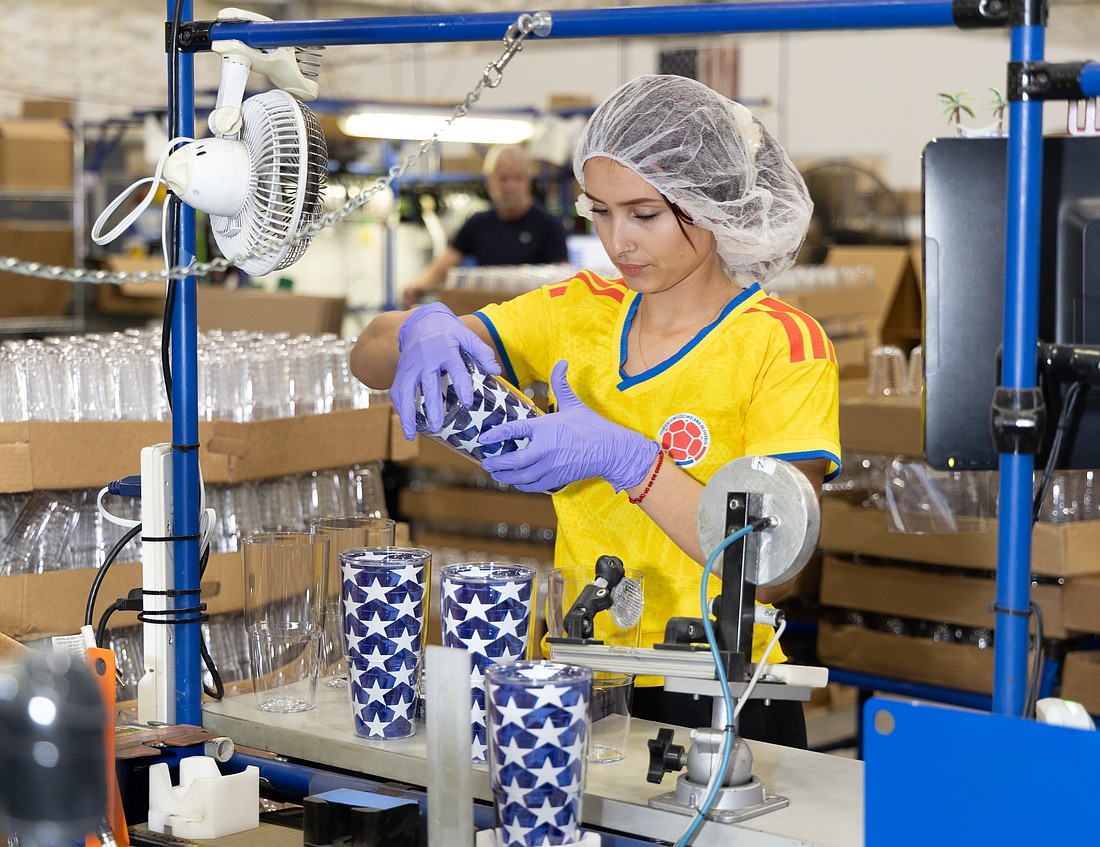
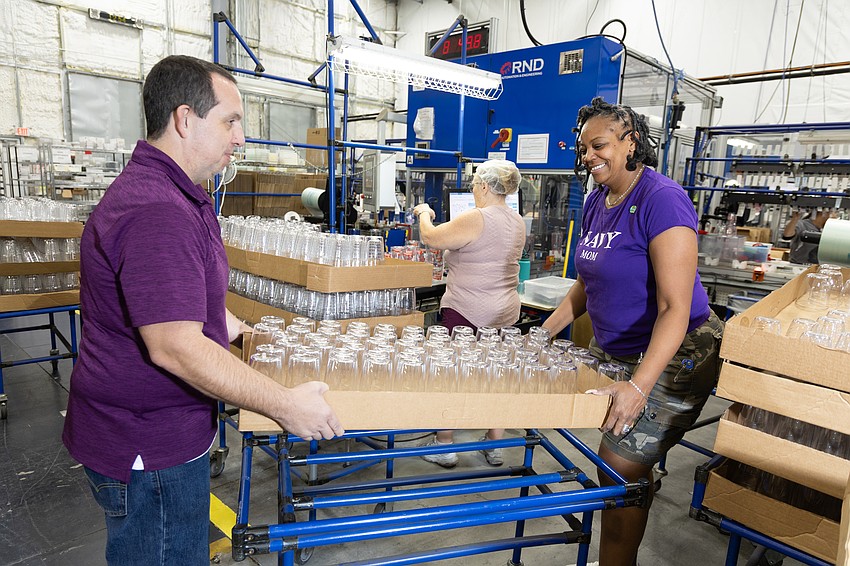
The company also has a leaner manufacturing strategy: its Classic line of products are made and decorated at TMF Plastic Solutions in Bradenton and its Stainless lines, while sourced from China, are all decorated at TMF. Tervis and TMF have a connected relationship. TMF has made Tervis products there since 2022, bankruptcy records show. At one point 200 TMF employees were working on Tervis, say former executives of the drinkware company. In addition, after the 2025 acquisition, Tervis moved its headquarters from Venice, where it had been located going back to the 1950s, to Bradenton, in office space next to TMF’s facility on 19th Street Court East off State Road 70 and US 301.
TMF also held the largest debt of any entity when Tervis filed for Chapter 11 bankruptcy Sept. 5, 2024. Tervis, according to court records, had $27.8 million in unsecured debts, $15.7 million in assets and owed TMF Plastics $10.1 million when it filed for bankruptcy. Under the Chapter 11 reorganization plan, Tervis will pay TMF in full without interest over the course of five years.
The Donelly family in Sarasota and Venice had owned Tervis for decades; they sold the company after coming out of bankruptcy. The new owners are an investment group of four individuals, first under an LLC in Delaware that has since been transferred to an LLC in Florida under the name Tervis. Company officials declined to elaborate on who the specific owners are.
That ownership group has tasked Parsons, Tervis Chief Marketing Officer Linn Jordan and CFO Doug Mattoon with restoring the brand to industry prominence, hitting top-line sales growth goals and posting positive profit margins.
“We're protecting the brand, and we're protecting the profitability of the company, first and foremost,” Jordan says in the virtual interview, “and then we're being very strategic about how we go about the commercial strategy to grow distribution.”
One key to the first six months of new ownership has been to improve and enhance internal processes and, not surprisingly post-bankruptcy, find spots to cut costs. Jordan says Tervis, on the latter, has been “really digging into various cost actions we needed to take,” which includes bringing costs down in raw materials.
The new Tervis leaders have been visiting brick-and-mortar customers, such as Target, Dick’s and Walmart. One reason is to boast about this new version of the company. Another is to curtail what executives say had become a loosey-goosey system of big customer customization on UPCs, packaging and more. “It was almost like every customer had their own kind of model,” says Jordan, which strained employees and was costly.
“We maybe got too far into very custom pricing, and the way we service the customer,” Jordan says, “and now we have more of a standard.”
Parsons says some of the past six months have been spent evaluating the product portfolio, which is more than 1,000 SKUs deep. The company has at least 50 licenses and a range of dishwasher-safe plastic and stainless steel products. In total, says Parsons, that volume “offers Tervis points of differentiation versus” competitors. It’s also gotten a bit bloated, too.
“A lot of work was done to really understand what products sold well, what ones didn't,” says Parsons, “and streamlining the portfolio so we will have far fewer SKUs in certain parts of the business as we roll through this year, and we'll have a disciplined focus as we launch items to make sure they have a role in the portfolio and that they're additive and not just something nice because maybe someone requested it or thought it would be a nice item to have.”
Adds Parsons: “It’s been a little bit of a process change internally for the company to really put that level of diligence around bringing an item to life and making sure it really has a clear role and is profitable to do.”
An important element of the company’s resurgence, Jordan and Parsons say, is a sense of urgency to seize opportunities. That goes from meeting customers and strategizing with employees to an acquisition the company is considering. (That acquisition, of Symglass, a Nashville company that makes cups for a variety of alcohol and other beverages, was announced April 8.
“We’re taking the insights and things that these customers are telling us as to what was great about Tervis, how we lost our way and what would need to be true to grow again,” Parsons says. “Then we are really quickly capitalizing on those things.”
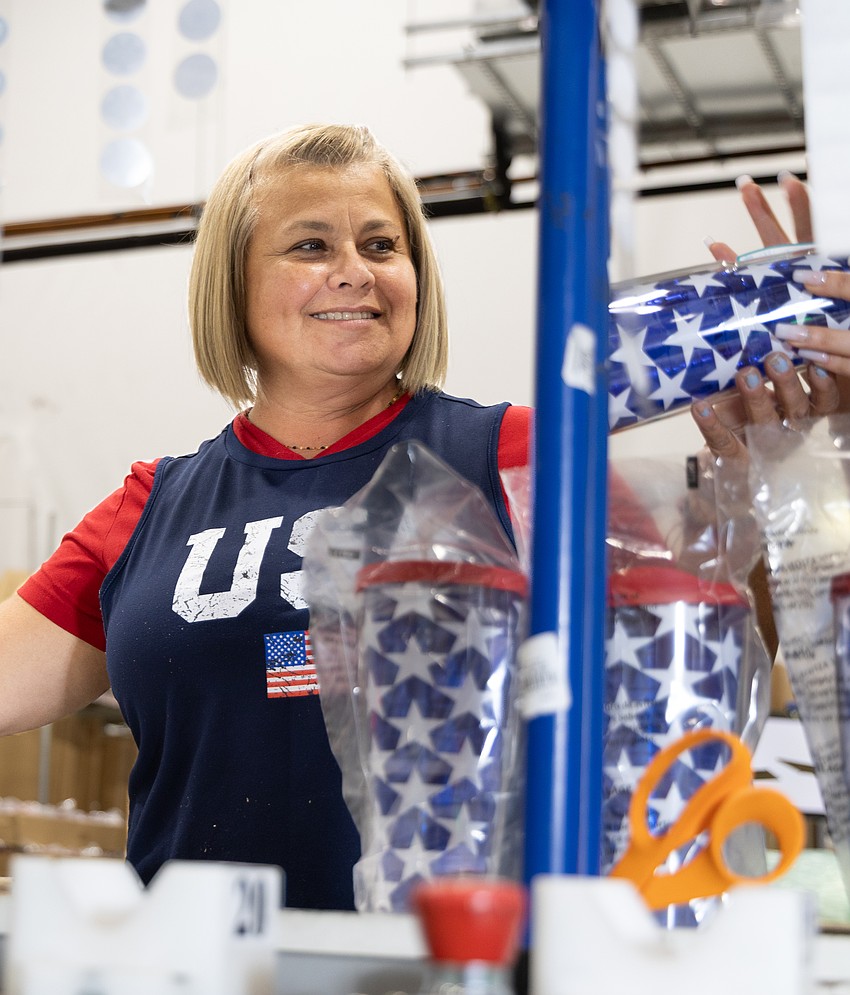
One of Jordan’s catch phrases, says Parsons, is “moving at the speed of culture” and that's what Tervis aims to do. An example is the company’s America250 line, a variety of red, white and blue products that celebrate the country’s semiquincentennial coming up in July.
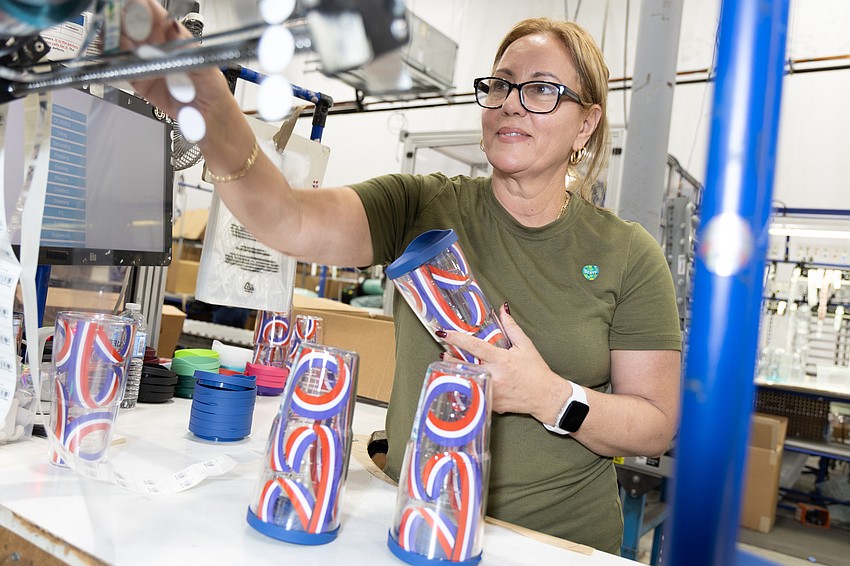
Another example is with a large retailer where Tervis recently won business because it could get products on the floor within six weeks — much faster lead times than Chinese competitors, says Parsons. “There's not many drinkware partners that have the ability to have that speed and turn that out that quick,” he says.
And just because the company is formalizing customer contracts that doesn’t mean, executives say, it’s going to give up one of its superpowers: the ability to be nimble to respond to what Parsons calls “green grass” opportunities. That ranges from Carnival cruise lines to Disney to big box retailers to country clubs — any place selling gifts, cups and related products. Parsons, based in Boston and Jordan, based in Colorado, have been visiting customers in person, along with stops at the Bradenton headquarters.
“It’s really (about) reconnecting and understanding what their needs are, where their gaps are within drinkware and, even more broadly, within tabletop, and showing how we can be a great partner in filling those those voids,” Parsons says.
In filling those voids, Tervis has one final mission: constant improvement. Jordan puts it in the category of good, better, best. That could be in materials, in customer service and more. Jordan says Tervis is in the middle right now, and is better. That leaves a clear goal: to be the best.
Parsons says this version of Tervis is more than qualified to hit that goal.
“There's a level of excitement that's building among the organization,” he says. “For me, it’s very rewarding to see so quickly people grasp on to what it is we want to be, and how we're going about getting there.”