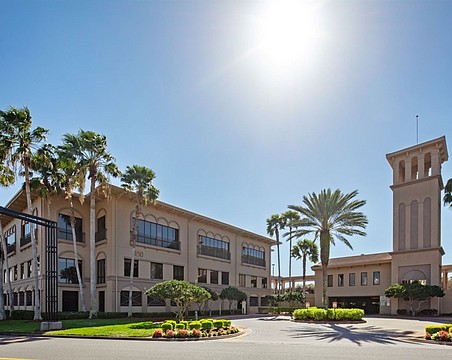
Investor group buys cup maker Tervis, will move HQ to Bradenton

The new owners’ "strong investment in Tervis," CEO Hosana Fieber says, "speaks to its well-established and beloved brand legacy."


  • By Mark Gordon
  • | 12:00 p.m. August 12, 2025
  • | 2 Free Articles Remaining!
Tervis maintains over 50 licenses, including one with Guy Harvey.
Photo by Jaysen Ward
  • Manatee-Sarasota
  • Share

Less than a year after filing for Chapter 11 bankruptcy with at least $30 million in debt — and six months after coming out of it — Sarasota County-based drinkware manufacturer Tervis has been sold. 

The new owners are a group of five investors formed under the name JV2 Innovative Products LLC, which, records show, was formed June 4 in Delaware. Executives with Venice-based Tervis declined to disclose the names of the investors, saying only that one of the five is local, while the others are outside of Florida, and the new entity intends to relocate the company headquarters from Venice to Bradenton. Tervis executives, while declining to get into specifics on who the new owners are, saying they preferred to remain anonymous, confirmed that JV2 is "made up of investors that collectively have extensive manufacturing experience."

Financial terms of the deal weren’t disclosed. 

The new owners plan to keep the Tervis name, say company officials, and in the coming weeks will name a new president and chief revenue officer, in addition to four sales team leaders. JV2, according to a Tuesday statement, also seeks to “build on the great Tervis legacy with product, material and manufacturing innovation,” and also plans “to invest in a larger sales force with a renewed emphasis on product development.”

Tervis was founded in 1946.
Courtesy image

Tervis Chairman Rogan Donelly, whose family has owned the company for 75 years, will be a minority shareholder under JV2’s ownership. Hosana Fieber, who has held several leadership posts with Tervis going back to 2009 — including being president and CEO since October 2023 — will help the new owners during a transition process, but won’t remain with the business.

In something of an unusual twist, both Donelly and Fieber will maintain another tie to Tervis: they will co-own the lone remaining Tervis retail store, at 928 South Tamiami Trail in Osprey. 

Fieber and Donelly, in separate interviews with the Business Observer, say the new owners, in addition to leadership changes, intend to invest significant capital into the company. That’s a factor they say was missing in the company’s exit from bankruptcy as it sought to regain market share in what’s become a competitive sector, with brands like Stanley, Yeti and more.

“You can’t grow if you can’t put the money into it,” Fieber says. “But we didn’t have the dollars to grow organically." 

Donelly adds the investment and “fresh blood” is something Tervis, founded in 1946, “badly needed.” 

“The entire Donelly family is extremely proud of Tervis’ legacy, and we are excited for the opportunity ahead given the renewed investment in the brand,” Donelly adds in the Tuesday statement. “This investment is exactly what is needed to position Tervis for success in its next 80 years.”

Tervis officials declined to disclose the amount the new owners plan to invest into Tervis.

Fieber and Donelly stress the sale and investment, while the end of an era in Venice and Sarasota County — where Tervis was once one of the region’s largest employers — is a good short and long-term move for the company, brand and employees. “It was a great opportunity for both the investors and shareholders,” Feiber says; shareholders are made up mostly of the Donelly family, and the principal shareholders/family members loaned nearly $19 million to Tervis from 2020 to 2024 to help provide capital for ongoing operations, bankruptcy court records show. 

The sale, announced to the company’s 70 employees Tuesday morning, marks the end of a 75-year run of the firm being run by the Donelly family and being based in Venice, south Sarasota County. Detroit engineers Frank Cotter and G. Howlett Davis founded the firm in 1946, when they created the double-walled insulated tumbler that became the company’s core product. (They named the company Tervis after the last three letters of their names.) 

Donelly's grandfather, Casey Key entrepreneur John Winslow, bought the company in the 1950s and moved it from Michigan to Venice. Winslow died in 1989 and his son-in-law, onetime Wall Street banker Norbert Donelly, Rogan’s father, took over the business. 

From roughly 2000 through 2020, the company grew from a quirky cup maker into one of the most recognizable brands in the region. Its products were sold in Bed Bath & Beyond and Beall’s stores, among other retailers, and it had a robust e-commerce business. A decade ago it had a peak of 1,000 employees, including seasonal workers; in 2022 the company posted $90 million in revenue, a figure that dropped 50% by 2024. 

In addition to the revenue drop, the company’s Sept. 5, 2024 bankruptcy filing revealed several lingering issues. The list included a post-Covid spike and then a just-as-sharp decline in e-commerce sales; a long-lasting drop in consumer discretionary spending; inflated operating expenses; and a complicated lawsuit from a former supplier. The company had $15.7 million in assets and owed more than $32 million to creditors when it filed for bankruptcy, court records show. 

It exited bankruptcy Feb. 10 with all litigation dismissed and debt resolved. Its post-bankruptcy plans, Fieber said then, included focusing on products that could be used at the home rather than only for on-the-go occasions. That included a sub-brand called TervisHome launched in 2024 and a new category of products made of melamine, a chemical compound found in dinnerware, that debuted this past January. 

Fieber, who has left Tervis and come back twice since 2009, quips that with the retail store, she feels like “I will never completely detach myself from this brand.” 

But she also looks forward to what the new owners will do with the brand. “The company has been through many good and a few bad moments in the past 15 years,” she says. “I believe it has bright days in its future.” 


author

Mark Gordon

Mark Gordon is the managing editor of the Business Observer. He has worked for the Business Observer since 2005. He previously worked for newspapers and magazines in upstate New York, suburban Philadelphia and Jacksonville.

Latest News

Sponsored Content