- July 27, 2026

-
-
Loading
Loading
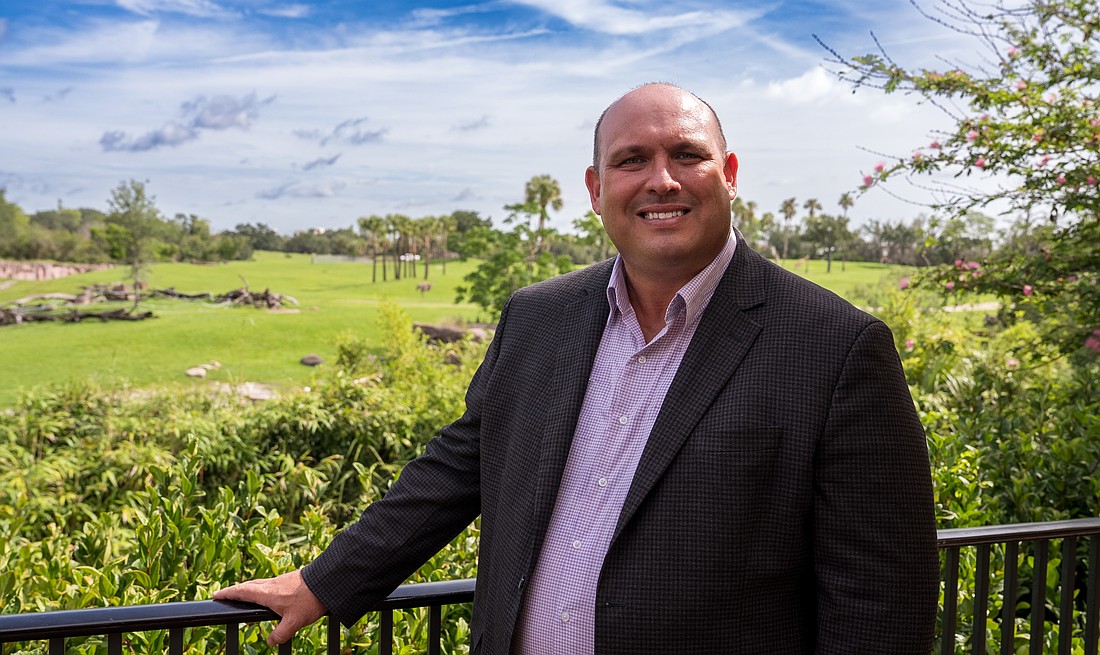
When Jon Vigue was 15, he took a job near home at the Lake Compounce theme park in Bristol, Connecticut.
He worked a concession stand, making chicken tenders and serving drinks, working the cash register.
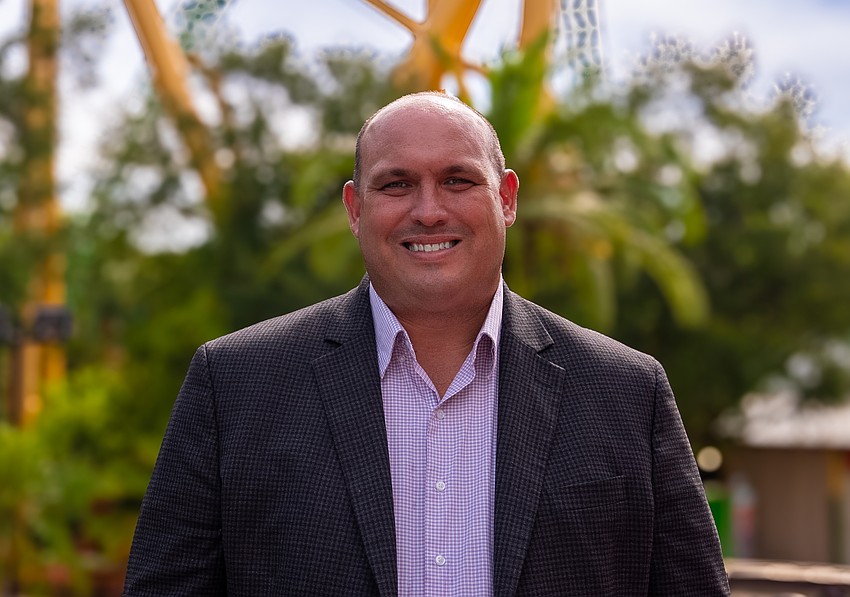
That was 30 years ago. Today the 45-year-old Vigue still works in theme parks. Only now he is president of Busch Gardens Tampa and, rather than serving hungry park goers on hot summer days, he’s overseeing a five-year $200 million enhancement at the park.
Busch Garden is a 300-acre park off Busch Boulevard in Tampa, not far from the University of South Florida. The park, which includes the Adventure Island water park, employs about 4,000 and features several renowned roller coasters among its attractions.
The park, which traces its roots to 1959 when it was a bird sanctuary and garden next door to an Anheuser-Busch brewery, also has a fully accredited and working zoo amid the rides with more than 16,000 animals.
Busch Gardens’ parent company, Orlando-based United Parks & Resorts, does not disclose revenue or attendance figures for its individual parks. But in its first quarter earnings statement issued in May, the company reported total attendance at its 12 parks was down 5% to 3.2 million guests when compared with the same period the previous year. Total quarterly revenue was down 3% to $278.3 million.
Vigue has been at Busch Gardens for about two months, saying "it’s like running a small city, or in this case, a big city."
“We've got maintenance and construction teams," he adds. "We've got design and engineering teams. We have our zoological team, operations. I think of them as sprockets turning together to spin out this thing we call our guest experience.”
Vigue spent 20 years at Lake Compounce, rising to its second in command while earning an Executive MBA in the process. He then went to work at the Wild Adventures theme park outside of Valdosta, Georgia.
Asked if he still had fun after spending 30 years at theme parks, Vigue, who walks the park nearly every day and will ride the slides at Adventure Island every year, says, “working in this business is such a joy.”
“The day it stops being fun is the day I stop doing it.”
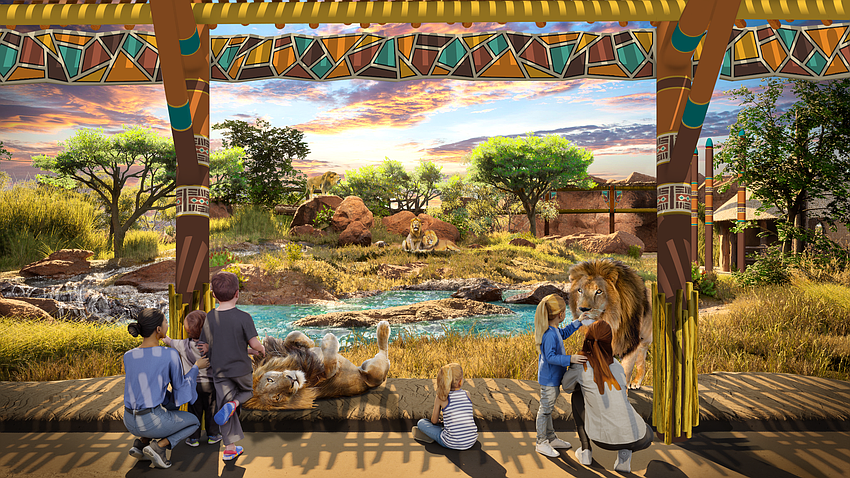
Vigue spoke to the Business Observer last week about operating a theme park. The interview took place about a half hour after the official opening Lion & Hyena Ridge — a new animal habitat that spans nearly 35,000 square feet and features two apex predators who, safe to say, do not particularly like one another. Edited excerpts:
A variety of things..I think that it's important to see it through your guest experience lens. Obviously, you're looking at things that keep the park safe as people come through, for the animals, guests, employees. That's a huge focus.
As time goes on, we have more access to analytics and things of that nature. So, you try to take those analytics and you try to bridge your guest experience with the analytics to figure out what you need to focus on. And by focus, I mean in the day-to-day activities of the business, but also as we think about big bigger projects, capital projects, planning.
And those are a big part of it. But that customer lens (is crucial), because when you visit a park like Busch Gardens Tampa Bay, or really any park, the experience is made up of so many small experiences. You'll have 1,000 experiences. Everything, ranging from going to the bathroom to getting lunch to riding a ride. You want to make sure that all those touch points are as smooth as they possibly can be. So that's the big thing I focus on when I'm in the park.
I think it's balancing all of the pillars of who we are and how we want to think about prioritization of where the needs are. Obviously, with Busch Gardens Tampa Bay being in business 67 years, I think there's a lot behind the scenes that we do from an investment standpoint that guests would never see — some of our infrastructure type projects, pipes under the ground, HVAC systems, those kinds of things.
But as far as the front-facing, front-looking guest things, like Lion & Hyena Ridge, it's just prioritizing the pillars for us and (looking at) what is going to move the needle to make people want to visit. It’s a very important part.
But also elevating the experience for people when they're within the park. The park has put a lot of time, attention and money into guest comfort, making sure that there's places to sit, places that are clean and where fans are running. Those kinds of little, simple, details are examples of things that really have a high impact on the experience.
Keeping people aligned and keeping the river flowing in the same direction. We invest in rides, animal habitats and those types of things, but it's really our people and our teams that that make it what it is. It's important that we provide a place for those individuals that makes them want to come and help make us successful every day and make them want to deliver on the things that we have. Transparently, we have a lot to work on to continue to grow and improve and expand and do all the things that we want to do.
I don't think it's any secret that there's an elevated consumer expectation that exists.
I think people, with their dollars and their time, expect excellence when they are recreating at a facility. We have to deliver on that, right? And some of that comes through the pillars of food and beverage experiences, retail experiences, making sure our bathrooms are fresh and clean. Making sure that the park looks excellent and has a routine cadence of new attractions, like Lion & Hyena Ridge, coming online.
There’s a lot to unpack there and it's a very wide question. I don't want to go too deep on how I feel about it because I think it, in its simplest form, comes down to balancing the idea of financial success, with the idea of your guest experience, with the idea of your employee experience. There has to be equal tension on all of those things.
As I think about decision making and how we approach the different elements that we do every day, I make an honest effort to filter every decision with that in mind, to make sure that the team experience, the guest experience, and the financial success metrics are equally being pulled. That way you have the best possible outcome for all the stakeholders that are involved in the equation.
That's a super important part of running a place like this.
I think there's the component of competing for discretionary dollars that exists for any business, right? I mean, at the end of the day, there's been a lot of pressure on that over the last five years in general. Case in point, right now we go to a gas station and it’s $4 a gallon. Families feel that at the end of the week or at the end of the month. They only have so much money that they can allocate to leisure.
But I also think we'd be naive to say that we're not in the theme park capital of the world being in Central Florida. That's something that we're well aware of. We continue to maintain our identity as a world-class zoological facility tied to thrill. But something that maybe not everybody is aware of, we have world-class events.
But to your point, I think when you look at our positioning, we are a value alternative to some of those other players that are in Central Florida not so far away.