- July 8, 2026

-
-
Loading
Loading

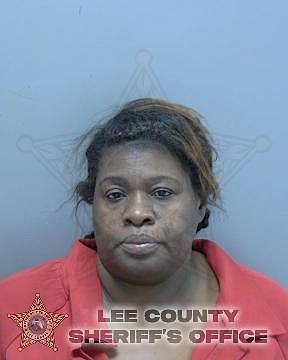
A Georgia woman is facing 76 years in jail after pleading no contest in Lee County to ripping off TJX Cos. in a sophisticated shoplifting scheme authorities say took advantage of loopholes in the retailer’s point of sales systems.
Santina Green, 52, is set to be sentenced Aug. 3 after changing her plea to no contest amid her trial late last month.
According to a statement from Florida Attorney General James Uthmeier’s office, Green (who also goes by Santina Hill) was charged with racketeering, conspiracy to commit racketeering and fraud. The change of heart on the plea, the statement says, came after prosecutors presented witnesses at the trial from Virginia, England, Massachusetts, as well as Pasco, Sarasota and Miami-Dade counties.
Green’s attorney did not respond to a question Wednesday about the no contest plea.
Green’s case centers on an alleged retail theft scheme that included 84 transactions involving nine debit cards at TJ Maxx, Marshalls and HomeGood stores in 17 Florida counties. Prosecutors says the alleged crimes happened when Green and three co-conspirators manipulated TJX systems to pocket cash from fraudulent returns.
The attorney general’s office names Albert Junior Boyce, Jr., Diana Rochelle Harris and David Lee Griffin as co-conspirators. Their current status was not immediately available Wednesday and the AG’s office did not respond to questions.
According to an investigative summary signed by Special Agent Eric Smith of the Florida Department of Law Enforcement in court records, here is what happened.
Between November 2020 and May 2021, the crew would go to one of the retailer’s combo stores, where they would buy area rugs costing between $400 and $1,000 with a debit card. Green would pay with her card, put the receipt in her purse and while still at the checkout tell the cashier she changed her mind, asking for a refund.
TJX combo stores feature two different brands under one roof. For example, a T.J. Maxx and HomeGoods are in a single location but have different layouts and check out systems.
Once done at the first store, according to the FDLE summary and the attorney general’s office, they would then head to a standalone T.J. Maxx, HomeGoods or Marshalls store where they would present an inferior non-TJX rug to a cashier along with the original receipt or a duplicate and ask for a refund.
They would often make the returns at more than one location.
They were able to take advantage of TJX’s procedures in two ways.
For one, the FDLE summary says there was an anomaly in the retailer’s system: when an item was purchased at a combo store and returned to a standalone store (or vice versa) the cash register system did not recognize that the original sale had already been refunded. It also did not flag any other refunds until the system reconciled sales data at the national level.
The summary says that “there could be several days after a refund occurred before the system flagged the fraudulent returns.”
Green, in a second method of taking advantage, is also alleged to also have exploited a system meant to prevent fraudulent returns.
FDLE’s summary says TJX has a “silent price coding” system in place, where employees handwrite numbers in inconspicuous places on high-dollar merchandise — expensive area rugs and artwork — before they are put on the sales floor. The coding includes an item’s product category and style. The code also appears on the receipt.
When someone comes into a store looking to return an item, the company’s cashiers are trained to look for the silent price code and then match it to the receipt to make sure it is authentic.
Knowing this, Green would allegedly forge codes on the non-TJX merchandise when returning them, making it so the code would match the receipt to fool the cashier.
The summary adds that in the event there is no receipt, cashiers are expected to ask for personal identification and write the person’s name and address on the return receipt.
Green (who was going by Santina Hill) was using her own identification along with multiple others under different names to make the returns.
When TJX’s Loss Prevention National Task Force discovered a pattern of activity, it began to track the transactions. It was able to identify 12 credit cards being used by the suspects nationally. Nine of those cards were identified as being used in Florida.
A total of eight names were identified and tied to the suspects through non-receipted returns where the identifications were used.
The company then turned to a system named Appriss Retail that records all returns — receipted and non-receipted. The data collected includes credit card information and/or customer names, allowing it to match refunds and track to the customers.
Kip McCoy, a corporate organized retail crime investigator for TJX, handed the Appriss Generated report to FDLE officers at a July 21, 2021, meeting at the agency’s Sarasota Field Office.
The report, according to the summary, said Green and her cohorts “as a group, had (up to) a 178.58% return rate.”
McCoy also identified Green as the primary female suspect. The summary says she was identified through returns at stores where receipts weren’t used and she presented a government issued identification bearing her name, address and a photo. That information was linked to store merchandise credits and credit/debit card data from cards she presented on the purchase and refund transactions.
Company officials were able to use that information to link her to to the name Santina Green as well as five others.
Green continued to use the credit card tied to her to make the allegedly fraudulent transactions through April 2021. And it was at about this time that McCoy and the task found two new co-conspirators, a man and a woman, helping Green at different times.
The co-conspirator, identified in the summary as Diana Harris, was positively identified by McCoy after she was arrested for making a return on a credit card in the name of Santina Hill — Green — in Pasco County April 21, 2021, as she left the HomeGoods store in Lutz.
According to the summary, police arrested her as she g into a rental car driven by Green.
Harris told Pasco deputies that she and Green were cousins and she had flown from Cleveland to Fort Lauderdale the previous day, after Green asked her to.
Once in Fort. Lauderdale, Green picked her up at the airport and “they traveled to different stores across Florida returning merchandise using Santina's debit cards,” the summary says.
“Harris admitted that she had conducted the fraudulent returns on behalf of Santina Hill and that she knew her actions were most likely criminal in nature.”
Green, the summary says, refused to speak to deputies.
The summary, signed Aug. 3, 2023, concludes with Smith, the FDLE investigator, writing he “hopes and prays upon review and consideration, the court issues individual arrest warrants for Santina Hill (AKA Santina Green)” and the co-conspirators.
It is unclear exactly when Green was arrested, but the Lee County Sherriffs Office shows she has been in custody since April 24, 2024. She is being held with no bond.