- March 3, 2026

-
-
Loading
Loading
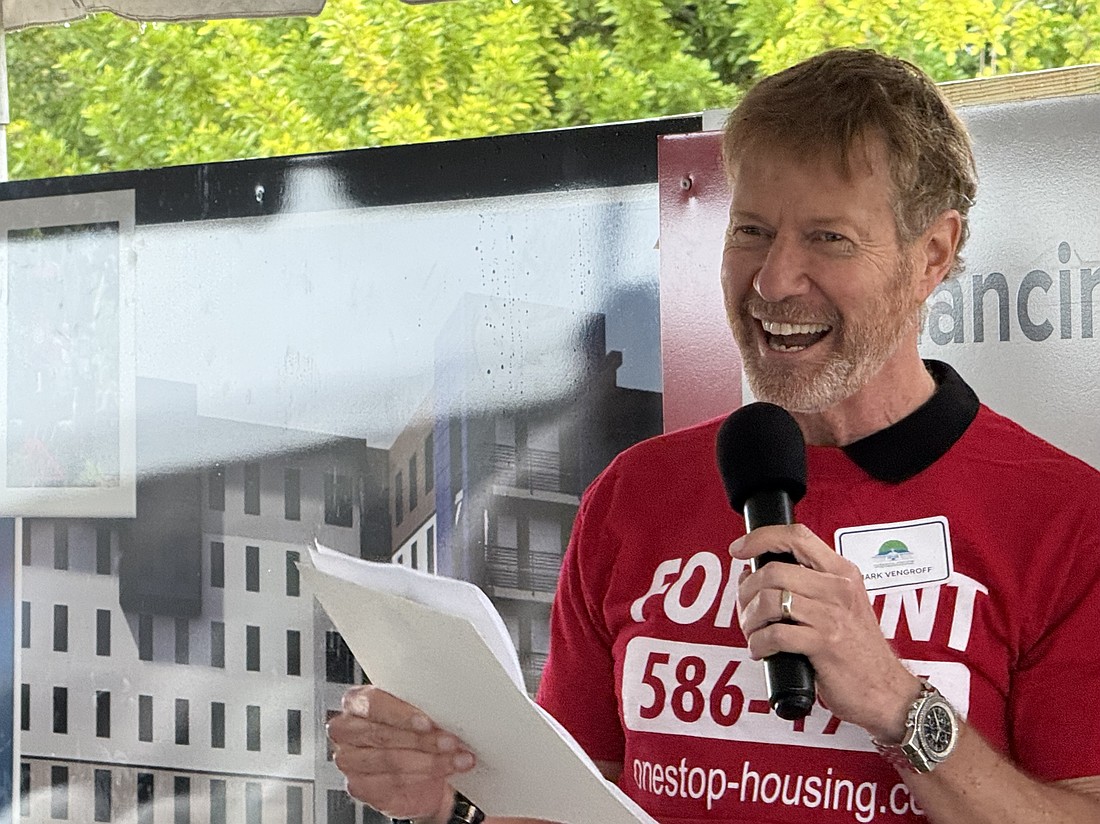
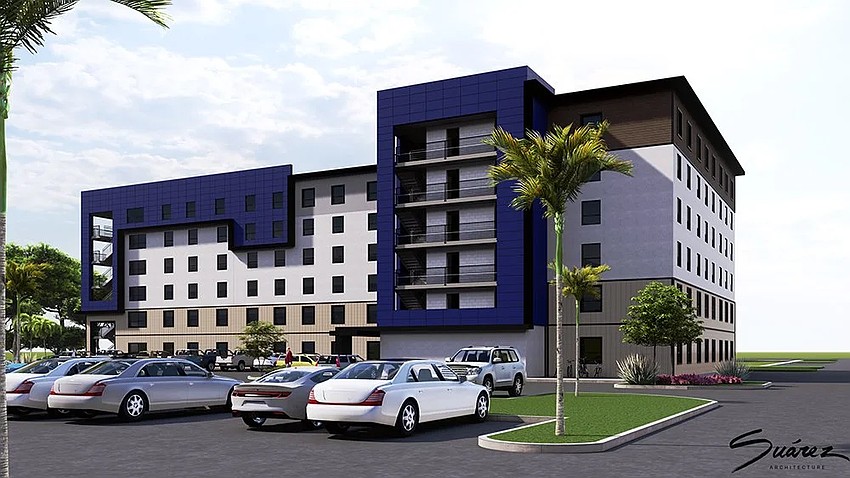
To meet the demand for affordable housing in Sarasota, a new — and long-anticipated — project, Sarasota Station, is now officially underway. The developer behind the project, One Stop Housing, hosted a groundbreaking event for the project Thursday.
Sarasota Station will be a multifamily mixed-use development dedicated 100% to workforce housing, with a 30-year affordability period. It will include a mix of studio, one-bedroom and two-bedroom apartments with rent priced below the market rate. To live there, tenants must earn between 60% and 80% of the Area Median Income (AMI).
Situated on 4.38 acres at 2211 Fruitville Road and 300 Audubon Place, Sarasota Station will include amenities like a clubhouse, basketball court, dog park, business center, community center and Legacy Trail access.
The development marks the first use of the Live Local Act in the city of Sarasota, according to One Stop Housing CEO and Managing Partner Mark Vengroff.
Passed in 2023 and amended in 2024 and 2025, the Live Local Act is designed to spur the development of affordable housing.
It will cost $30 million to build Sarasota Station, including moving train cars on the site and erecting the clubhouse, Vengroff says.
“We're building this for about 40% below cost,” Vengroff says, thanks to his vertically integrated development company. The project will be built by One Stop Housing Development & Construction and managed by One Stop Housing Property Management.
While the apartments will be deemed affordable, they will feature granite countertops and “beautiful finishes,” Vengroff adds. The construction will be all block and steel.
Bob’s Train restaurant will also be on site, inside a renovated Ringling circus train with a collection of circus and Sarasota memorabilia on display. The last day for the business was Jan. 15, before Bob's Train will close for two years during construction.
Sarasota Station is expected to open to residents in the first quarter of 2028.
Once it is built, Sarasota Station can apply for an ad valorem tax exemption since its units will be for those earning below 80% AMI, Vengroff says in a phone interview after the groundbreaking. That is one of several incentives for developers to create affordable housing through the Live Local Act.
"We filed [for this exemption] in all our other developments ... and we have received the award on all of them," Vengroff says.
One Stop Housing has more than 4,000 workforce rental units under management across Florida and Memphis, Tennessee. With the funds it saved in taxes, One Stop provided a "huge donation back to our nonprofit" One Stop Cares and to "wraparound services to give it right back to the people," Vengroff says.
Sarasota Station “will house the people in Sarasota who really keep the city functioning,” Sarasota Mayor Debbie Trice says, speaking at the groundbreaking event.
One Stop Housing plans to set aside 60 of the 202 apartments for certain groups on a "priority basis," Vengroff says. So far, he says, 25 units will go to Sarasota County Schools employees, while the others will be reserved for employees of the Sarasota County Sheriff's Office and the city of Sarasota for city staff and first responders.
While many developers look at projects and try to figure out how they can maximize profits, the mayor says, that is not the case with this project.
Vengroff embraced “creative thinking” to determine: “How can I maximize public benefit while still making the numbers work?” Trice says.
Going into a couple of meetings with the developers of Sarasota Station, Interim City Manager Dave Bullock says: “I saw no way forward,” but Vengroff and the team “worked it out … and here we are.”
While the groundbreaking marks a starting point for construction, Vengroff says it is also a “finish line” in other respects — like approvals and financing. He was speaking in front of a banner for Synovus Bank, which is financing the project. (The bank is now under the Pinnacle brand following a January merger.)
Several other funding sources helped make the project possible.
Sarasota Station received a more than $15 million grant from Resilient SRQ, which provides funds for disaster recovery efforts, including the development of affordable housing, from the U.S. Department of Housing and Urban Development. There were times when the HUD requirements "conflicted with city building codes," Vengroff says, requiring collaboration with municipal officials and his attorney to help navigate the way through.
More funding for the project came from a deal in December, when an LLC owned by Vengroff sold 3.6 acres at Fruitville Road and School Avenue to David Weekley Homes, which plans to build luxury townhomes near Sarasota Station. The $8.84 million deal was brokered by Kevin Robbins of Robbins Real Estate, who calls the funding a “catalyst” for the workforce housing development.
"We got a really good price point because [David Weekley] was able to get higher density because we filed under Live Local," Vengroff says in the phone interview after the groundbreaking. The homebuilder is "well within the realm on his site to build his market-rate luxury townhomes, and he can get more. His land is worth more," Vengroff says, estimating the development could include about 74 townhouses.
A third source of funding for Sarasota Station is from the Gulf Coast Community Foundation, which structured a below-market-rate loan for $2.5 million, GCCF President and CEO Phillip Lanham says in an email.
“At Gulf Coast Community Foundation, we believe affordable housing for our workforce is essential to a thriving community,” Lanham says.
“Sarasota Station represents more than these buildings,” he adds, in front of a rendering for the project. “It represents civility, opportunity and a future where the people who power our community can afford to live here.”

The Charles & Margery Barancik Foundation provided a $250,000 grant toward the development of Sarasota Station. It is “emblematic of the kind of project we need many more of to help dig us out of a hole that has been decades in the making,” Barancik Foundation Collaboration and Impact Officer Matt Sauer says.
In Sarasota County, Sauer says, 47,000 households spend 30% or more of their income on housing, which for those who lease is called being “rent-burdened." The trend, he continues, is “unsustainable” and has an impact on everyone.
“If you're a business owner, your top resources are people,” Sauer says. “Those folks need an affordable place to live.”
Sarasota Station will bring to fruition the vision of Mark Vengroff’s late father, Harvey Vengroff, founder of One Stop Housing. Harvey Vengroff purchased the land for a workforce housing development, along with his business partner, Bob Williams, more than 15 years ago, his son says.
Williams and the Vengroff family provided private investment for the project, which has been in the works for years since the land purchase.
While the Live Local Act allows developers to proceed without administrative review if the property is zoned as industrial, commercial or multifamily, Mark Vengroff says his father went through the process of getting approvals for the workforce housing project long before the legislation was passed.
In recent years, the need for affordable housing has become even more pronounced as housing prices have “skyrocketed,” Mark Vengroff says, which is what sparked the Live Local Act.
To meet the current demand, he says, the city of Sarasota needs 8,200 additional affordable units by 2035.
“I'm so proud that we're finally able to break ground today,” Vengroff says at the groundbreaking, “not only to be able to finish this development for my father's legacy, but for the 202 hard-working individuals and families … that will no longer have to work two jobs to keep a roof" over their heads.