- September 18, 2026

-
-
Loading
Loading
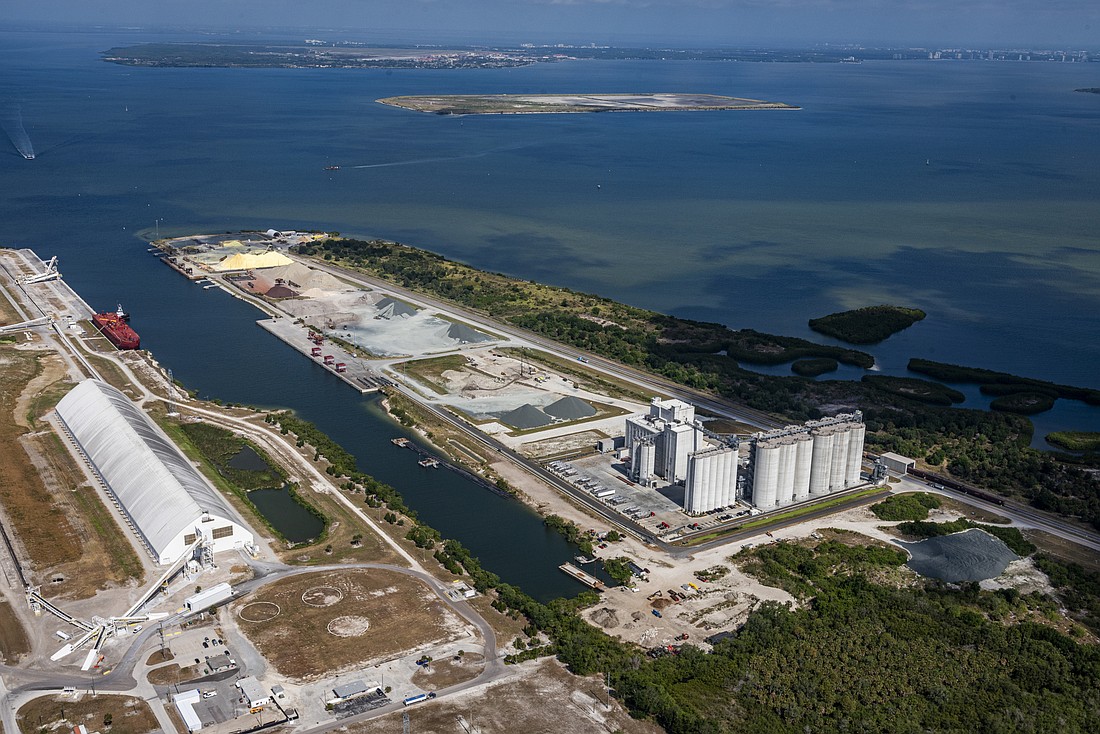
Port Tampa Bay was awarded a $24 million federal grant to expand a berth at Port Redwing — allowing the terminal to increase its bulk cargo capacity.
The funding comes from the U.S. Department of Transportation’s Maritime Administration Port Infrastructure Development Program and will fund a major expansion of Berth 300 at the Port Redwing site in Gibsonton. The $40 million project will extend the berth by about 800 feet to create a 1,300-foot berth, according to a release. The port will provide a $16 million local match.
Once completed, Port Redwing will offer approximately 2,800 contiguous linear feet of berth space — nearly half a mile — significantly improving its ability to accommodate multiple vessels at once.
“This investment enhances Port Tampa Bay’s capacity to support Florida’s position among the world’s top economies, while improving supply chain efficiency and resilience across regional and national markets,” Port Tampa Bay President and CEO Paul Anderson says in the release.
An expanded seawall will allow up to four 650-foot handysize bulk carriers, or three of the largest dry bulk vessels in the Gulf of Mexico, to dock simultaneously, the release says. That added capacity will reduce vessel wait times, improve turnaround, and provide greater flexibility for the port to accommodate a wide range of vessel types.
Port Redwing primarily handles dry bulk cargo, such as granite, limestone, cement, gypsum and grain, the release says. Such shipments are essential to the construction, infrastructure and agricultural sectors, and increasing the port’s capacity will help meet the growing demand.
With the expansion, existing tenants who have already committed to handling more than 5.7 million tons of cargo annually, will be able to meet and exceed those volumes, the release says.
“This project positions the port to meet rising demand today while preparing for the continued growth we see across Florida,” Anderson says.
It’s also intended to reduce reliance on long-haul trucking, improving roadway safety and lowering emissions associated with overland transport.
The expansion is part of the port’s larger, long-term goal of achieving 1 million TEUs of annual capacity, the release says. A standard, 20 foot long shipping container is one TEU, or twenty-foot equivalent unit, of cargo capacity while a 40 foot long container is two TEUs.
In the 2028 fiscal year, the port is expected to begin an estimated $1.5 billion effort to deepen and widen its shipping channels, the release says, allowing larger ships to access Tampa’s docks.
Port Tampa Bay is the largest port in Florida by both cargo tonnage and land area, according to its website, spanning more than 5,000 acres. A leading economic engine in the state, the port generates approximately $34 billion in annual economic impact and supports more than 192,000 jobs statewide.