- October 26, 2026

-
-
Loading
Loading
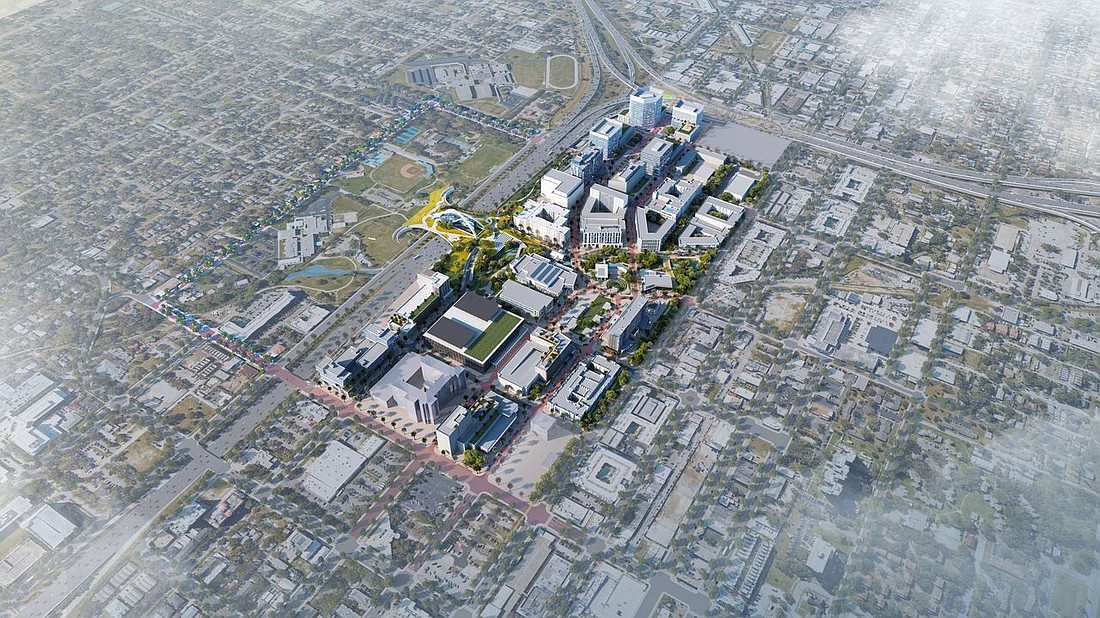
The fuel to revitalize the long-neglected Historic Gas Plant District in downtown St. Petersburg could come from what, on the surface, seems like an unusual trio: a developer with a penchant for historical architecture; one of the most prominent and successful Wall Street tech investors of the past decade; and the leader of the one largest minority-owned construction firms in the Southeast.
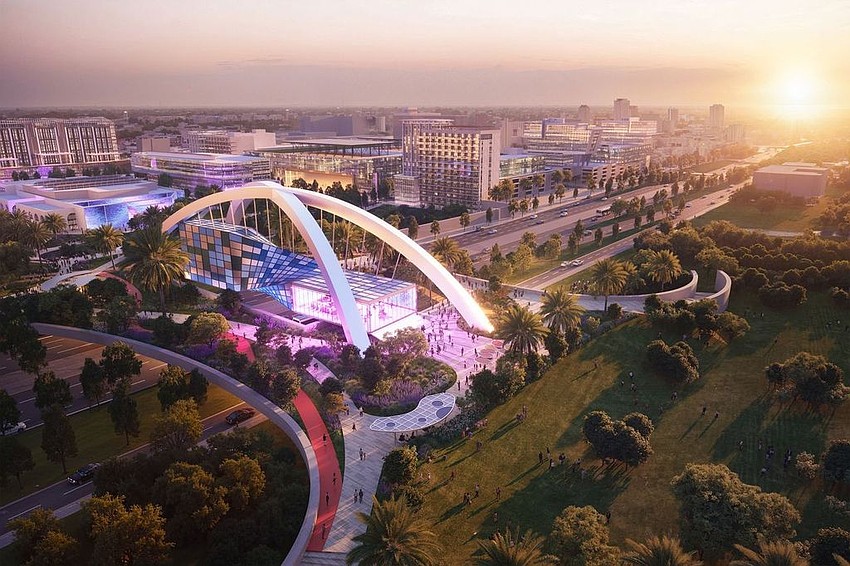
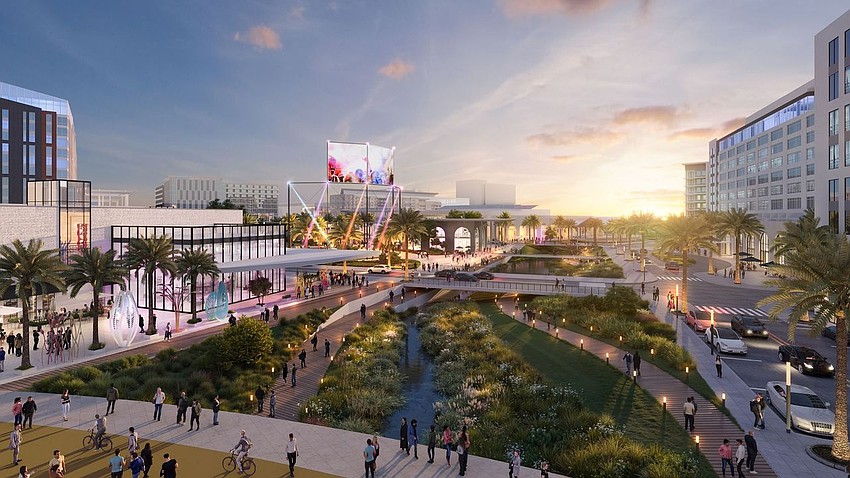
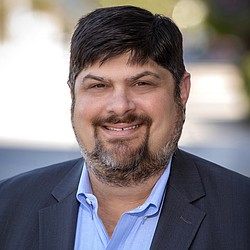
In people, that’s Casey Ellison founder and CEO of Ellison Cos., Cathie Wood of CEO and chief investment officer of ARK Invest and Jonathan Graham, president of Horus Construction. Those three, under an entity named ARK Ellison Horus LLC, submitted a $6.8 billion unsolicited proposal Oct 3 to, according to a statement, “reimagine St. Petersburg’s Historic Gas Plant District as a world-class epicenter of innovation, culture and community.” A fourth entity in the project, Baker Barrios, was named the master planner architect.
Ellison’s past ranges from master-plan projects such as The Central in downtown St. Pete and the Central City YMCA in Tampa Heights to transformative landmarks, such as Armature Works, Oxford Exchange and the Stovall House. Wood, who notably moved her company, ARK Invest, from New York City to St. Pete in 2021, has made millions from investments into tech giants like Tesla, Roblox and Robinhood, with a total fund worth some $20 billion. Graham, meanwhile, is a second-generation builder with more than 40 years of experience in construction; his father, James Graham, founded a stucco company in 1973 and Horus was founded in 2001. Projects Horus has built include the Gaillard Performing Arts Center in Charleston, South Carolina and the Tampa Museum of Arts.
The Gas Plant District is a historically Black neighborhood leveled to make way for the construction of Tropicana Field and the construction of Interstate 175.
At the time, residents of the district were promised economic opportunities would come from the projects, but locals at all levels agree those opportunities never fully materialized.
That seemed about to change in September 2023 when the Tampa Bay Rays and its development partner agreed to build, as part of a stadium project, a $6 billion multiuse development that would have brought housing, retail and offices along with cultural and entertainment spaces.
The deal, however, fell apart earlier this year.
Since then, St. Petersburg Mayor Kenneth Welch has called redeveloping the Gas Plant district — with or without a ballpark — one of his top priorities.
Last week, Welch said he had read over the proposal several times and his staff is doing its due diligence. If the city decides to move forward with it, he’ll open a 30 day window for alternate proposals.
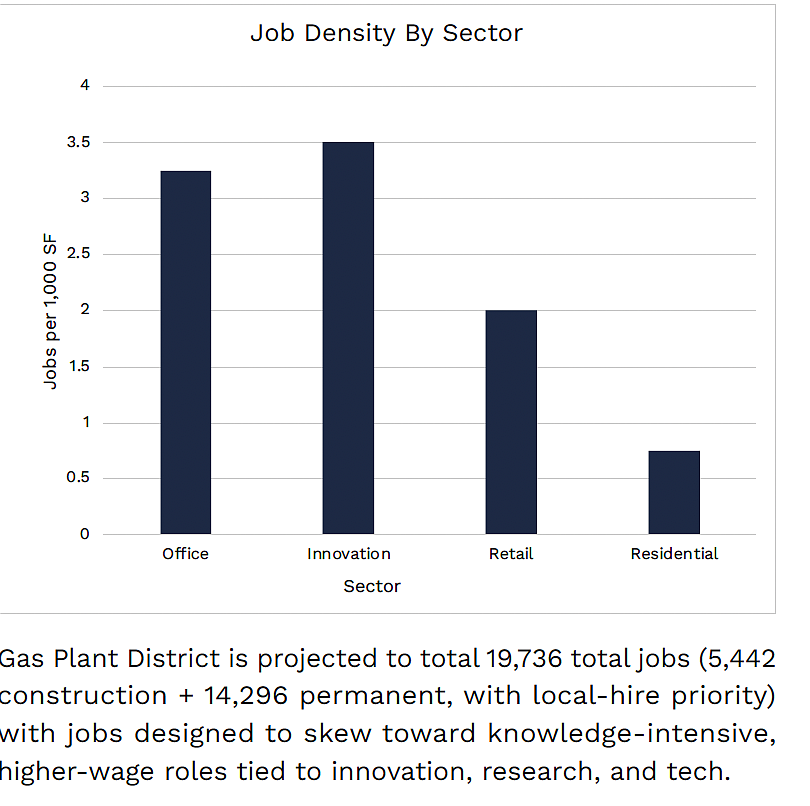
But, he says, the ARK Ellison Horus plan meets “all the criteria” the city asked for when it originally asked for RFPs to redevelop the district. “It speaks to jobs, housing. It almost doubles the affordable housing. It has senior housing in there. It's got a workforce development mechanism,” Welch says.
“It's very powerful.”
A deeper look at the numbers behind the Gas Plant proposal includes the following nuggets: