- May 23, 2026

-
-
Loading
Loading
Not so long ago, annual contract and budget discussions between the Economic Development Corp. of Sarasota County and the county commissioners were laced with threats of defunding the organization.
Led by chief critic and former commissioner Mike Moran, the majority of the board in the past had demanded greater transparency and clear deliverable metrics of the EDC in order to retain its status as the county’s official business retention and recruitment organization.
In her three years at the helm of the EDC, Executive Director Erin Silk and the organization’s reconstituted board of directors and staff have managed just that. The result was compliments all around as the County Commission unanimously — and with little discussion — approved the EDC’s fiscal year 2027 contract. At just less than $1.6 million, the EDC’s budget is flat compared to the current fiscal year as it inches closer to its goal of balanced funding from public and private sources.
The EDC was created in 2004 through an interlocal agreement between the county and its four municipalities, each contributing funding on a per capita basis. Until fiscal year 2024, it also received nearly $500,000 from a countywide business license tax before Moran led a charge to eliminate the fee, which for most businesses was less than $20 per year. That was replaced by a 50% match of private donations by the county, compelling the EDC to be more aggressive in its fundraising and its goal of 50% private funding.
That goal is within reach. For next fiscal year, public funding is at 54%
“At our core we're about diversifying our economy, growing the tax base and creating high-quality career opportunities that support long-term community prosperity,” Silk told commissioners. “Approximately 70% of our work is focused on business retention and expansion, because existing businesses are the heart of our business community. They're often the most likely source of new jobs and investment.”
She cites as an example 22 active expansion projects in the EDC’s support pipeline.
“Collectively, these projects present the potential for more than 1,000 new and retained jobs,” Silk said. “They're approximately $33 million in new taxable capital investment. Their demand is about 560,000 square feet of commercial and industrial space.”
Therein lies the rub.
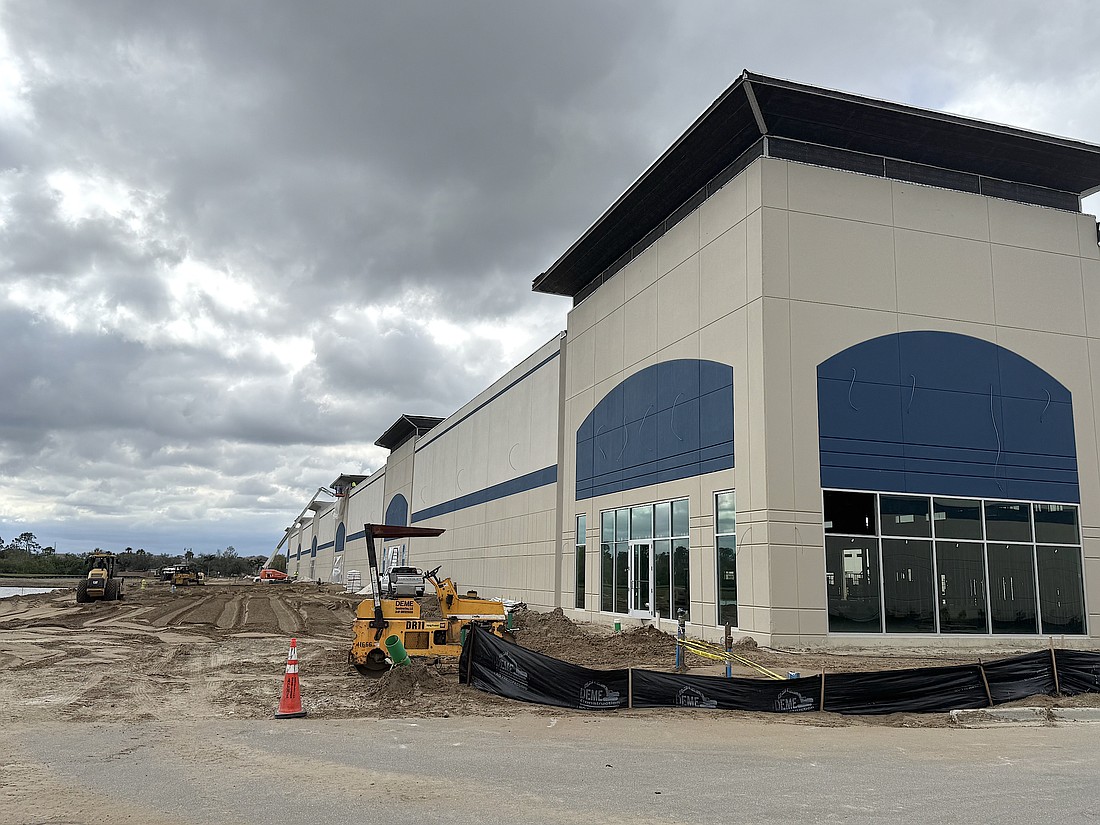
To continue that momentum, Silk told commissioners they will receive next month a proposal to help create more opportunities for commercial and industrial development in unincorporated areas of the county.
“If Sarasota County wants to compete for and retain high-value employers and long-term economic investment, we must increase our inventory of shovel-ready sites,” she said.
According to Silk, in 2019 Sarasota County had more than 1,000 acres available in its major employment centers. Today, that number has dwindled to approximately 285 acres with only 100 ready to develop.
“Our major employment centers are being built out, which is a good thing, but we need to continue to look outside of them for opportunities,” she said.
Among the proposals is to reduce the business park rezoning threshold from 10 acres to 2 acres to support and retain local small and mid-sized businesses as they grow. “This is especially critical because land costs have gone up by 85% and construction has gone up by 30%, so attracting those smaller projects that our local entrepreneurs want is key,” Silk said.
Another recommendation will be to raise the by-right height in business park zoning from 35 feet to 45 feet to accommodate modern advanced manufacturing and corporate operations.
The EDC projects a need for 152 acres and 1.45 million square feet for business recruitment and expansion over the next five years and, in the next 10-plus years, 578 acres and 3.58 million square feet under roof.
In the interim, the EDC can move forward with its fiscal year 2027 planning free from the political drama of the past.

“Anybody who has lived here as long as some of us have really do enjoy the benefits of having a healthy economic base, and without a healthy economic base a community dies,” said Commissioner Teresa Mast. “It's vital that we work to have those site-ready locations and that we work within the communities that will embrace them.”
Commissioner Mark Smith said continued diversification beyond the narrowly focused industries that carried the region for years is essential for future economic stability.
“A diversified economy is essential. If we rely totally on construction and service industries, we’ve seen what happens,” Smith said. “These are great jobs, and so I just want to say thanks and I'm fully supportive of approving the next contract.”