- March 18, 2026

-
-
Loading
Loading
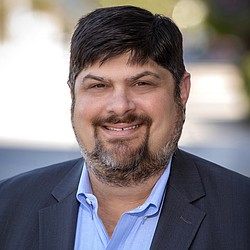
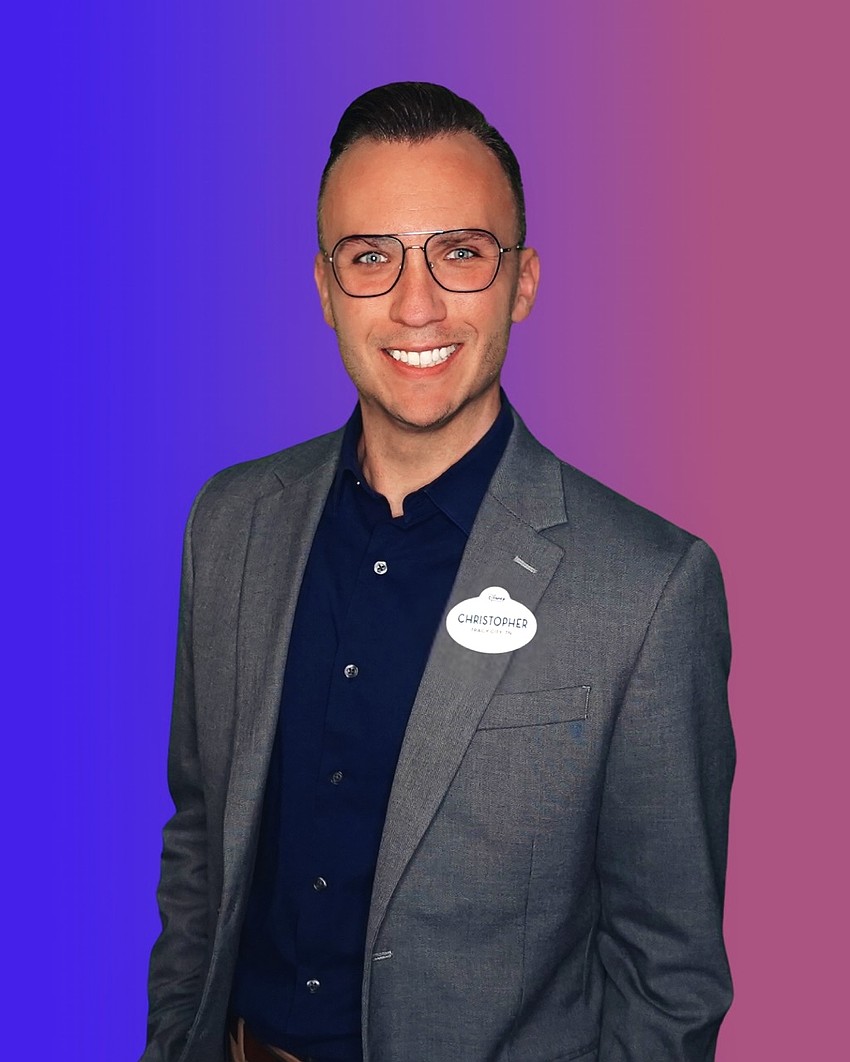
Christopher Fults has some cool things on his resume. He’s been a recruiter for Amazon. He’s been a manager of training content for National Geographic. He’s currently in his last year of a doctoral program at Vanderbilt University's Peabody College for an Ed.D in leadership and learning in organizations. And he’s worked at Disney World for a decade, in two different stints, in roles from talent coordinator to guest experience manager. Fults is from Tennessee, with the deep drawl to prove it — so deep he more than occasionally gets asked if he’s from Australia, goofy as that sounds.
One thing Fults isn’t is a Walt Dinsey impersonator. Fults is affable and a bit self-deprecating, while Disney, even with his impeccable imagination innovations, was known as exacting and sometimes gruff.
Yet there was Fults, on a recent late Wednesday morning, some 10 feet from the entrance to Magic Kingdom at Walt Disney World in Orlando, channeling his inner Walt Disney. It was a Chamber of Commerce kind of day, sunny and 73 degrees, when I saw Fults — twice — bend down, pick up trash and place it compactly in a nearby garbage can.
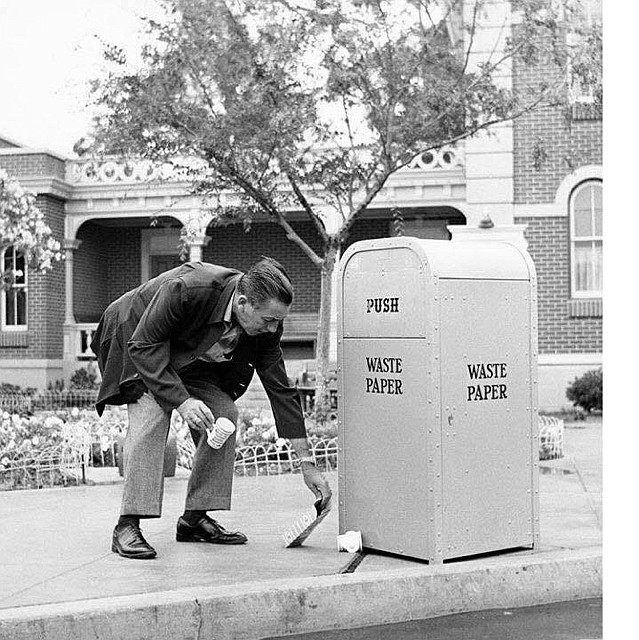
Classic Walt Disney move. The animation pioneer, film producer, voice actor and amusement park impresario famously would pick up trash as he walked around Disneyland in California. Legend has it Walt Disney did that for two reasons: One, to show employees the boss isn’t above doing grunt work. The other reason, he once told a reporter, was a desire to make the park neat enough to change people’s behavior. “We’re going to make it so clean,” Walt Disney once said, “that people are going to be embarrassed to throw anything on the ground.”
I was at Disney — all in a day’s work — to spend a day with Fults and his senior facilitator colleague, Marjorie Colas, at the Disney Institute, learning about the leadership and management philosophies that make Disney, Disney. Founded 35 years ago, the Disney Institute has worked with companies in health care, automotive, manufacturing, retail, banking, sports and more. Its curriculum, officials say, helps professionals “adapt and apply nearly 150 business insights to improve their own customer and employee experiences — no matter the industry or organization.”
The institute isn’t an internal training arm of the famed theatre park. “We’re not in the business of making anyone Disney 2.0,” Fults told our group, about a dozen reporters and editors from Central Florida, industry trade publications and Disney and travel blogs. “We want to get organizations to elevate their own brand of magic.”
I saw that magic up close and personal through a morning and afternoon session, split by a behind the scenes tour of some of Magic Kingdom. (I asked Fults about his grab-and-throw out trash habits. “It’s bad when you pick up a melted chocolate wrapper and forget it’s in your pocket,” he quips.)
A snippet of the leadership lessons I learned from the Disney Institute include:
Purpose driven: “Disney’s consistent successes and results are driven by a strategic focus on creating and delivering exceptional experiences,” a slide from the institute states. “We have learned to be intentional about details that surround and connect our guests, cast and leaders.” Getting there, the facilitators say, takes two critical components any business can do: know your brand promise and have a common purpose wrapped around that promise. For Disney, that promise is magic, timely storytelling and making both come to life. As leaders, says Fults, you need to “ensure everyone (on your team) understands what this looks like.”
Three P's: Striving for the pinnacle of exceptional customer service, the facilitators say, doesn’t have to be exclusive to Disney. “Exceptional customer service is achievable for every organization,” states one slide, “because exceptional service is architected from systems and processes that you control.” Fults calls it a venn diagram, with processes, people and places in overlapping circles.
Happy days: Taking it from theory to practice, Fults tells the story of how a team at Disney World — with a common purpose approach centered around if the customer isn’t happy, they aren’t happy — developed its lost and found software. Gone are the days at the park of parents trekking to the lost and found booth on a hope and prayer Susie’s Mickey Mouse plush was discovered on an empty ride seat. Now guests can go to the lost and found page on the Disney app or website, answer a few questions and get a claim number. Then a team hunts down the item — hello Mickey — based on when it was last seen, where the family was, etc.
Let’s have a parade: Another common purpose example lies in Disney World's custodial staff. Leaders, say Colas, encourage team members, or in Disney World’s case, cast members, to look for moments of magic for guests. The facilitators told the story of an employee, sweeping a floor, when he was stopped by a family with a query: Where is Tomorrowland, the park’s futuristic segment, and home to Buzz Lightyear? Instead of just verbally telling the family to go this way, then that way, “he turned his broom upside down and led them on a parade to Tomorrowland,” Fults says. “Nowhere in his job description does it say ‘flip broom upside down and lead an impromptu parade to Tomorrowland.’ But as a leader, you have to encourage that. It’s OK to be off task if you’re on purpose.”
He closed that story with a leadership line so good he said it twice: “What gets recognized gets repeated.”
Go deeper: More examples of common purpose came during a walk down Main Street, U.S.A in Magic Kingdom. Prior to our group even getting there, we watched the entrance. Fults points out many years ago, Disney changed the job classification of the people at the gate from ticket takers to park greeters. Why? Ticket takers do just that. Greeters do more. “That change is so significant to set baseline expectations,” Fults says.
Right on: Examples of being intentional toward the common purpose of making magic — and, of course, making money — even in the short distance we walked along Main Street toward Cinderella's Castle, are as common as cotton candy. When you walk into the park, a place to rent strollers, buy sunscreen, grab some popcorn are all on your right. That’s because, says Fults, 90% of the world is right-handed, and that’s the way they look first. Oh, souvenir stores are on your left when you enter Main Street. Same reason. So when you leave, those stores are on your right, and you don’t have to worry about lugging gifts around all day. “There’s something to be said about understanding guest behavior,” Fults says.
And that’s not only for commercial purposes. An example: The Magic Kingdom First Aid station is near a cafe, with red and white umbrellas, that sells Coca-Cola products. The connection? Both are known instantly by their shared colors.
As Fults is talking, someone in a blue Disney uniform is spraying bubbles around the Main Street crowd. Fults jumps on the object lesson. “We spray bubbles because it makes people happy,” he says through a big smile. “This is not just a vacation. It’s an opportunity to create a lifetime of magic.”