- September 5, 2026

-
-
Loading
Loading
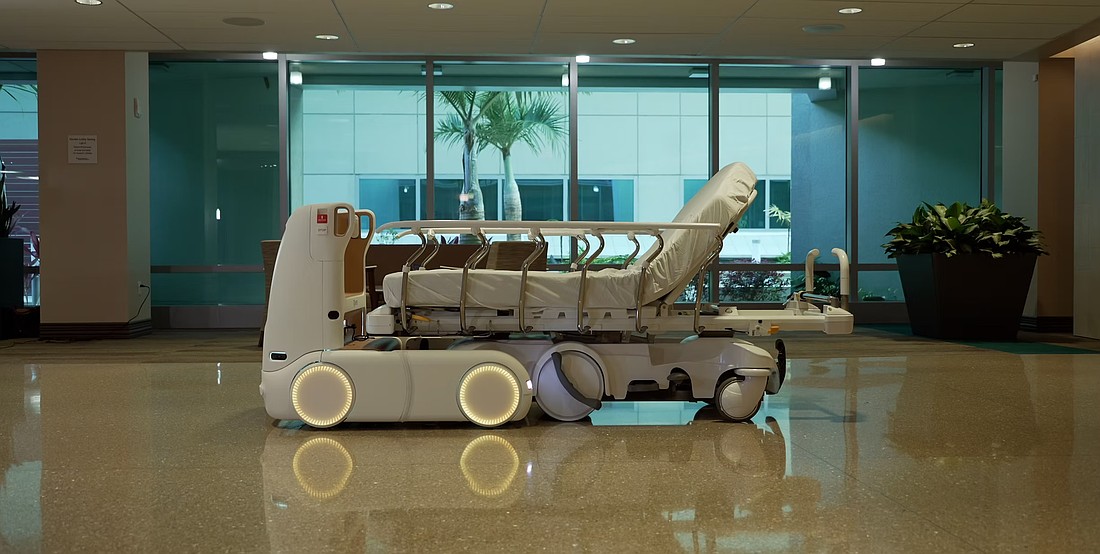
BayCare Health Systems has partnered with a Gainesville technology company on a pilot program to see how robotics can support hospital operations and make it easier to move patients.
The Pinellas County nonprofit health care system began the pilot program earlier this month at Morton Plant Hospital in Clearwater.
In a statement, BayCare says the program will focus on “on evaluating workflows, transport patterns and operational opportunities within the hospital environment, with later phases designed to support potential in-hospital robotic stretcher movement.”
The partnership is with Rovex, a robotics startup founded in 2024 by emergency physician David Crabb.
The Gainesville company focuses on helping hospitals improve patient movement, support care teams and strengthen operational capacity through robotics that are built for the health care industry.
Rovex says on its website that its robot — Rovi — can attach to any brand of stretcher and eventually to beds and wheelchairs. And its autonomous navigation and obstacle detection capabilities allow it to move through doors and elevators as well as avoid equipment, spills and hospital visitors.
“For hospitals, patient transport is an essential part of care delivery,” BayCare says in the statement. “Delays in patient movement can ripple across the system, slowing imaging and procedural workflows, disrupting schedules, increasing strain and injury risk for staff, and creating a less efficient experience for both patients and care teams.”
BayCare says the technology also supports employees by reducing physical strain and logistical difficulties, allowing them to better focus on patients. It says that robotics will not replace employees and that robots will not be used to move patients during the current pilot.
As for expanding the pilot to additional hospitals, a BayCare spokesperson says in an email that the decision "would be based on what we learn during this and future phases, and there is no timeline or plan to share beyond the current location at this time."
BayCare has 4,003 beds across 16 hospitals. Its revenue was $7 billion in 2025.