- April 14, 2026

-
-
Loading
Loading
Hospital: Manatee Memorial
Size: 295 beds; had 104,167 emergency visits in 2024
Budget: Private, declines to disclose (Suburban Philadelphia-based hospital management chain Universal Health Services owns Manatee Memorial, which is in downtown Bradenton.)
Technology: Medtronic CathWorks FFRangio System
A new tool that combines AI and advanced computational science is advancing cardiac care in Manatee County.
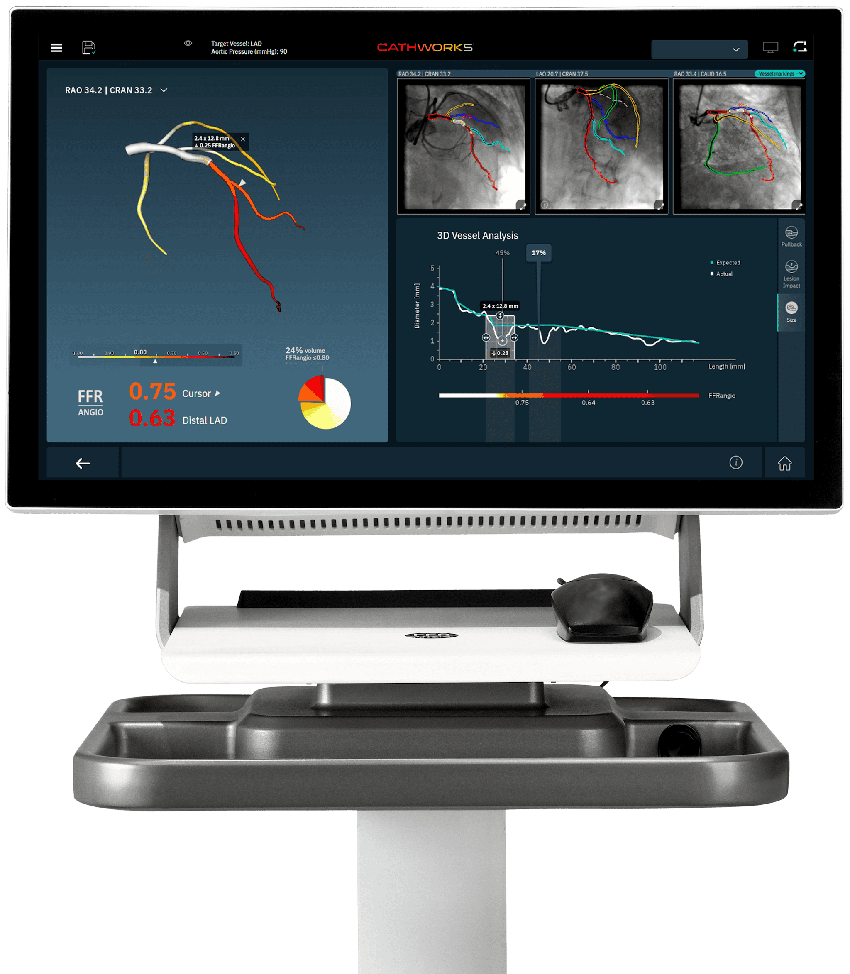
The cardiac team at Manatee Memorial Hospital recently began using Medtronic CathWorks FFRangio System. It's a noninvasive diagnostic tool that creates a 3D, color-coded model of the coronary arteries. These visualizations help medical personnel treat patients with coronary artery disease, which occurs when blood vessels supplying the heart are obstructed or damaged.
Using the Medtronics CathWorks FFRangio System’s models, the team can identify blockages and assess their severity with greater precision and without invasive techniques, according to a statement.
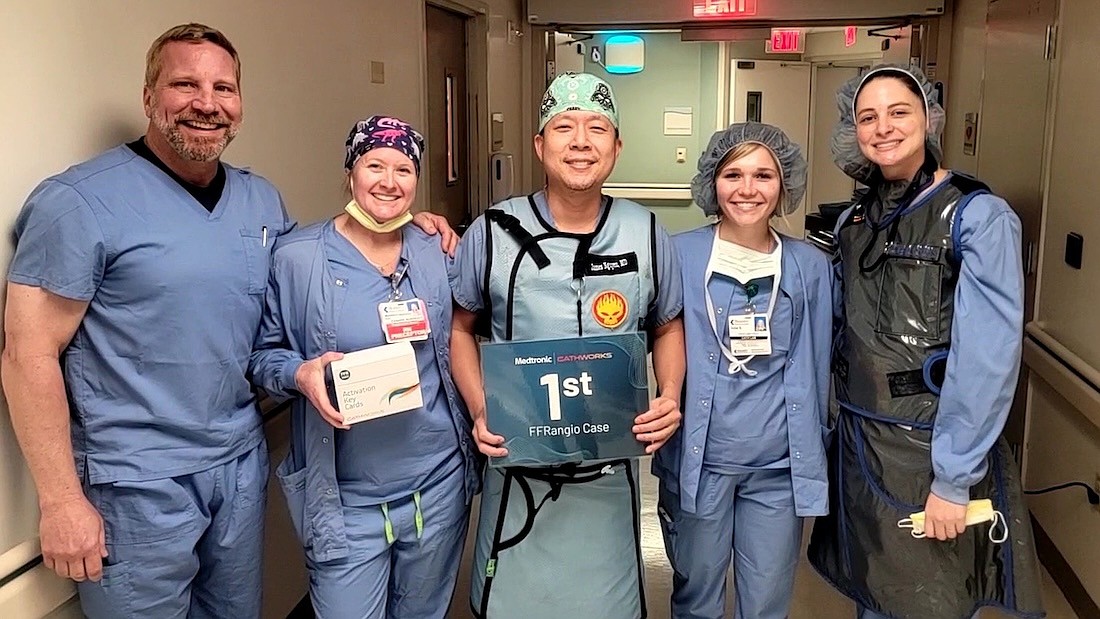
“This new technology marks a significant advancement in how we visualize and treat coronary artery disease,” Dr. James Nguyen, an interventional cardiologist, says in the statement. Nguyen was the first to use the technology in a procedure at Manatee Memorial in January.
Often, when someone has chest pain or other symptoms of heart disease, doctors perform a test called an angiogram that involves putting a catheter into a blood vessel and guiding it into the heart. After a special dye is injected into the bloodstream, X-rays show how it flows through the coronary arteries, enabling doctors to detect whether any vessels appear narrow or blocked, a Manatee Memorial spokesperson says.
While an angiogram can show blockages, it does not always show how much blood flow is blocked.
“That’s where a measurement called Fractional Flow Reserve (FFR) becomes important,” Manatee Memorial spokesperson Rob Coseo says in an email, explaining this measurement identifies pressure before and after a blockage to help determine whether treatment is required.
“Traditionally, measuring FFR requires doctors to insert a specialized pressure wire through the artery and past the blockage. Patients are often given a medication called adenosine to temporarily increase blood flow so the pressure measurements can be taken accurately,” Coseo says. “While this technique provides valuable information, it can add time to the procedure and carries some risks. The wire must be carefully maneuvered through the artery, which can potentially irritate or injure the vessel, and the medication used to stimulate blood flow can cause discomfort or side effects for some patients.”
Using the CathWorks FFRangio System, doctors at Manatee Memorial are instead employing AI and advanced computer modeling to analyze images taken during an angiogram. The platform creates a digital model of the coronary arteries and calculates FFR values — without the use of wires or drugs. It also provides detailed information, Coseo adds, about the length of a blockage and the size of a blood vessel, which can help doctors plan treatments like stent placement more precisely.
“By combining artificial intelligence with computational science, we can more accurately assess the severity of blockages,” Nguyen says, “leading to better treatment decisions and improved outcomes for our patients.”