- October 26, 2026

-
-
Loading
Loading

Like nearly all bankers, Dennis Murphy had a solid exit strategy when he founded Gulfside Bank eight years ago. He wanted to create an institution with a high-performing loan portfolio and sticky core deposits, in a package attractive to potential suitors.
One element it likely didn’t contain: being bought by a credit union.
Back in 2018, when Murphy and several other prominent local business leaders, including Sarasota attorney Jennie Compton and ad agency founder Timothy Clarke, launched Gulfside in Sarasota, the idea was to fill an unmet need. The previous decade was something of a de novo community bank desert, with few new entries across Florida. That was mostly due to the 2008-09 recession that led to regulators tightening lending and bank formation requirements.
But the appetite for a community bank was strong. Gulfside raised $23.5 million in two months, officials said then, and the bank opened Nov. 13, 2018. Gulfside grew steadily, even amid Covid, inflation, political tumult and more, and the bank was nearing $350 million in assets and $300 million in deposits through June 30.

When Murphy, a founding shareholder and executive with Sarasota-based Gateway Bank of Southwest Florida, now part of SouthState Bank, wrote that Gulfside business plan and exit strategy eight years ago, a credit union buying a community bank was rare but not unheard of. Dunedin-based Achieva Credit Union, for one, acquired Charlotte County-based Calusa Bank, with $165 million in assets, in a $23.2 million deal in November 2015. And Lakeland-based MidFlorida Credit Union bought Community Bank & Trust in Ocala in May 2019.
Yet credit unions and banks didn’t mix it up in the M&A world with any consistency. One reason: bankers, both nationally and in Tallahassee, worked diligently to spread a message of unfair competition, particularly since credit unions, as nonprofit co-ops, don’t pay certain taxes. Murphy had been part of that mission, as a member of the Florida Bankers Association board and its government relations council.
Turns out what once was rare is now regular, if not redundant. There have been some 20 deals involving a credit union buying a bank, or parts of a bank, in Florida since 2015, according to S&P Global Market Intelligence data.
Which is how Gulfside found itself last week in an exit strategy with a credit union, Dearborn, Michigan-based DFCU Financial. DFCU, with $8.04 billion in assets, announced its intention to buy Gulfside Oct. 19. The boards of both organizations unanimously OK'd the deal, which, pending regulatory approval, could close by the second half of 2027.
Executives with both Gulfside and DFCU declined to disclose a purchase price or tangible book value for the deal; Murphy confirmed Gulfside’s initial shareholders — there were 258 in 2018 — tripled their investment after raising $23.5 million and are projected to cash out at $30 a share. By one comparison, DFCU, which has now made four acquisitions in Florida since 2023, paid $94 million for Tampa-based First Citrus Bank in 2023, when that bank had $689 million in assets.
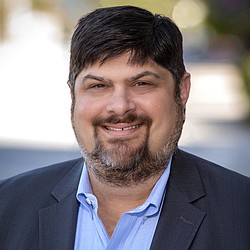
Murphy, meanwhile, in an interview two days after the deal was announced, acknowledged the irony of a 24-year banker like he is being in a deal where an institution he founded is bought by a credit union. “But once you get past the political parts,” says Murphy, credit unions buying banks is a “very compelling story.”
“The M&A landscape for buying community banks has changed significantly over the last five years,” Murphy adds. “Credit unions are the prevalent buyer of banks our size.”
Murphy cites several factors that put credit unions at the top of the M&A list, with a big one being that credit unions tend to be “more aggressive on price.” Credit unions, as member-based institutions, also don’t have the same earn-back metrics some banks do, he says. And, he adds, notably, credit unions tend to look at bank acquisitions as add-ons, where the investment grows and the employee base remains intact, while banks sometimes look at acquisitions defensively and cut staff and resources.
And in DFCU and its CEO, Ryan Goldberg, Murphy has found not only a customer service-focused kindred spirit, but someone he actually worked with once before: Both Goldberg and Murphy were colleagues at AmSouth in the early 2000s.

Goldberg, in a separate interview, says he and Murphy started talking two years ago, more about careers and the industry at first than deal parameters. When Murphy reached an “inflection point” with the strategy at Gulfside a few months ago, says Goldberg, the peers started talking more seriously about a deal.
Goldberg says like in all past deals he’s led at DFCU, the decision tree starts with a people analysis. He says the core parameters have to be there — quality loans, profitability, market demographics, geography in relation to other DFCU markets — but no deal gets to closing without a people alignment. An acquisition won’t work, Goldberg says, “unless you have like-minded people who are on the same page about what the (organization) can do together.”
That starts with the top, Goldberg says, and at Gulfside, Murphy will be Sarasota/Manatee Area President for DFCU after the deal closes.
After the people part, Goldberg says geography plays an important role in DFCU’s acquisition strategy. The credit union’s overall goal is to be in five of the seven largest MSAs in Florida, leaving out Miami and Jacksonville. The Sarasota-Manatee region marks No. 4 for DFCU, and fills an Interstate 75 gap, as it already has a presence in Tampa Bay and Naples-Fort Myers.
“Sarasota-Bradenton was a logical next step geographically,” Goldberg says. “We have done some business in Sarasota, but we haven’t had delivery systems there in terms of a branch.”
Goldberg says his Florida enthusiasm isn’t dented by lingering market challenges, like cost of living issues. “We continue to believe there is a significant growth opportunity in Florida,” he says. “There are challenges in the market, but those force you to be better around execution. You can still win in the marketplace.”