- October 22, 2026

-
-
Loading
Loading

Julianna Nickel remembers driving by construction sites on the way to school or track practice when she was a kid. There was something exciting about it, says Nickel, now a 26-year-old senior project engineer at JE Dunn Construction in Tampa.
Just seeing the progress, watching a space, like a blank canvas, transforming from nothing into something, becoming a place where people lived or played or grew or worked or healed.
“That really spoke to me,” the Clearwater native says. “I just always had this natural attraction to buildings.”
All these years later Nickel is working in construction, helping put up buildings like the ones she so admired growing up.
She is also the rare woman in the industry and a rising leader using her platform in trying to bring more of her cohort into the field with her. A piece of her resume is rare, too: She was named Miss Gainesville in 2020 while a student the University of Florida. The skills she developed and experiences from participating in pageants and the Miss America organization, she says, have meshed well with her work in construction.
“It's made me a well-rounded person,” she says of the Miss America organization. “And so many of those lessons that I've taught to others, that I was teaching to myself at the same time, really empowered me to step into a male dominated field like construction."
“And not to toot my own horn," she adds, "but to excel and build relationships and be successful in this industry.”
Nickel has worked at JE Dunn since graduating from college in 2022. At the firm she was project engineer at The Viv, a 15-story, nearly 300-unit luxury tower in downtown St. Petersburg. And she’s currently working in the same position on TGH North Crystal River.
In her role at the JE Dunn, and as someone who senses a responsibility to help those coming behind her, Nickel is encouraging young women to enter construction, working to change perceptions at her jobsite daily and is an ambassador of sorts for the construction program at the University of Florida.
“What I find is that she provides the best role model you ever could,” says Robert Cox, director and a professor at the M.E. Rinker School of Construction Management at UF.
“She's been back and forth every year, every semester since she graduated to be a guest in either my class or somebody else's class.”
Cox says that’s a huge benefit for the female students in the program who get to see someone that can relate to the issues they will face in the industry (and personally as professionals in it) and can serve as an example to model their own careers on. “It gives the current female students reassurance that they can have this full, complete livelihood” in construction, Cox says.
Nickel, of course, is far from alone in her efforts to help women in the industry. Other women visit the school and there are national and local organizations, including SWFL Women in Construction in Fort Myers, that help woman connect and navigate challenges.
That Julianna Nickel wound up working in construction shouldn’t come as a big surprise.
Both of her parents are engineers — her mother Katie Chappell has degrees in mechanical and industrial engineering and her father Jesse is an electrical engineer — and she grew up in a home surrounded by math and science.
Nickel entered UF after graduating from Calvary Christian High School in Clearwater in 2018, majoring in civil engineering. She was one semester into her undergraduate education when the realization dawned that traditional engineering was not something that called to her.
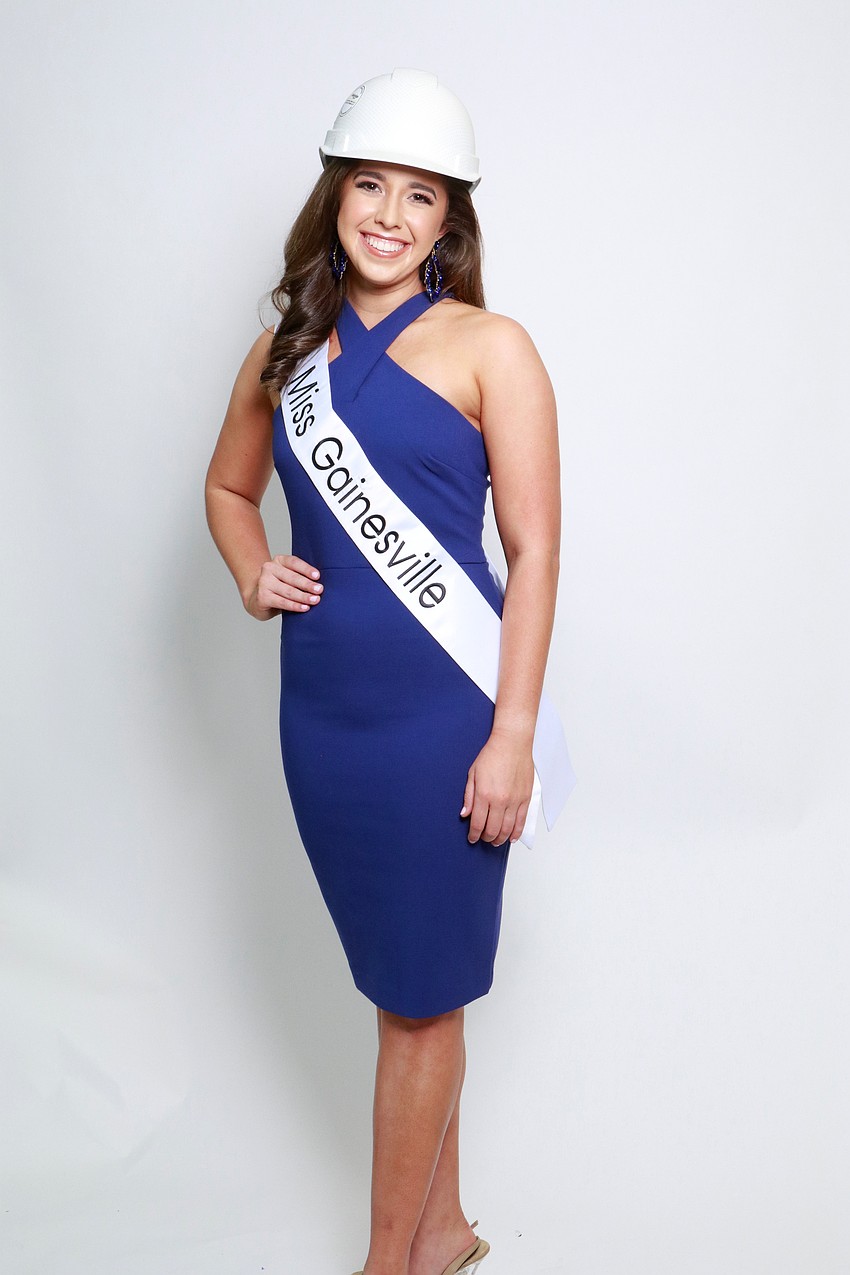
She’d always thought, given the environment she grew up in, that she would grow up to be engineer. But once the coursework began, it became clear that she wanted something else for her life. “I wasn't loving it.”
It was at about this time that one of her friends introduced Nickel to UF's renowned construction management program.
According to the Rinker School’s website, its core curriculum focuses on “understanding the construction management process through a foundation of technical, managerial and business courses.”
Nickel was aware of the program but the friend described it as being a third focused on business, a third focused on people skills and a third focused on engineering.
“I made the switch and I just fell in love with it because the way he encapsulated it in that description is kind of exactly what it is,” Nickel says.
“It is a little more human oriented — still being able to apply that math and science, but at the end of the day, working in more of a team environment and getting to communicate with people and work towards the common goal. Which I love.”
When Nickel first started in the construction management program, females made up about 20% of the students, says Cox. The program is about 30% female today.
Despite its success in bringing women into the field, the Rinker School is not reflective of the industry as a whole, though.
A September 2025 study by the National Association of Home Builders found that women made up 11.2% of the construction workforce in 2024, “the highest share in two decades.”
The 1.34 million women working in construction is a rebound after a dip following the 2008 economic downturn, which saw the female workforce drop from 1.13 million in 2006 to 802,000 in 2012.
Most of the women in the industry, the study shows, work in roles such as office and administrative support, management and business and financial operations. About 521,000 women are in management, professional and related occupations.
While Nickel acknowledges there has been progress, she believes, as do most, that there is still a significant gender gap — one of the reasons she gives so much time to trying to help attract new talent.
“She was just a wonderful student, and obviously she did quite well because she has performed so well in the industry and comes back and has made a true commitment to continue the relationship with the school through her professional career path,” says Cox.
That practicality means operating in an industry that is in transition when it comes to accepting women.
Nickel says most of the challenges she has encountered stem from assumptions rather than overt hostility.
As a young woman she sometimes faces an initial skepticism about her experience or expertise with people often assuming she works in marketing rather than project management.
“I think sometimes people are still adjusting to the reality that women are working in this field, women are succeeding in this field, and women are becoming leaders in this field,” Nickel says. “There's still a large gap between, male and female ratio on every level, but we're seeing more and more women stepping into this field.”
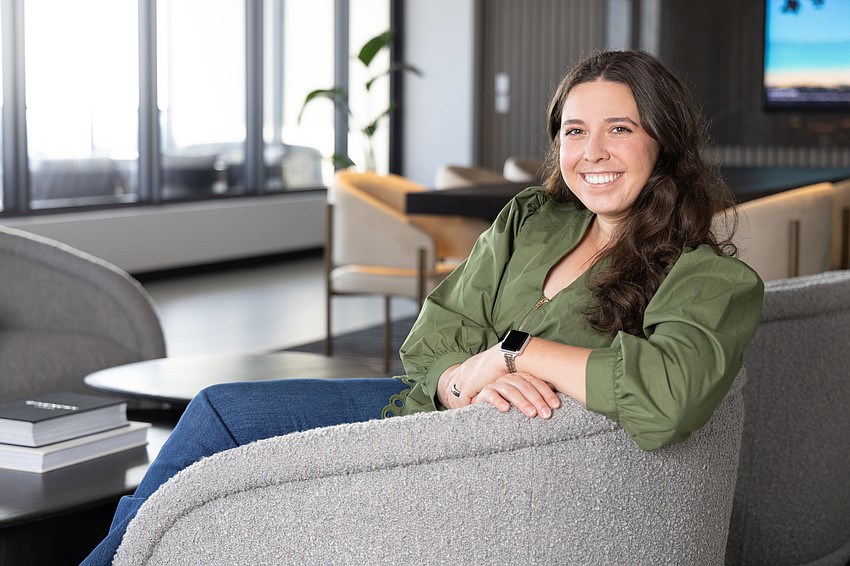
Rather than focusing on barriers, though, she emphasizes preparation and being the best she can be at the job.
Early on with JE Dunn, she was advised “knowledge wins.” The saying is not about winning per se. It’s about knowing the drawings, the plans, the schedules and demonstrating she understands what is being talked about.
That’s because when dealing with people who are standoffish or difficult, that knowledge, and being able to demonstrate and communicate her understanding, is how you win doubters over.
But it’s also a matter of attitude and approach.
Nickel says she often feels there is an initial bias among some of the people she works with on projects. But she genuinely believes that most aren’t ill-willed.
“I have to choose to believe that, right? Or else it's going to be a really long, exhausting, negative road, and that's just not me,” she says.
“I don't like to show up thinking, ‘Oh, everybody's against me and I'm the victim.’ But yeah, I do think sometimes there is a different standard, whether it's intended or not, that has to be overcome.”
That gets us back to the reasons Nickel loves her work and why she feels it is important to mentor younger women considering joining her in it.
It’s a challenging job in a challenging field, but it’s rewarding seeing something you helped build standing tall. And Nickel knows someday, a young girl is going to drive by on her way to school or practice watching, in wonder, as something comes out of nothing. Just like she did when she was girl.
And with that knowledge, she knows, comes responsibility.