Top Entrepreneur

Natalia Levey: Hospitality-centric leader has a soft spot for 3D printing

"If there's an error that happened, then we look at it, and we address it. … I like to sort of reframe that as opportunities." –Natalia Levey, Hi Hospitality Group


  • By Louis Llovio
  • | 5:00 a.m. May 15, 2026
  • | 2 Free Articles Remaining!
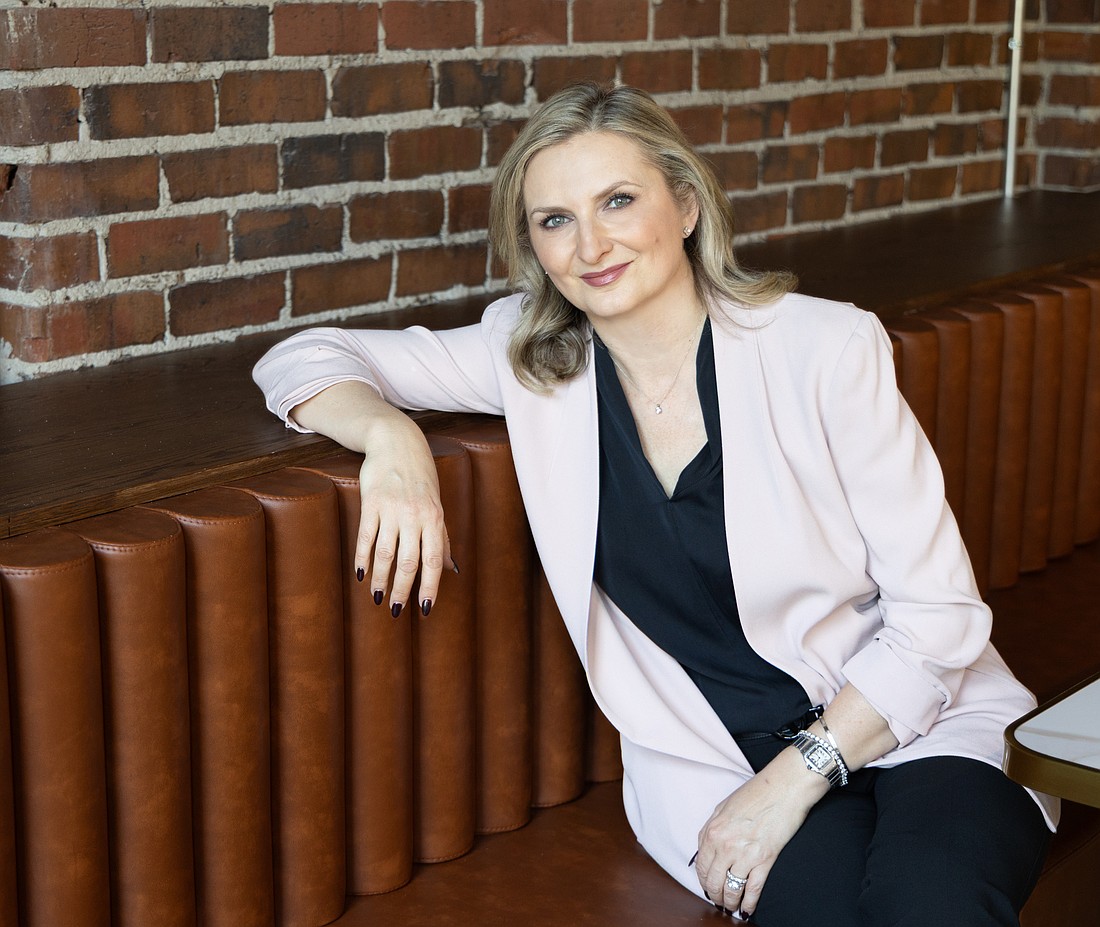
Natalia Levey is the founder of the Hi Hospitality Group. Her latest venture — and current focus — is a St. Petersburg food hall.
Photo by Mark Wemple
  • Tampa Bay-Lakeland
  • Share

Entrepreneur/company

For a long time now, Natalia Levey, 47, has been known as a pioneer of sorts in the food scene in both the Tampa Bay and the Sarasota/Manatee market.

Her Hi Hospitality Group owns four eateries in Sarasota and Bradenton, places the company calls “bespoke dining destinations” on its website.

Levey, who was born in Russia, moved to the U.S. in 1999 and graduated from the Art Institute of New York, first got into the restaurant business in 2018. That's when she joined the ownership group of Speaks Clam Bar in east Manatee County with her brother-in-law. He left the business, which at the time had a second location, in St. Armands Circle, in 2020. She renamed it Hi Hospitality soon after.

(The company’s current roster includes the east Manatee Speaks Clam Bar; Kojo, a modern Asian restaurant on Palm Avenue in downtown Sarasota that includes the company’s Bar Hana concept; and Palm Avenue Deli, a New York-style deli next door to Kojo. The St. Armands Speaks Clam Bar closed in March.)

Her latest venture is a food hall in Pinellas County named Central Park St. Pete. It’s a multi-level food, beverage and entertainment destination on Central Avenue that, she says, integrates technology with hospitality to streamline guest experiences.

The five-story space, which began a phased opening in February, features nine chef-driven food concepts and four beverage concepts as well as a private club. Central Park St. Pete is a roughly $20 million project.

Central Park is in the former Woolworth building and was built from the ground up. Levey says the hope was to save the building and that the company spent time exploring options. But to ensure structural integrity they were only able to save one wall. Everything else, she says, was newly built.


2026/2027 outlook

Levey’s attention for the foreseeable future is getting Central Park St. Pete running smoothly.

“The outlook is to just focus on bringing that building to life and streamlining all of the all of the systems,” she says.

As the food hall gets established, Levey is spending much of her time in St. Petersburg and says a big part of the job is connecting Hi Hospitality with the community.

“We’re the new kid on the block so we’re making new friends in St. Pete and continuing to strengthen community relationships in Sarasota and Bradenton,” Levey says adding that she’s eager for diners “to see all that’s coming this year.”


Tipping point 

Getting the right leadership team in place for Hi Hospitality has been a key step. 

Having the correct people in the right positions took time, Levey says, but it allows the company to create a culture and put systems in place so the brands can thrive.

“Once we had those in place, it's sort of just translates from there,” she says.


Natalia Levey is the founder of the Hi Hospitality Group, which operates eateries in Sarasota, Bradenton and St. Petersburg.
Photo by Mark Wemple

Biggest mistake and what you learned from it

Levey doesn’t look at decisions that don’t go as planned as mistakes. She sees them as a chance to get better.

Given that approach, she doesn’t have one singular incident that changed the trajectory of the company. Instead, the missteps that were made became lessons that helped Hi Hospitality grow to what the company is today.

If you address it negatively, it's a mistake, Levey says. If you address it as a learning opportunity, it's progress.

“I don't necessarily want to focus on the word mistake,” she says.

“If there's an error that happened, then we look at it and we address it if it needs to be addressed. Do we need to implement a new system or just completely stop doing something? I like to sort of reframe that as opportunities.”


Entrepreneurial advice 

Look at the numbers and don’t take things personally. 

One of those is easier than the other, Levey says.

It may sound simple, but looking at the financials — which provide cold, hard facts — is the key to running the business. She says that knowledge gleaned from financial documents allows her to understand everything that is happening within Hi Hospitality, giving her a realistic perspective of how the company is doing and where improvements can be made.

“My business coach made me fall in love with spreadsheets and doing estimates and things like that,” Levey says.

She learned not to take things personally from the book “The Four Agreements: A Practical Guide to Personal Freedom," by Don Miguel Ruiz. The bestselling book, based on ancient Toltec wisdom, was notably a go-to guide for another Tampa Bay area leader: Super Bowl champion Tom Brady, who often cited The Four Agreements as life-changing throughout his career.

“Sometimes people are just having a bad day,” Levey says as one takeaway from the book.

She describes herself as an empath who cares deeply about how people feel. That’s a trait, though, that can make it difficult to separate personal feelings from business “because business is such a big part of a person’s self.

“It's kind of hard not to take things personally because of how much our whole team cares about everything,” Levey says. “Me, I had to learn to separate that.”


Hiring criteria

Ego, Levey says, is a the biggest turnoff when hiring people. 

Hi Hospitality, especially when hiring for leadership positions, looks for people who care and take ownership of projects. That means finding employees who are protective of the culture and feel part of the bigger team when they start.

“We look for humility,” she says. “I feel like most of us really are willing to jump in and do pretty much anything for each other. So, yeah, I think the ego is a big turn off.”


Up-at-night worry

“Just making sure that our team is OK.”

Levey says Hi Hospitality has more than 300 employees and those people count on her and the leadership team to make the right decisions.

“They put so much faith in us to make sure that they have jobs,” she says.


author

Louis Llovio

Louis Llovio is the deputy managing editor at the Business Observer. Before going to work at the Observer, the longtime business writer worked at the Richmond Times-Dispatch, Maryland Daily Record and for the Baltimore Sun Media Group. He lives in Tampa.

Latest News

Sponsored Content