- March 6, 2026

-
-
Loading
Loading
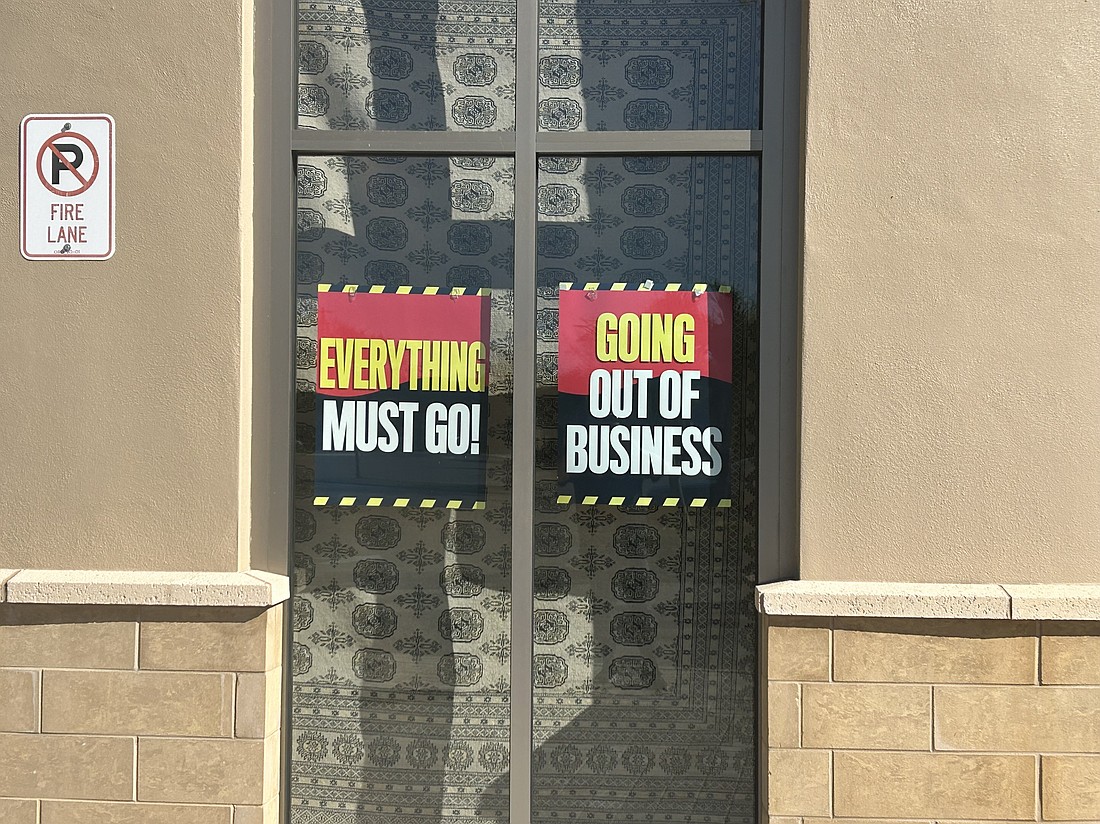
In the early weeks of 2026, news started trickling out: major retailers were shutting down stores nationwide.
The reasons varied. But the results were the same. Storied brands, Saks Fifth Avenue and Eddie Bauer among them, announced stores were closing locations. As did other familiar brands like GameStop, Francesca’s and furniture store chain American Signature.
Locally, Orlando-based Darden Restaurants said it was doing away with Bahama Breeze Island Grille, closing 28 restaurants, half of which will be rebranded. Among those scheduled to be rebranded are four in the region, in Tampa, Lutz, Brandon and Fort Myers.
And the closures look to be continuing.
Commercial real estate information company CoStar Group says in a just released retail forecast that “store closures are expected to increase in the first half of 2026 as the bifurcated retail sales environment pushes certain tenants to trim locations.”
While the doom and gloom is not wholly unique to this time of year, it does raise questions about the remainder of 2026 and how landlords and consumers will be affected.
The questions: Are all these closures just a blip? Are they one-off adjustments to the market or do they represent a trend? Or are they an indication of deeper economic troubles?
Some local veteran real estate executives say the situation isn’t as fraught as the it may seem.
What’s happening is the normal cycle of store openings and closures, led mostly by publicly traded companies that answer to shareholders.
The reality, says Charlie Boscarino, CEO of LQ Commercial Real Estate Services and principal and managing director for LQ’s Tampa Bay market, is that space is being absorbed almost as quickly as it becomes available. (Boscarino was previously a long time executive with Bradenton-based retailer Bealls.)
The national retail vacancy rate currently sits at roughly 4.4%, near historic lows, says Boscarino. That shortage of available space has created fierce competition for second-generation storefronts — particularly large boxes vacated by chains like Big Lots and JoAnn.
When Big Lots began shuttering stores in 2024, he says, a line of off-price retailers formed, eager to take over those locations. Companies like Bealls, Burlington, Marshalls and Ross Dress for Less emerged as aggressive backfill candidates, capitalizing on a consumer shift toward bargain hunting.
The appeal of off-price is behavioral, which makes the sector resilient because it draws in-person shoppers.

Unlike traditional department stores or online retailers, where shoppers expect to find a specific size and color, off-price retailers thrive on unpredictability. Consumers may arrive looking for a pair of Nikes and leave with a pair of dress shoes and two shirts because the deals were too good to pass up.
That dynamic makes these stores far more resistant to e-commerce disruption. “It’s the thrill of the hunt for off-price retailers because you have to go in,” Boscarino says. ‘You have to ‘shop the store,’ and you can’t replicate that experience online.”
The same logic applies to a second category increasingly filling former retail boxes: experiential tenants. Gyms, trampoline parks, pickleball courts, entertainment centers and movie theaters are taking over spaces once reserved for apparel and furniture.
In one St. Petersburg shopping center, Boscarino says a former Badcock Furniture & More was converted into a 24,000-square-foot pickleball facility, Dill Dinkers, after multiple recreational operators expressed interest.
In the past, landlords and anchor tenants often resisted those types of entertainment uses, concerned they would monopolize parking without driving retail sales. But with limited new construction and persistent demand for space, that resistance is fading.
“Landlords are now saying, ‘There’s nobody else looking. Backfill it,’” Boscarino says.
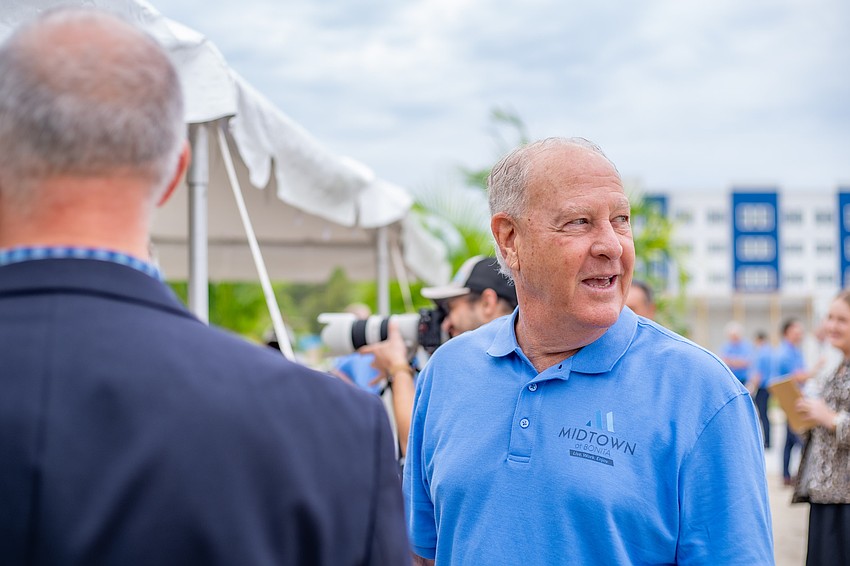
Andrew Zuckerman, president of The Zuckerman Group, which is developing the 68-acre mixed-use development Midtown at Bonita in Lee County, agrees with the sentiment that retail is in better shape than headlines and announcements may show.
A fourth-generation real estate executive whose family has been in the business for more than a century, Zuckerman believes retail is currently outperforming other commercial sectors, including office and residential.
“I asked a very high-powered executive who operates all over Florida how he sees the market,” Zukerman says. “When I narrowed it to retail, he said it’s the best of all real estate markets. They’re bullish and buying.”
(He did not disclose who the executive was, saying it was private conversation.)
That optimism is proven by new facts on the ground: the developer announced last week that TJ Maxx and Ulta Beauty had signed leases for space in the pedestrian-friendly retail portion of the project currently under construction.
While a Zuckerman spokesperson declined to share how much space the two retailers leased, nearly 100,000 square feet of retail space is accounted for in the center, with negotiations underway for the remaining space.
Midtown at Bonita is on Bonita Beach Road, just off Interstate 75. When complete, it will include 315,000 square feet of retail, restaurant, wellness and entertainment space, along with apartments and a planned hotel on the site.
Construction on the retail portion began in November, with the first tenants set to open early next year.
While conversations about retail often — and rightfully — center around how e-commerce has affected brick-and-mortar, Zuckerman and others believe this shift toward experiential and service-oriented uses combats that. In other words, businesses that cannot be easily replicated online.
“You can buy a lot of things on the internet,” Zuckerman says. “But restaurants, fitness, personal services — those are destinations. We believe we’re creating a true destination.”
Which gets us back to the main question: What do those early closures this year really tell us about the state of the retail market?
While developers and real estate executives are by nature — and necessity — optimistic, the CoStar forecast, too, shows some bright spots, even with the prediction of more closures.
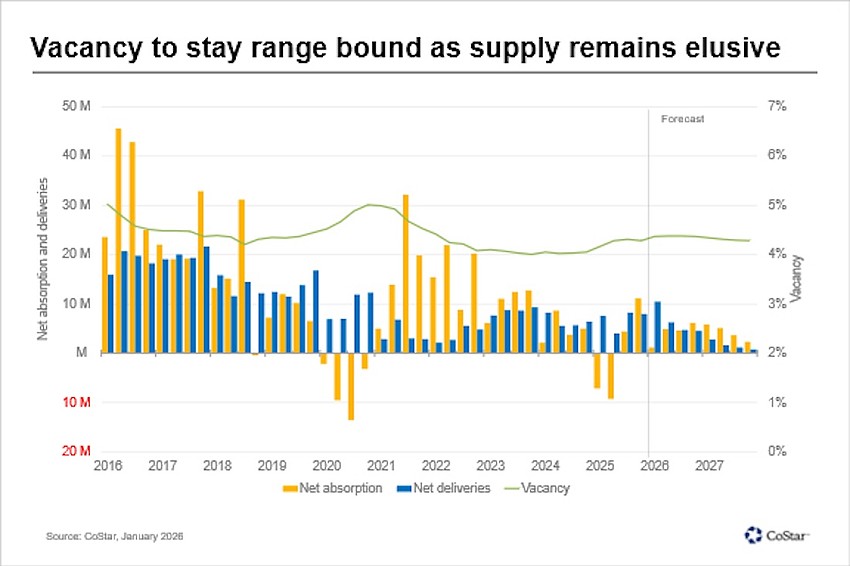
According to the report, U.S. retailers vacated 13% less space in the fourth quarter of 2025 than in the third quarter “as the pace of store move-outs moderated as bankruptcy-driven closures tapered off.”
While the recent store closures following the holiday shopping season — and which are likely to continue — will lead to a national uptick in the vacancy rate, CoStar expects it will decline again in the latter half of this year and into next.
But, as it always does with retail, the real answer to what will happen in 2026 does not lie with economists or real estate executives. It’s is in the hearts and minds — and pocketbooks — of the consumer.
And there are reasons to be concerned, says Brandon Svec, CoStar’s national director of retail analytics. “Continued uncertainty persists around the impact of tariffs, and although retailers and suppliers have largely absorbed these costs so far, many are signaling imminent price increases, which could further strain household budgets and dampen discretionary spending.”
So, the state of retail really boils down to that. If consumers are willing — and able — to spend, things will go well. If they are not, well, the economy will suffer and some retailers will make adjustments, likely meaning more store closings.
In other words, only time will tell.
Store frontRetailers and restaurants that have announced closings in recent months | ||
| Company | Stores | Time frame |
| Francesca's | Roughly 400 | 2026 |
| Wendy's | About 300 | First half of 2026 |
| Papa John's Pizza | About 300 | Later in 2026 through end of 2027 |
| Pizza Hut | 250 | First half of 2026 |
| Carter's | 150 | Announced in October, to continue through the next three years. |
| Macy's | 150 | Announced in January 2025 to continue through 2026. |
| Kroger | 60 | Announced in June to continue for 18 months. |
| Saks Off 5th | 57 | Early 2026 |
| Yankee Candle | 20 | Announced in December lasted through January. |
| Saks Fifth Ave. | 8 | Early 2026 |
| Source: Business Insider, Yahoo! Finance | ||