- March 3, 2026

-
-
Loading
Loading
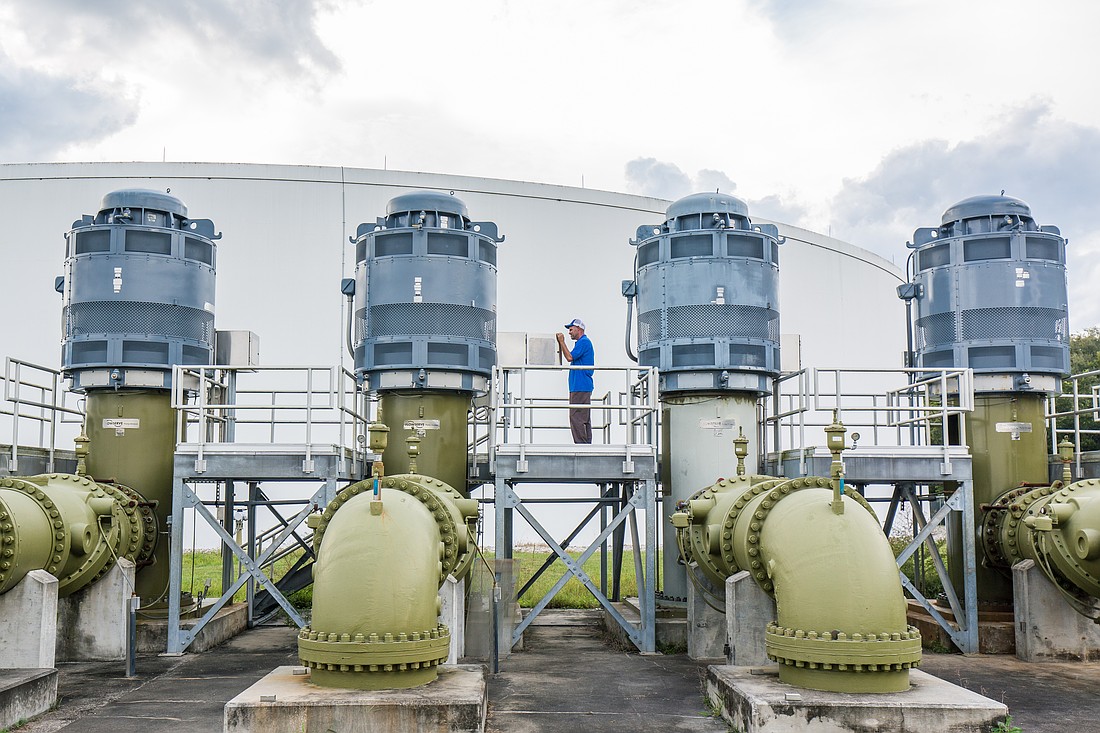
Tampa Bay Water General Manager Chuck Carden remembers when the plot of land in east Hillsborough County that now holds its "cornerstone" treatment facility was home to a makeshift rodeo. People there could pay money to ride bucking broncos and bulls.
That was before explosive population growth across the region led Tampa Bay Water to purchase the land and build its Regional Surface Water Treatment Plant in 2003. The area’s population has continued to grow, with horses giving way to housing and demand for clean drinking water. That spurred a major expansion of the plant in 2010, about doubling its capacity.
On Monday, officials with the water utility held an official groundbreaking ceremony for the plant’s second, and likely final, expansion — a $181 million project that will increase the plant’s treatment capacity by up to 12.5 million gallons per day.
“This plant has really gone from an open field to becoming the cornerstone of our water supply system and has gone a long way to reduce our dependence on groundwater as our main water source in this region for about 2.6 million thirsty folks,” Carden says. “When we reduced groundwater pumping we replaced much of that supply with river water from this plant, which played a major role in the recovery of lakes and wetlands in our area.”
The plant started small, processing 66 million gallons of water a day when it opened, and was then expanded to process a maximum of 120 million gallons of water each day. With the new expansion, the plant will be able to treat about 145 million gallons of water each day without increasing permitted river withdrawals by maximizing the use of rainfall when available, Carden says.
The expansion, approved in April, is needed to keep up with rampant population growth throughout the six municipalities served by Tampa Bay Water — Hillsborough, Pasco and Pinellas counties along with the cities of New Port Richey, St. Petersburg and Tampa. The build out is expected to be completed by 2028 and fulfill the region’s drinking water needs through 2033. Then, it will likely be up to Tampa Bay Water and the governments it serves to build another facility somewhere new, Carden said.
Expanding TBW’s Tampa Bay Regional Surface Treatment Plant is just one of nine upcoming construction projects the water utility plans to undertake this year to keep up with the projected demand through 2033, TBW spokesman Brandon Moore says. The Tampa Bay region is projected to need up to 38 million more gallons of water each day by 2043, according to TBW’s long-term Master Water Plan.
Perhaps the biggest of those projects is the South Hillsborough Pipeline, a $505 million effort to lay 26 miles of pipe to deliver drinking water to a corner of the region experiencing the most explosive growth: from Brandon to Lithia to the Wimauma/Balm area. Both the pipeline and the expansion to the surface water treatment plant are expected to be completed in 2028 and will connect to each other, forming a horse-shoe-like delivery system around Tampa Bay delivering groundwater, river water and desalinated sea water that’s turned into drinking water for its member municipalities, Carden says.
“I think of our system like a bus and this plant is going to be the first stop, where the bus has got water getting on and water getting off on its journey,” Carden says. “Our member municipalities all have different stops along the same route.”
Construction on the plant is being carried out through a public-private partnership with Veolia Water North America and CDM Smith — the same team that built the plant and carried out its expansion.
“In a nutshell, with the expansion we are expanding the supply capacity by tapping into our raw water tanks and bringing another pipeline in to feed the plant to get that extra water to treat,” says Mike Kuhn, Veolia’s Director of Capital Management.
The surface water treatment plant pulls its water specifically from the Tampa Bypass Canal, the Hillsborough River and the Alafia River, Carden says, and now will be able to take advantage of the roughly 50 inches of rainfall the Tampa Bay region receives each year. The new expansion will bring the number of water treatment systems at the plant from four to five and introduce three additional filters to the 15 currently in place.
St. Petersburg City Council Chairwoman Lisset Hanewicz serves as Chair of Tampa Bay Water’s Board of Directors and calls the surface water treatment plant “one of the biggest environmental successes in our region and our state.”
"This plant" Hanewicz adds, "makes it possible to reduce groundwater pumping to meet the needs of the environment while simultaneously meeting the growing drinking water needs of our region.”