- September 24, 2026

-
-
Loading
Loading
Pick up any newspaper or turn on the local television news and chances are pretty good you’ll see a story about a data center. That’s because they’re all the rage these days.
And rage is the right word when it comes to discussions of these massive warehouse structures being proposed — and often rejected — to support the AI revolution.
The concern most often cited for the opposition is data center’s drain on water resources and how they tax electrical systems, raising costs for residents. Proposals, or at a minimum data center chatter, have popped up from Polk to Collier counties. Some jurisdictions, in response, have even thrown around the idea of a developer's nightmare: a moratorium on data center projects.
But in DeSoto County, a Dallas, Texas, developer behind a planned data center project on the site of a former natural gas plant says his firm's project is different. The pitch is that it wants to build is self-sustaining and environmentally friendly.
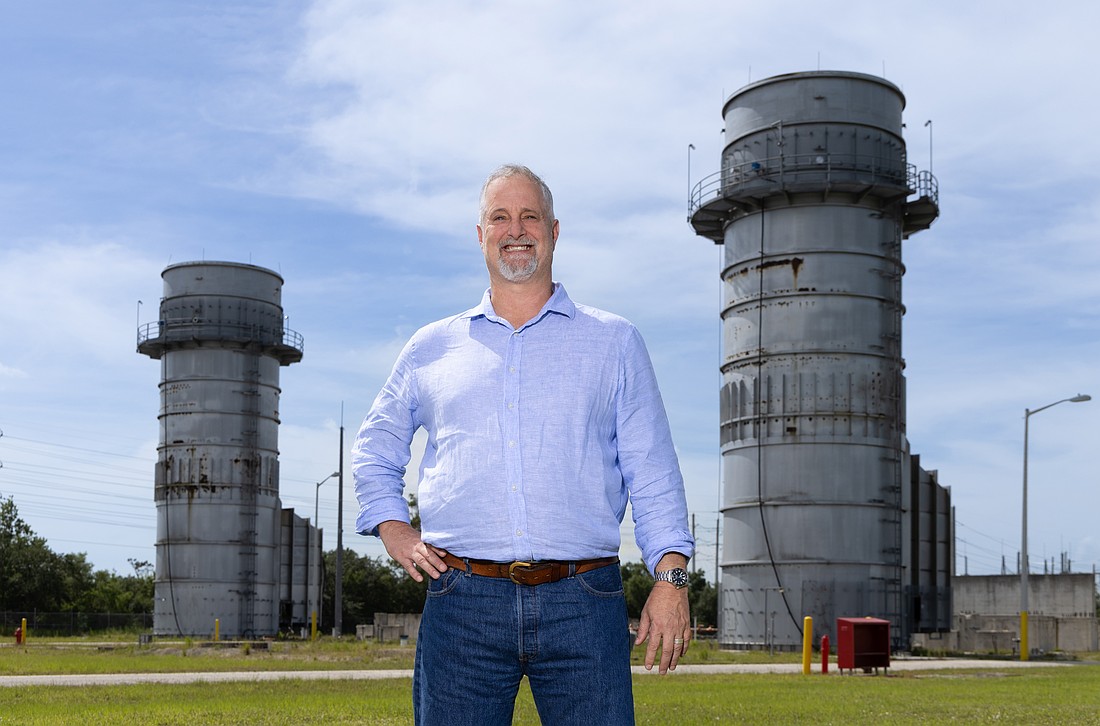
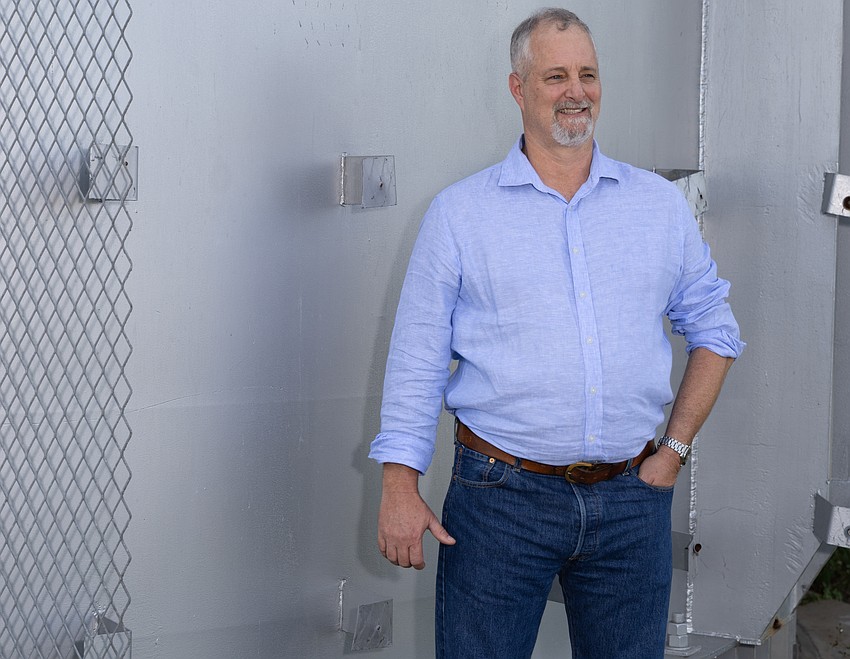
“We’re very proud of the fact that this project is going in as a sustainable project, from both water, energy,” says Jon Brown, CEO of DCIP Group, the developer. DCIP was formed about two years ago by investors with a history in developing projects for international trading in the metals industry. It bought the 34 acres where the plant operated in 2024 for $2.23 million.
“The community lived with that industrial use for years,” he adds. “We have an obligation to be a better neighbor than that site ever was. And we intend to be.”
What DCIP has proposed is a large-scale data center campus in DeSoto that when completed will span 1,315 acres. The site is northeast of North Port — 93 miles from downtown Tampa and 51 miles from downtown Fort Myers.
Where it differs from other projects — and how Brown and DCIP hope will alleviate fears — is in how it generates power and uses water.
Plans call for the data center campus to address water issues by relying on treated reclaimed wastewater from the city of Arcadia’s sewer treatment system, as well as building ponds on the site to capture stormwater runoff on its property, rather than water diverted from the city.
Brown says groundwater is a last resort and, according to a fact sheet from the developer, if it is used “would be metered and monitored in coordination with the Southwest Florida Water Management District.”
“This is not a workaround,” the company says about its water plan in the fact sheet, “It is a deliberate design choice that reduces demand on shared water resources rather than competing with them.”
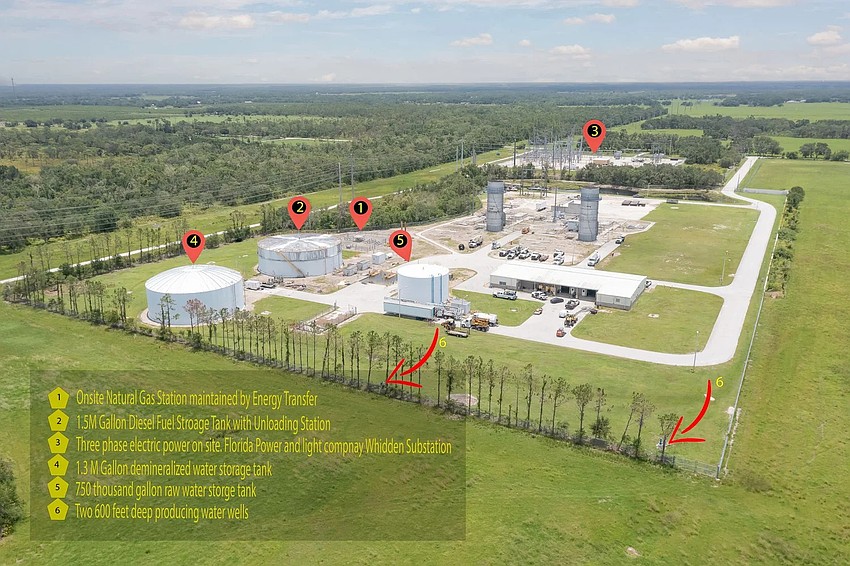
As for power generation, rather than rely heavily on local utilities, DCIP plans to build its own power plant on the property — a move Brown says will avoid driving up electric bills from residents and straining the local grid, drawing from it only during off-peak hours.
DCIP’s ambitious plan raises a valid question: Is it possible to build a sustainable AI data center?
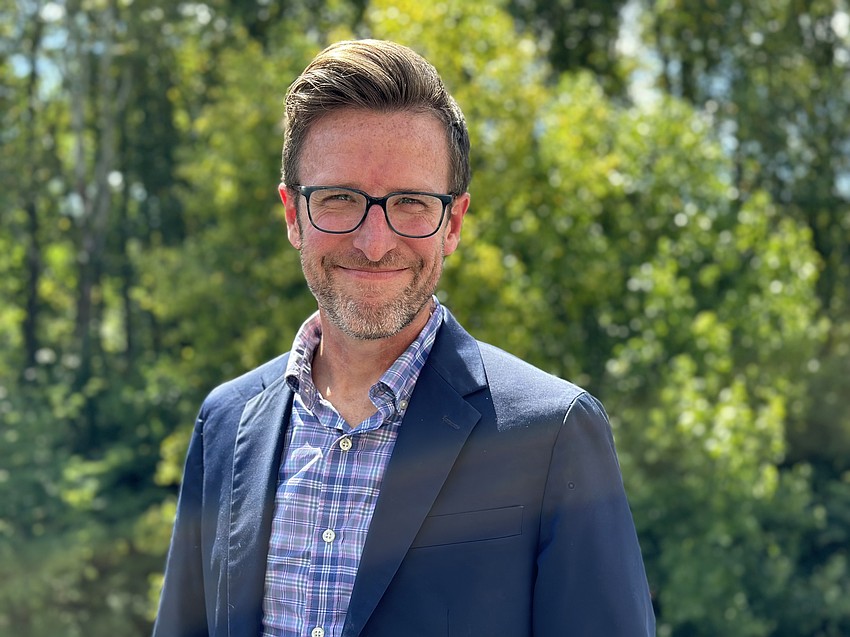
“The key to that question is defining the term sustainable,” says John Farner, executive director of land and water at the Lincoln Institute of Land Policy, a nonpartisan think tank based in Cambridge, Massachusetts.
That’s “because the term sustainability, sustainable, has different definitions for different people, different audiences. As we look at it, we look at it from a social, economic and environmental perspective.”
The institute — and Farner — have been watching the development of data centers for years. Like many others, he and the organization see data centers as a natural outgrowth of the explosive advancement of AI.
Data centers are massive facilities that house tens of thousands of computer servers. While they have been around for a long while to support cloud services and other technologies, modern facilities to service AI will sit on huge plots of land, sometimes hundreds of acres, and are called hyperscalers. (A hyperscale data center, according to IBM, is a massive data center that provides extreme scalability capabilities.)
These facilities take a great deal of water and electricity to run and keep the thousands of servers they house cool.
Just how much power do they use? In a report published on its website last year, the Lincoln Institute found that a Meta (formerly Facebook) data center in Louisiana, when completed, is expected to draw more than twice the power of the entire city of New Orleans. Another Meta data center planned for Wyoming will use more electricity than every home in the state combined, the report says.
“Even a mid-sized data center consumes as much water as a small town, while larger ones require up to 5 million gallons of water every day — as much as a city of 50,000 people,” the report says.
But Farner says that while the amount of power and water used is huge, the way for a community to look at whether a particular data center is sustainable is to what its net positive benefits are for the locality where it is being built.
“I think the answer to your question is, the devil is in the details,” Farner says.
While the idea of data centers spurs a lot of emotions, there are different policy and planning aspects to their development that need to be addressed in order to achieve a sustainable project, he says.
With the DeSoto data center, one of the arguments DCIP makes is about economics.
“DeSoto County is the sixth poorest in the state. You start at the bottom, you go up six, you hit DeSoto County,” says Brown.
“As far as revenue to the county, at their current millage rates, it could be 50% of their current county budget and tax revenue from Phase 1. So, the impact to the county from an economic standpoint is very, very, very large, especially given what's going on with property taxes in Florida.”
While economic promise is one of the factors Farner says communities need to consider carefully, it should only be a part of the consideration.
The question to ask, he says, is: Does the one investment a developer makes assure a long-term net positive, whether it be environmental or economic, for the community?
Because the needs for each community looked at for data centers is different, that requires frank conversations between the public and government officials, conversations free of behind-the-scenes dealings that could lead to distrust. “It begins," Farner says, "with transparency and community-driven decision making.”
While the thought of finding sustainability in a data center may still sound, well, absurd to some, there is at least one private-public partnership that has shown that a facility can bring positive usage to a community.
It’s in Ireland, and its called The Tallaght District Heating Scheme.
According to officials from the Sustainable Energy Authority of Ireland, the plan involves Heat Works, a nonprofit utility owned by the South Dublin County Council, and a nearby Amazon Web Service data center.
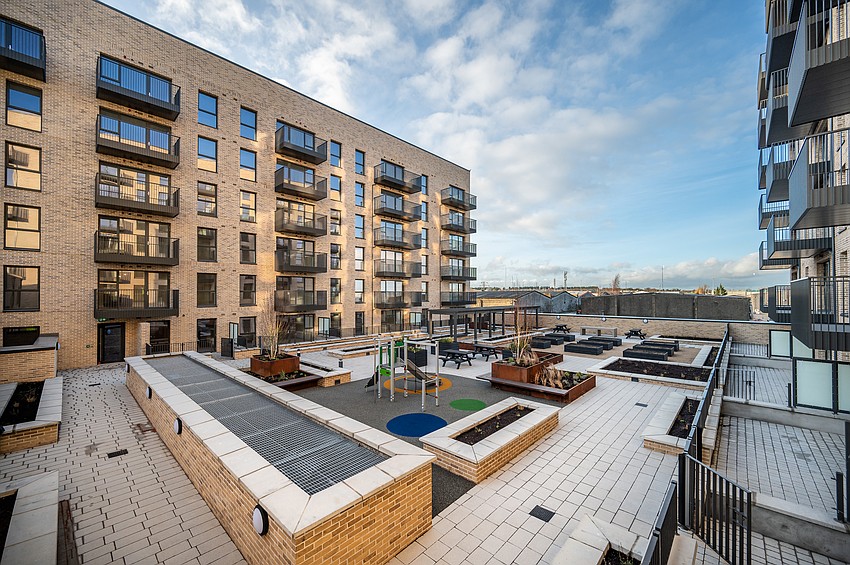
Through the partnership launched in 2023, AWS provides waste heat from its facility free of charge to Heat Works, which then delivers low-carbon heat and hot water through insulated pipes to buildings connected to the network.
When it launched in 2023, it delivered 3,770 megawatt hours. (According to the U.S. Energy Information Administration, a megawatt hour equals 1,000 kilowatt-hours or 1 million watt-hours, enough to power 33 homes for an entire day.)
In 2024, the partnership saved 1,264 tons of carbon and another 1,421 tons of carbon in 2025.
Back in DeSoto, the project — despite its promises of sustainability and self-sufficiency — has not gotten a warm welcome from residents.
At a DeSoto County Commission meeting June 9, a large group of residents spoke out against it despite the matter not being on the agenda. And on the road at informational meetings, it’s gotten a mixed response, says Brown.
“People who are worried about it or are negative toward it have concerns,” he says.
“Some are valid. Obviously, you should be concerned about noise. And you should be concerned about your power bill. And you should be concerned about the water in the community.
“We've solved for all those issues, and I've been able to explain it to people in these meetings. They come in negative, and sometimes they leave on the fence, and sometimes they leave positive.”
As for the approvals needed to move forward, DCIP is working with DeSoto County to get roughly 1,200 acres rezoned as planned unit development, which the company says gives the county a voice as the data center campus is built out.
Of that acreage, 20% will be used for the actual data center campus, the company says. There are wetlands and floodplains that will be kept in place.
The first phase is expected to be about 300 megawatts and Brown says data center construction costs are more than $1 billion per 100 megawatts. In this case, that’s before adding the cost to build the power plant. With the power plant included, he estimates Phase 1 at $5 billion to $6 billion.
(Since AI technologies require such a large amount of computing power to run, the data centers themselves need large amounts of power — hence the focus on megawatts and gigawatts in data center infrastructure. Having access to this necessary amount of power is a critical consideration for hyperscalers when and where they build a data center.)
The full buildout will include six phases over roughly a seven-year period. Brown stresses, though, that the company will not build later phases on spec, putting off construction until there is a demand from the market.
Brown says tenants, which could range from large companies to small businesses, will lease the data center on a negotiated rate per kilowatt of based on how much usage they need.
“We expect (the approvals) to happen early Q3, so that's where we are,” Brown says.
“As far as being able to take this to where it will be ready to start engineering and getting shovel ready, we can't do any of that work until we have all the permissions in place.”