- September 18, 2026

-
-
Loading
Loading
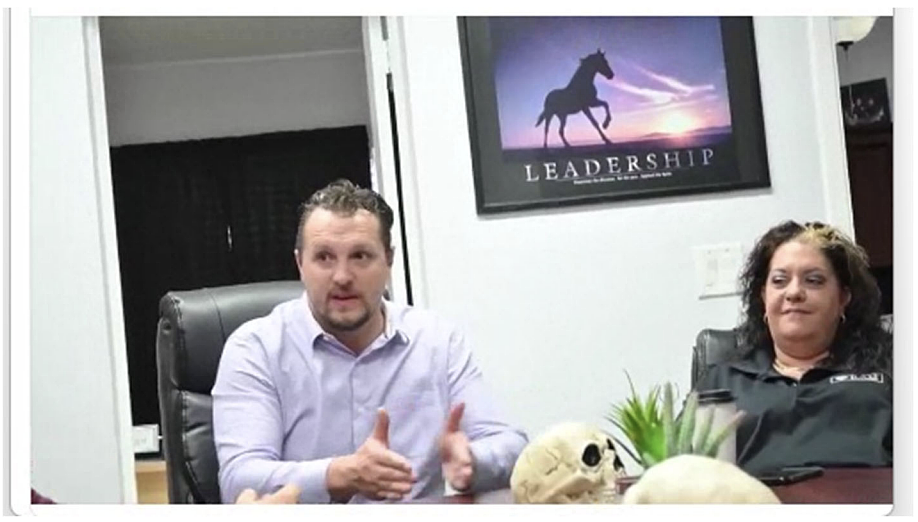
A Port Richey-based real estate investment trust and its two founders defrauded more than 5,500 investors nationwide in a $152 million investment scheme while diverting millions of dollars for private jets, luxury goods, adult nightclub outings and other personal expenses, federal regulators alleged Wednesday.
The U.S. Securities and Exchange Commission filed a civil lawsuit July 29 in the U.S. District Court for the Middle District of Florida against RAD Diversified REIT Inc., founder Brandon "Dutch" Mendenhall, 47, co-founder Amy Vaughn, 48, and The Seminar Solution LLC, a company the founders owned.
In a 39-page complaint, the SEC alleges the defendants raised at least $152 million from investors between November 2019 and March 2024 by falsely portraying the company as a profitable real estate investment trust with steadily increasing share values and reliable liquidity. In reality, though, the business was suffering steep losses and increasingly depended on new investor money to stay afloat.
The SEC's complaint seeks civil penalties, repayment of allegedly ill-gotten gains, permanent injunctions and orders barring Mendenhall and Vaughn from serving as officers or directors of public companies.
According to the complaint, RAD Diversified swindled investors through a business that bought, renovated and rented residential properties, primarily in Florida and Pennsylvania, while also owning homes in Texas, California, New Jersey, Idaho and Delaware. At its peak, the company controlled more than 550 properties.
Regulators allege Mendenhall and Vaughn marketed the investments through social media, podcasts, seminars and a 60-person internal sales force, frequently invoking Christian values, patriotism and support for military veterans to build trust with prospective investors.
The company’s Instagram account name was @redefinedamericandream and its page carried the tagline, “We’re a cultural and financial shifting of consciousness for Americans. If you don't love this country, go somewhere else.”

The SEC’s complaint says investors were told the company was profitable and that "zero investors have ever lost money," despite annual losses that included at least $31 million in 2022 and $22 million in 2023. Annual rental income, according to the complaint, never exceeded $5 million.
The agency also alleges the company misrepresented how it valued its shares. Investors were told the stock price, which increased from $10 to $25.04 between 2019 and 2023, was based on independent third-party appraisals. Instead, the SEC alleges the valuations were prepared by Mendenhall's brother, the company's vice president of real estate operations, who lacked appraisal experience and relied on online estimates rather than professional appraisal standards.
According to the complaint, the company also understated its mortgage debt by tens of millions of dollars when calculating its net asset value and stopped updating its share price after July 2023 despite mounting financial problems and widespread foreclosures involving its properties.
By early 2024, RAD Diversified was facing at least 166 foreclosure actions involving roughly $47 million in debt, the SEC complaint says. The company and four affiliated entities later filed for Chapter 11 bankruptcy protection in March 2026, placing more than 300 properties under court supervision.
The SEC alleges investors were repeatedly assured they could redeem their shares but that redemption requests were routinely delayed or denied because the company lacked sufficient cash. The company froze redemptions in February 2024 while at least $3 million in requests remained outstanding, according to the complaint.
The complaint also alleges Mendenhall and Vaughn encouraged investors to finance investments using retirement accounts, home equity loans, credit cards and life insurance proceeds.
Federal regulators allege the company raised approximately $104 million through REIT stock offerings, another $23 million through high-interest "hard money loan" notes promising 20% returns and about $16.5 million through joint venture real estate investments marketed to members of an exclusive investment club.

Perhaps the most striking allegations involve how investor money was spent.
The SEC alleges the founders diverted approximately $54 million in investor funds to The Seminar Solution, another company they owned, and then misappropriated nearly $5 million for personal expenses.
According to the complaint, Mendenhall transferred about $1.4 million into personal accounts and used investor funds to pay roughly $691,000 in IRS tax obligations. He also charged nearly $197,000 to an American Express account for expenses that allegedly included custom clothing, jewelry, gift cards, golf outings, bowling, gun-range fees and adult nightclub services. The SEC also alleges investor money paid a nanny approximately $75,000.
The complaint alleges Vaughn transferred approximately $1.5 million into personal accounts while charging more than $214,000 in private jet travel, roughly $173,000 on luxury clothing and accessories, about $80,000 at jewelry stores and approximately $40,000 at adult nightclubs. Thousands more were spent on Ticketmaster purchases, private school tuition, pet care and pawn shop purchases.
The SEC further alleges that while Mendenhall and Vaughn publicly said they had deferred salaries and management fees to help the struggling company, they were simultaneously using investor funds to support their personal lifestyles.
Matthew Fornshell, an attorney representing RAD Diversified, and Paul Sisco, an attorney representing Vaughn, did not immediately respond to requests for comment. An attorney representing Mendenhall in the SEC case could not immediately be reached.
The civil enforcement action comes as Mendenhall faces separate legal troubles.
In May, a federal grand jury in Tampa indicted him on one count of mail fraud, alleging he submitted false information on a mortgage application to obtain financing for a $1.6 million home in Brandon. Mendenhall has denied those allegations through his criminal defense attorney, Mark Rankin. Vaughn has not been charged criminally. If convicted, Mendenhall faces up to 20 years in prison.
Separately, Florida Attorney General James Uthmeier has opened an investigation into RAD Diversified and issued subpoenas seeking records related to potential violations of the Florida Deceptive and Unfair Trade Practices Act, including investor communications, marketing materials, financial records and shareholder information.