Employee-owned businesses on the rise in Florida

A sometimes overlooked exit strategy, even with complications, is emerging as a strong option for business owners.


  • By Mark Gordon
  • | 5:00 a.m. September 4, 2025
  • | 2 Free Articles Remaining!
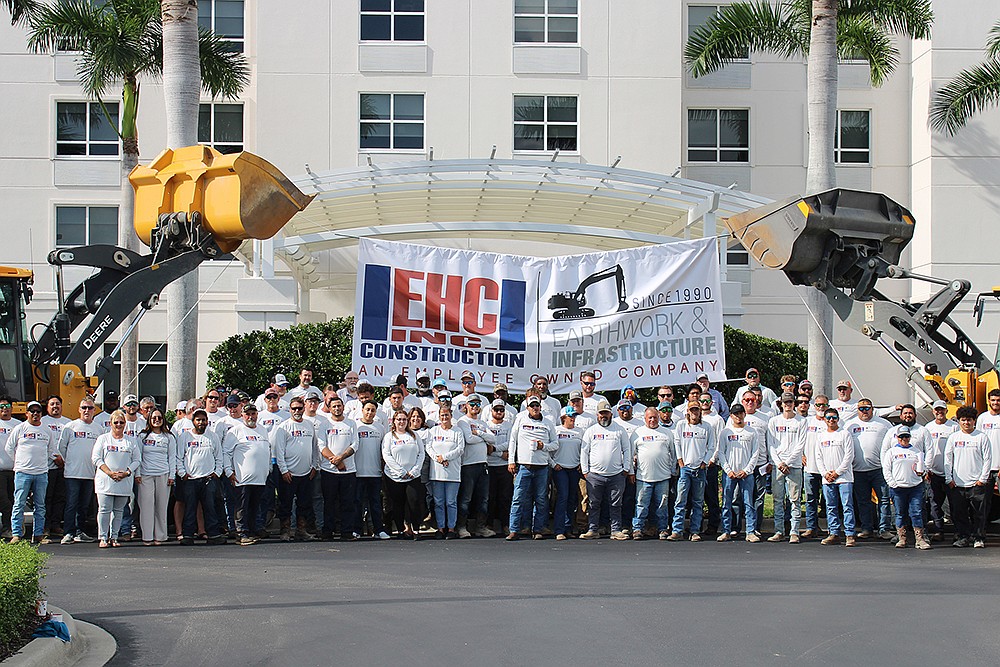
Fort Myers based EHC, closed a deal to become an ESOP in May. Pace Financial Group, with offices in Naples and Indianapolis, was a financial adviser on the sale.
Courtesy image
  • Florida
  • Share

Southwest Florida financial executive and entrepreneur George Cassiere is something of an evangelist for a specific kind of exit strategy for businesses — the Employee Stock Ownership Plan. 

Cassiere has specialized in these kinds of plans, known as ESOPs, for some 35 years, working on hundreds of transactions worth hundreds of millions of dollars. ESOPs, he says, are “incredible for the employees,” given the slew of benefits, particularly the financial freedom of owning a piece of a company you work at. Those benefits, he says, also make ESOPs “incredible for America.” And finally ESOPs, he adds, are great for business owners, who can exit with confidence their legacy will continue. 

Florida has never been a national leader in ESOPs. But Cassiere and other ESOP advocates believe the Sunshine State is on the verge of having an ESOP moment. This is partially because the idea of ESOPs in general are gaining traction, he says, and partially because the sheer number of business owners seeking an exit strategy, given the graying of America, already happening in Florida, is on the rise.

Florida's ESOP growth mirrors the national scene. An Aug. 26 Forbes article, “ESOPs are back in the spotlight — what advisors need to know in 2025,” says ESOPs, “long associated with manufacturing companies, are suddenly at the center of headlines again in 2025.” Cable provider Spectrum, through its parent company Charter Communications, recently offered a “groundbreaking” ESOP for 95,000 employees, Forbes reports. Global accounting firm Perelson Weiner also recently created an ESOP. “The message is clear,” Forbes writes: “Employee ownership is moving into the mainstream.”

“I think Florida was late (to) the game,” Cassiere says, “but now Florida is going crazy.” 

Ted Bill, who owned a company that went through an ESOP, Naples-based wire and cable manufacturer Pelican Wire, agrees. “There is definitely good momentum behind ESOPs right now in Florida,” says Bill.

Naples-based Wire Experts Group CEO Ted Bill says an ESOP is a "fantastic way for someone to exit the business who doesn’t want to sell to private equity."
File photo

Bill sold Pelican Wire to his employees in 2008 in an ESOP deal when the business had a payroll of 47 and did $10 million a year in sales. Bill remains CEO of the employee-owned company today, which runs under the name Wire Experts Group. It now has subsidiaries in Naples and Loveland, Colorado, and has 110 employees in total, with 54 in Collier County. Bill also remains involved in ESOPs. He’s the founding president of the Florida Chapter of the ESOP Association, a national trade group, a role he took on three years ago. 

Cassiere’s ESOP history goes even further back, to when he was part of a treasury/pension team at pharmaceutical giant Eli Lilly that helped structure a $200 million leveraged ESOP for the firm in 1990. Since then he’s run two separate firms that focused on ESOPs; in 2002 Cassiere founded Pace Financial Group for mostly that purpose. That company today, with six employees and offices in Indianapolis and Naples, closed 64 ESOPs nationwide from 2020-2024 worth $613 million in market capitalization. At least a dozen more ESOP transactions the company is facilitating are in some phase of development in 2025.


Good stuff

To both Bill and Cassiere, no other exit strategy for a company can provide the kinds of benefits an ESOP can. Private equity might provide a bit more in valuation and payout, they both say in separate interviews. But being taken over by an outside entity can erode company culture and morale, they say, and lead to long-term customer service and quality control issues. 

An ESOP on the other hand, Cassiere says, “is the most lucrative retirement plan you can ever give someone” while also maintaining the parts of the business — people, mostly — that made it successful in the first place. ESOPs, in most cases, don’t pay federal income taxes — a lucrative benefit for acquisition and other investing purposes. “It's like a pension fund in that there's no taxes,” Cassiere says. 

Source: National Center for Employee Ownership

Bill recently attended the ESOP Association’s annual CEO summit, where he says attendees chatted about best practices and other ideas. He’s counseled many business owners on the process, benefits and potential downsides of an ESOP. “This is a fantastic way for someone to exit the business who doesn’t want to sell to private equity,” he says.

An ESOP happens when ownership of the company is held in trust for the benefit of the employees. The trust buys the company on behalf of the employees and uses the profits of the company to pay off the loan used in the purchase. That allows employees to gain ownership as a result of their work — not in paying out wages or income. 

A big one

Florida has 191 ESOPs with 318,744 employees/participants, according to data from the National Center for Employee Ownership. That’s good for No. 11 in the country, but behind states not normally ranked as business-friendly as Florida, such as New York, Illinois and the No. 1 state, California. The Golden State is the far-and-away leader nationally, with 781 ESOPs and 905,969 employees. 

Despite lagging in total ESOP volume, Florida has the biggest ESOP in the county in terms of employees with Lakeland-based Publix. The grocer, with $59.7 billion in revenue in 2024, has 255,000 employees. The second-largest ESOP in the country, according to the Employee Ownership 100 compiled by NCEO, is Boise, Idaho-based WinCo Foods, with 22,647 employees. The only other Florida company on the Top 100 list is The Berkley Group Inc., a Fort Lauderdale real estate firm with 4,730 employees. 


Pace Financial Group has handled 15 ESOP projects in the state in the past five years. The list includes Fort Myers pre-construction, earthwork and infrastructure services firm EHC, which closed a deal to become an ESOP in May; Naples Soap Co; and Advanced Aluminum of Polk County in Lakeland. 

“I think (ESOPs) in Florida are going to keep trending,” says Cassiere, who earned a bachelor’s in finance from Florida State in 1984 and remains connected with FSU’s business programs for ESOP education. “I think, as we know, a lot of our Floridian firms are heavily labor-oriented, whether it's construction, architecture, engineers, health care.”

Advanced Aluminum remains a Pace client — a source of pride for Cassiere, who first worked with the company when it had a lone office in Lakeland and transitioned into an ESOP in 2004. It’s since opened three facilities in Georgia, he says, and has become one of the more dominant aluminum suppliers in the cargo trailer industry. The funds to fuel that growth, he says, came from the ESOP. 

Cassiere and Pace will work with its ESOP clients on a variety of tasks after the ownership side transitions out of the entity. That includes company valuation, which determines the employee payouts; merger and acquisition analysis; real estate or other expansion projects; and some non-executive compensation work. 


Ups and downs

Bill, with Pelican Wire, says a big plus for ESOPs is even in a polarizing national political climate, the concept tends “to have very strong bipartisan support.” 

One downside, he says, is getting to closing could be costly and complicated, with lawyers and accountants for both the employees and management. “There are a lot of layers,” he says, and “it’s not an inexpensive process.”

Cassiere says another obstacle to seeing more ESOPs, in Florida and elsewhere, stems from a lack of “exposure to education” about what the plans are and where the value lies for business owners. Many times, he says, investment bankers and others in that space don't advise clients on an ESOP option because that would devalue their work — and commission in a sale. Ditto for business brokers. 

“I think our problem is there is not a proliferation of ESOP experts in the United States,” he says. “So when you come to a lot of companies, let's say from $3 million in market capitalization up to $15 million, they have their close advisors who they really want to get buy-in from, but their advisors don't know enough about ESOPs to really put their stamp of approval on it. And so these business owners don't want to go down that path without (that.)”


author

Mark Gordon

Mark Gordon is the managing editor of the Business Observer. He has worked for the Business Observer since 2005. He previously worked for newspapers and magazines in upstate New York, suburban Philadelphia and Jacksonville.

Latest News

Sponsored Content