- December 13, 2025
Loading
The homebuilding sector, in the region and across the county, is in price cut mode as 2025 comes to a close.
The share of homebuilders offering price cuts on newly built homes hit a five-year high in November, for starters, according to the National Association of Home Builders/Wells Fargo Housing Market Index. More than four of 10, 41% of builders cut prices, the index reports, with an average price reduction of 6% in November. Some two-thirds of builders reported using other sales incentives, like buydowns, in November, the association reports.
No surprise: builder confidence in the national survey for the new single-family home market was 38 in November; a reading below 50 reflects negative sentiment about the market, reports Realtor.com.
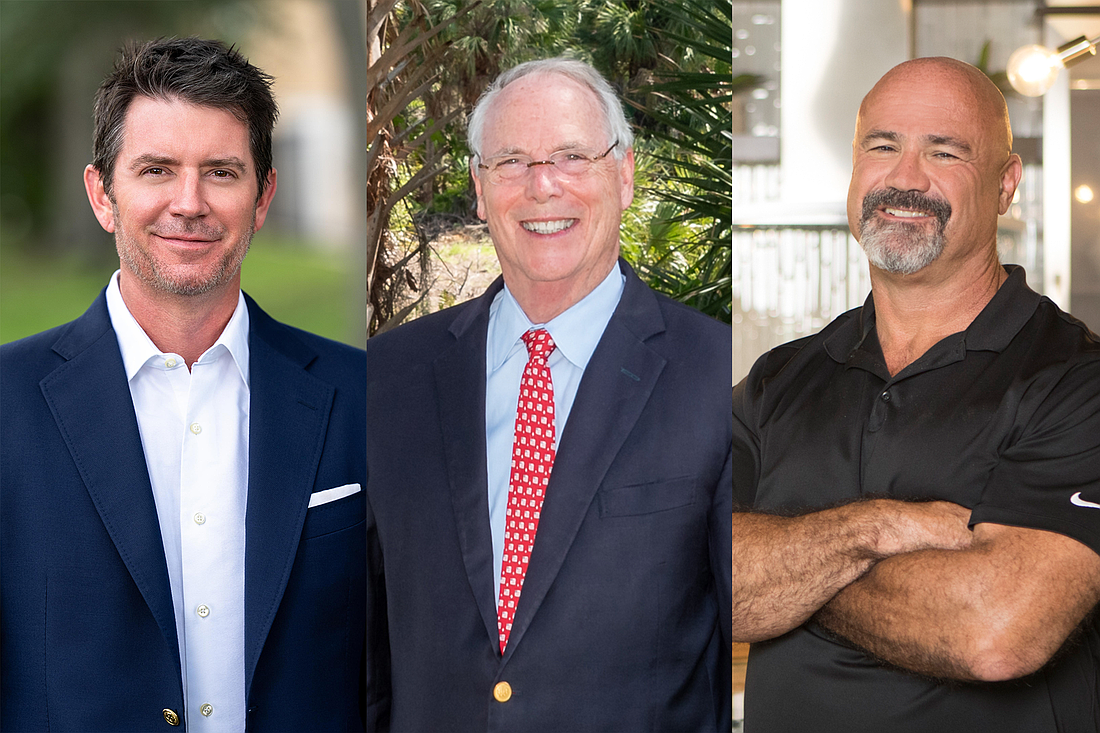
While Florida isn’t immune from market worries, a trio of locally-based homebuilders — with headquarters in Hillsborough, Sarasota and Lee counties — is looking at the end of 2025 and the start of 2026 under a different lens. For one, the top executives at the companies, Riverview-based Homes by WestBay, Lakewood Ranch-based Neal Communities and Fort Myers-based Christopher Alan Homes, aren’t as uniformly negative as the national builders. And second, each executive has positioned their company to capitalize on shifts in the market in 2026, from land buying opportunities to moving into new pricing categories. (All the companies have, like many peers, offered a variety of price cuts to meet market conditions and keep pace with competitors.)
Those executives, Willy Nunn with Homes by WestBay; Pat Neal with Neal Communities; and Ian Schmoyer with Christopher Alan Homes participated in a virtual panel chat with the Business Observer Nov. 21. The executives talked about this year, next year, affordable housing and the role governments play in all three. Edited excerpts:
Nunn: We did fine this year. We have returned to normal absorptions and margins after just a probably once in a lifetime boom delivered to us thanks to the pandemic, and where we had just really outsized absorptions. Prices have probably since come down 10% from peak mania. We had better expectations for 2025 originally, but since we recalibrated in March we've been ahead of our plan, and basically pretty happy with how the year is unfolding. (Revenue) will be up largely due to average price. And that's a function of just building more bigger homes, not necessarily the market price rising.

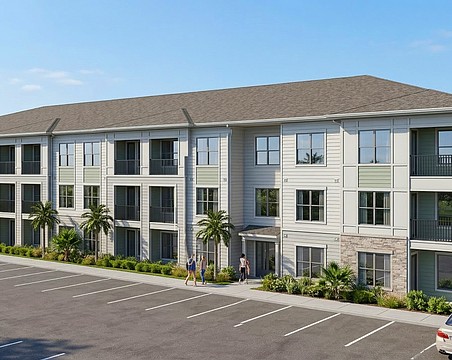
Neal: We have done somewhat less than expected. (On a 1-10 scale for 2025, 10 the best, Neal says sales would be 7, meeting goals an 8 and margins a 3.) I feel that south Sarasota has been a tougher market than Tampa Bay. Tampa Bay is a jobs market, while Sarasota-Bradenton is a retirement market. So we've gone down further in concessions. We have done well in our Neal Signature product. And I'm starting a new business in the low market but that hasn't been as much fun as I thought it was going to be, because I'm just barely making money on it. We did it based on doing a good guy thing for the community. We thought it was important that working class people in Sarasota-Bradenton, have a job and also a place to live that wasn't an apartment. We think we'll be successful in that over the years…but (right now) those homes, our least expensive homes, are upside down (or nearly upside down) except for Broadleaf by SimplyDwell, which is an A+ location on Golf Course Road in Parrish, north Manatee County, where we can get adequate compensation. We did not meet our budget for 2025, which was arrived at Dec. 1, 2024. We will miss by about 50 (sales) on a plan of selling 1,000 homes.
Nunn: Like Pat, we changed our budget. We re-forecast our budget in March, and I would have been off by at least as much as Pat or more if we didn’t.
Schmoyer: Our record as a company (for a year) was 580 closings. We thought we were going to hit 600 this year but we'll probably be around 550. We started to see sales pick up, so we're pacing pretty well, but margins are getting hurt in the entry level just because of the incentives. I have to follow along with what Lennar and D.R. Horton is doing and they're just killing builders out there today (with price cuts and incentives.) So that's been a little bit tough. But overall, as an organization, I'm extremely pleased with our company and our team. Sometimes you can do everything right, but the macro environment just doesn't let you make a lot of money.
Schmoyer: Affordability and land constraints continue to be top of the list. And interest rates. That's a big issue for affordability, especially in entry level and working class families. And there's the volatility in the markets. I'm an optimist, but I just do not see rates getting much better over the next year. I think some of the mortgage forecasts I've been looking at, nothing touches 5% over the next five years, and anything with a five in front of it would do a lot for this market. I think everything was still trending pretty well when we had a five in front of it. As soon as it hit six, it started really slowing down. (The national average 30-year fixed mortgage rate was 6.26% Nov. 21. )
Nunn: I have a pretty balanced view of ‘26. I think there are lots of unknowns and there are lots of potential for volatility, but I'm not sure that I could tell you where it is. We try to stay light on our feet and in sort of an athletic posture and go whichever way we need to go, and we focus a lot more on preparation and execution than predictions. I would agree with what Ian says, that I think this is kind of where interest rates are. They might get a little better, but I'm a good student in the macro, and all I can tell you is I'm uncertain. But having said all that, while there are desires to bring rates down, there is a whole lot of inflationary pressure in the economy. And I think we're kind of stuck. If people are waiting for interest rates to get better, they're going to be disappointed, most likely.

Neal: Of course, I agree with Willie and Ian: rates, all the uncertainty in our world keeps our net-worth buyers from buying. That is retired people who have the ability to buy, who don't buy. Around 57% of the people who buy a home from us at Neal have an out of state address. They won't buy unless they can see a certain future, and they won't move away from their doctor and church in Ohio unless they feel safe about the future. So I think the macro economy is what I'm trying to find. Then there's lots of little problems, tariffs, labor availability because of the immigration crisis, and I'm going to add one more: local governments have, because of the huge historic (population) boom, at least in Sarasota and Manatee counties, have gotten to be very difficult places to get approval. I have projects that are waiting three and four years, and for the first time in my life, I have a handful of lawsuits, some will be directed against local governments. And between time and exactions and direct costs as well as standards, I think the government is almost 30% of the total cost of a house for next year. Like Willie and Ian, we're just going to tough it out and get through the year.
Schomyer: As Pat and Willie mentioned, you can't base your business around uncertainty in the macro. A good operator is going to find margin, find a way to get through it.
Nunn: We've had a number of projects that have been in development this year that were significantly delayed, for a lot of the same reasons Pat referred to, and a lot of that is in the process of opening up now. So even though I don't particularly think the market's going to be much better or worse next year, we're going to open a fair number of (lots) while our competitors are probably losing (lots.) So we expect to take market share, particularly in the Tampa market. We may grow 20 to 30% next year. And it's across our businesses. We have a new division in WestBay that is focusing on urban infill, and we're very attracted to that. And the early indications are we're going to be extremely successful. We've started in South Tampa, but there's no reason we wouldn't move that business to include St Petersburg and Sarasota. So that’s a big growth avenue. And the other thing, too, much like Neal Signature, the upper half, or maybe upper third of our Homes by WestBay business really has a lot of opportunity in the higher price points, and we see more of that coming.

Neal: I'm a land guy, and started in the homebuilding business as a land developer. So I'm holding cash for the purpose of buying land. I think two things will happen. First, there'll be some builders who need to give up their land positions. And second it's very clear that the stock market penalizes public builders who hold too much land. So I feel that we will go more in the land business than we've previously been. And as Willie said, we will also go upscale in our prices, because the middle and upper middle class are doing better than the working class and far better than the working class and the hometown hero. So we'll go up market so we can, what you might say, fly above the public builders with a better offering of fit and finish, and we'll try to be below the public builders in our SimplyDwell brand. But to be clear, we have to be very disciplined for that purpose.
Schmoyer: I've always looked up to Willy's company. And what Willy and Pat are doing is kind of our next step — we're actually trying to go the other way and start entering the more move up and double move-up market and enter a higher price point. We've been planning the past six months to go there. I've only been building homes since 2017…so I'm watching what the other guys do, and learning a lot and just trying to make our own niche. We're also looking at some M&A activity, looking at a potential to expand the company in some different regions. I'm also focused on just creating a great place to work. A big goal of mine is not just from the financial aspect, but being the No. 1 place to work in Southwest Florida.
Nunn: I would do two things. I would allow accessory dwelling units and lot splits in urban areas by right. And what that means is without doing any zoning, without going into public hearing or anything like that. And the second thing would be to create a process by which local government has some cover against NIMBYism. I think everyone recognizes for the collective good, we have to have more affordable housing. And the problem is it is always turned back by handful of people who show up to a public hearing, On one hand, the state government and the federal government recognize the problem, and on the other hand there is the local government, and 10 to 20 people that show up at any particular hearing to oppose any particular problem. And so we've got to give the local government some cover so they can just do the right thing.
Schmoyer: We all know it comes down to three things. It's restrictive zoning, regulatory barriers with land use and financial policies. There's a lot of tweaks I think the government can do, and local governments getting out of the way. (The homebuilder community) just got impact fee raises shut down in Cape Coral, I mean, they were going to go up astronomically. And luckily, we got them to a small amount, so we didn't get it completely shut down. The timing just wasn't right to raise fees. And look, building codes change every couple years. That adds cost. Everything the government does adds cost. We've already proved building codes work through Hurricane Ian. All the new homes fared very well besides the water. Yet we keep changing it, because in Tallahassee you have these big insurance companies fighting the lawyers constantly. That affects cost.
Neal: I would apply the magic wand to the costs added by the government. The costs added by the government fall into two different categories. One is time in process. We had 102 communications with the City Sarasota on a set of homes in Newtown on Amaryllis Place. Replace the misshapen Golden Rain tree, replace the power pole, fix the city sewer from the nearest manhole, etc. I had to sell the homes for $370,000. I will build the same identical homes in Wauchula next year for $278,000. The second category is standards: We all believe in the hurricane standards, uplift standards, flood standards, handicap standards and energy standards, but they come at a cost. For expensive homes, the cost is not very much. But for inexpensive homes, it is a killer.