- January 29, 2026
Loading
In the 1980s, Tampa modeled most post-war American cities with a rising skyline and a dying downtown. This unsustainable model of lost revenue and zero growth potential ultimately bankrupted some American cities. In 1986, Tampa too, risked fiscal issues, until a daring mayor, and an underfunded nonprofit partnership built a new model for downtown Tampa,
The first-class office towers shaping Tampa's skyline in the 1980s give the illusion of a bustling city. Those handsome high-end buildings were occupied from 9 a.m. to 5 p.m. Monday through Friday. But after 40-hour weeks in high rise towers downtown, workers drove away from the Tampa skyline to growing communities Brandon, Wesley Chapel or Town ‘N’ County. By the mid-80s downtown shops and restaurants moved along the interstate with commuters. Tampa’s downtown was dead at night — typical of many American cities as a result of the population shift to suburbs.
Other than an old office and a metal cruise terminal on the Port of Tampa waterfront property, nothing new had been built in the Port area of downtown in decades, and property values and tax revenues were dropping. I joked at the time that about 600 people lived in downtown Tampa — all at the local jail. And none of them were interested in becoming permanent residents of downtown.
Something had to be built first. Something that would attract people downtown after hours or on a weekend. But what? Remember retail is at the mall now, along with the Olive Garden and Red Lobster. A store or restaurant won't work. Sports? The Tampa Bay Buccaneers had a place on Dale Mabry.
Tampa's first female Mayor, Sandy Freedman, took this “what” problem to a blue-ribbon committee of decision makers — business leaders, CEO's, property owners and city planners — and asked them and the public to figure it out.
Committee members visited Portland and Denver, two cities with growing economies developed through private-public partnerships. They did not return with the “what” for downtown Tampa, but an understanding of the “how.”
Members, each with their own business, personal and financial interests, ultimately decided to support new city ordinances for future downtown development that actually went against their own personal interests. “It was amazing,” Roger Wehling, Tampa's City Planner at the time, said “that these people were not on the other side of the fence fighting it.”
I was the newly elected chair of the Tampa Downtown Partnership, a nonprofit private citizen group and heard of an aquarium project looking for a location. I knew immediately: we must have that aquarium in Tampa. This was the project to spark downtown development.
More than 30 other cities had the same revelation and submitted proposals to win the project. I worked with the partnership to aggressively pursue the aquarium anyway. Our effort knocked all but two cities out of contention, and it came down to Tampa or St. Petersburg.

One week before the scheduled decision on the aquarium location, St. Petersburg sweetened their bid — offering $500,000 in interest free loans and the backing of the hometown newspaper, the St. Petersburg Times, and Florida Power.
The Tampa Downtown Partnership – small, new and with no government support – refused to let the aquarium slip away. I asked each board member to sign a personal note and raised $500,000 in one week.
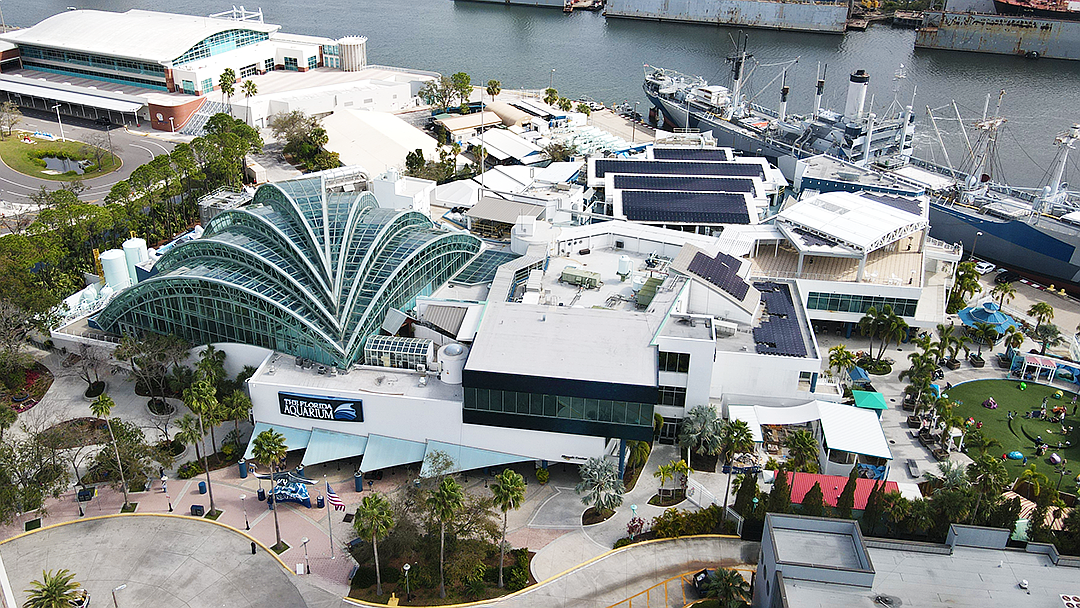
Tampa was named home to The Florida Aquarium in November 1986.
It took nine years and a village to build the Aquarium. Costs increased, funding was tough, although we raised $18 million. A lot of good people spent time and effort to make it happen like Jim Ferman, James Stuart, Bill Crown,Victor Leavengood, Jeff Thaxter, and many more. It was a complicated building by nature, and anyone associated with the project was both criticized for their role and the process at some point during the nearly decade-long effort.
The real hero was Mayor Freeman. With her support and enthusiasm, she found and arranged for a great location, and had the city back the Aquarium bonds to pay for the project, keeping it economically feasible.
The public/private partnership with The Florida Aquarium got the attention of the Tampa Bay Lightning hockey franchise. Team owners were negotiating plans to build a new arena on Dale Mabry, near the Buccaneers stadium.
When that deal fell apart, downtown leaders assembled a robust arena proposal that included letters of intent from major companies to lease corporate boxes and sponsorships, as well as the donation of city land near the proposed arena to the team. When the team owners announced that the arena would be located downtown rather than on Dale Mabry, they said they never would have considered a downtown location if it hadn’t been for The Florida Aquarium.
The Ice Palace (now Benchmark International Arena) opened in 1996.
The arena got the attention of Bill Marriott. A world-class hotel by The Marriott Group arrived in 2000, anchoring the location between the arena and the Tampa Convention Center.

The Aquarium and Arena offered people something to do in downtown Tampa. Together they brought over two million people a year into a part of Tampa that had been desolate before. The Marriott offered visitors somewhere to stay.
And then came the attention of would-be residents and developers. The “Holy Grail” of downtown development, people living in the area — 24 hours a day, seven days a week.
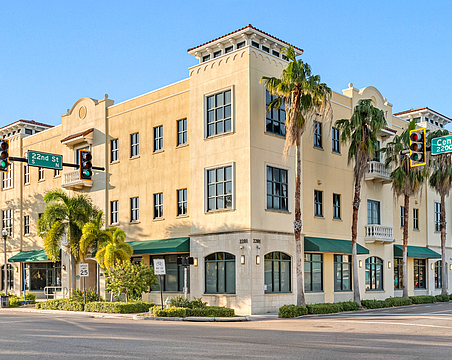
24-year-old Tampa native Marica McKeel was studying architecture and living in Chicago. When she saw what was happening in her hometown, she came back and built the first new residential project in an abandoned warehouse downtown. In 2003, she opened Channelside 212 Lofts with 28 units; 18 sold immediately.
This was the start of what The Brookings Institution refers to as an explosion in Tampa's downtown population.
Between 1995-2010, more than 14,000 people moved downtown, where none had lived before. U.S. Census data shows that by 2020 there were 19,976 living in downtown Tampa. Today, there are 29,000 and soon there will be 35,000.
The amazing consequences of this population shift and additional development shows that one building, The Florida Aquarium, created a movement and a growth trend that lasts until this day. One real estate expert told me that the Aquarium resulted in over $7 billion in new construction. This is truly the building that changed a city.
What would downtown Tampa have been like if the Aquarium had not been built? The Arena would have been on Dale Mabry, the Channel District would have fewer residents if any, Jeff Vinik may not have bought the Lightning, Tampa hotel broker Lou Plasencia would have never connected Vinik to Bill Gates, and Water Street would not be here. The major growth in downtown would probably not have happened.
Thirty years later, The Florida Aquarium and its mission of conservation, education and community impact, has stood the test of time. What started as an unknown attraction has welcomed more than 20 million guests, more than two million school children and now is regarded among the top organizations in coral research.
Which gives me another idea for Tampa: The Florida Aquarium Center for Marine Science and Global Warming.
Tom Hall remains involved with the Aquarium having served as its chairman and heading the first major fundraising campaign — Rising Tides — which raised millions of dollars for expansion. He is still a board member and also named The Channel District and Channelside Drive. He’s also chairman of Tucker | Hall, a strategic communications firm with offices in Tampa, Jacksonville, Orlando and Tallahassee.