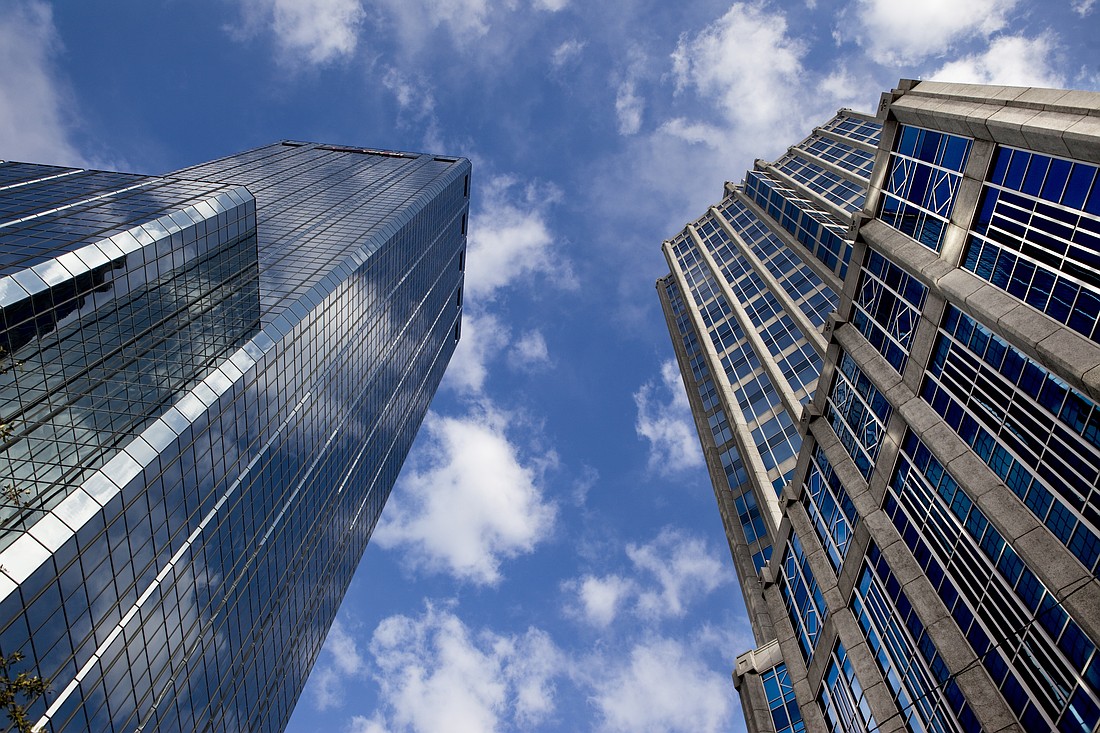
Tampa claims No. 1 spot on best cities for foreign businesses list


  • By Mark Gordon
  • | 4:34 p.m. June 23, 2025
  • | 2 Free Articles Remaining!
Tampa moved past more than 20 cities to get to No. 1 on Financial Times-Nikkei's third annual Investing in America rankings
Photo by Mark Wemple
  • Tampa Bay-Lakeland
  • Share

The city of Tampa moved up 26 spots in the Financial Times-Nikkei's third annual Investing in America rankings, going all the way to No. 1. In moving up the chart, Tampa bested last year’s No. 1 city, Houston, and also jumped over some cities it's sometimes compared to, such as Austin, Atlanta and Charlotte. 
The British daily newspaper, owned by a Japanese holding company, analyzed four dozen metrics of importance to foreign investors to measure cities across America and determine the rankings, according to a statement from the Tampa Bay Economic Development Council. A new category for this year’s ranking, according to the magazine, is trade-war resilience, “which takes into account a local economy’s reliance on imports and exports.” 

Tampa scored well in that category and also did well in workforce and talent, openness and quality of life, among other factors. It scored a 67 overall, two points ahead of six cities tied with 65. (The second-place cities are Seattle, Raleigh, Orlando, Cincinnati, Washington, D.C. and Pittsburgh.)   

The Financial Times article, posted online Monday, mentions Tampa’s history as a military, cigar and port hub. “Only one traditional cigar maker remains and the port, though still important, has made way for white-collar industries such as health care, education, real estate, finance and tech,” the magazine writes. “This economic diversity along with a drop in the crime rate and the city’s resilience to disruptions caused by Pres. Donald Trump’s trade war has propelled Tampa to the top spot.”

The magazine says the “uncertainty unleashed by Trump’s ‘liberation day’ foreign tariff blitz, the ensuing climbdown and his renewed threats of unilateral levies on America’s trading partners has muddied the outlook for local and multinational businesses looking to invest in the U.S.  That has made it harder for them to forecast demand and estimate costs, potentially hampering investment decisions.”

And since Tampa, the magazine reports, has a low exposure to imports, it can better weather the uncertainty. (Imports make up 4% of Tampa’s GDP, the magazine found, while nearly 33% of Houston's GDP.) 

The city’s biggest imports are commodities such as petroleum products, limestone, coal, cement, and not necessarily manufactured goods, University of Tampa associate professor of economics Michael Coon says in the story. “The demand for these is more inelastic . . . compared to tchotchkes at gift shops.”

Beyond tariffs, factors that drove Tampa to the top spot this year, the magazine states, include its  “competitive business environment — spurred by incentive programmes offered by the city — quality of life and a skilled workforce. Low tax was also a plus: Florida has no state income tax and the corporate tax rate is 5.5%. “What I hear from the companies and CEOs that I speak to, is that one of the main factors in the decision of where to invest or where to bring their business . . . is the quality of life for their team,” Tampa Mayor Jane Castor says in the release. “The companies are clearly interested in our tax structure and the ease with which they can do business here.”

The story, meanwhile, touches on some of the city’s biggest challenges, namely transportation and, for some of the year, hurricanes.

On the flip side, multinationals are coming to town, says the Financial Times. Japanese financial group Mitsubishi UFJ and Brazilian steelmaker Gerdau have “a sizable presence in the region,” the article states, and “the international influx is accelerating.” 

The Tampa EDC has helped sell the city as a top-tier multinational destination. "Multinational businesses that are based here tell us time and again that our welcoming community leadership, quality of talent and outstanding assets like Tampa International Airport and Port Tampa Bay make Tampa an ideal location for their businesses,” Tampa Bay Economic Development Council President and CEO Craig Richard says in the statement.


author

Mark Gordon

Mark Gordon is the managing editor of the Business Observer. He has worked for the Business Observer since 2005. He previously worked for newspapers and magazines in upstate New York, suburban Philadelphia and Jacksonville.

Latest News

Sponsored Content