- March 19, 2026

-
-
Loading
Loading
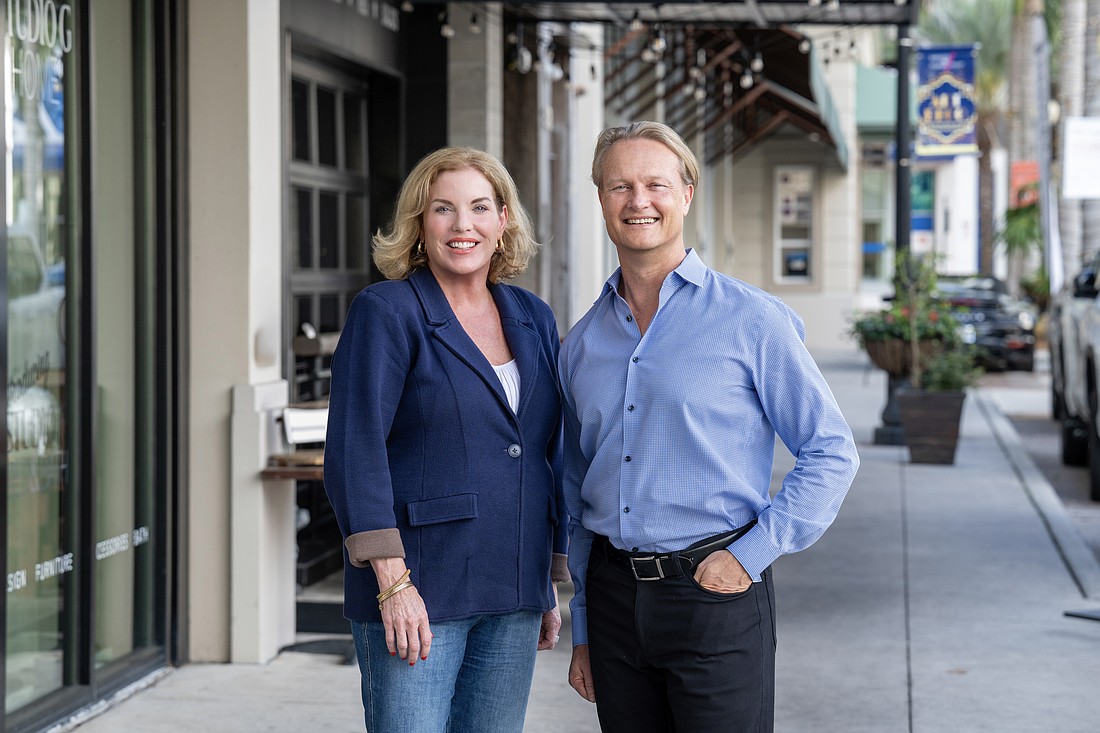
A group of angel investors in Sarasota is making a growing impact on the local business community, investing in startups selling everything from footwear to Lyme disease tests.
The group, Bridge Angel Investors, has been attracting more members after updating its operating structure and moving from an all-volunteer organization to one that employs paid staff.
It currently has 44 members, according to Executive Director Kim Miele. That represents more than 50% growth in the last year alone, says Bridge Angel Investors Board Chair Peter Offringa.
Part of the growth is due to the influx of people into the region. Three types of members have been moving into the area post-COVID, according to Offringa: retired executives; entrepreneurs who sold a business and moved to Sarasota; and those in senior leadership roles who are able to work remotely.
“They want to plug into the community,” Offringa says. “Oftentimes they've got some entrepreneurial experience, or at least some business leadership experience, and they want to give back, so they enjoy working with founders, which is part of the mission of our group.”
Membership runs the gamut as far as backgrounds, including many founders and executives.
“Our age range is 38 to 82,” Miele says, “which I think is really unique.”
While angel investors are so-called for helping startup companies that need assistance getting off the ground, the name also pays tribute to the disposition of the members, according to Miele.
“They give their time, they give their money, they give their expertise,” she says.
The group receives pitches from 10 to 15 companies a month, Miele says. After a screening process, about two or three make it to the monthly membership meeting.
Founders present a 10-minute pitch to members, including the problem they are solving, market size, go-to-market plan and financial projections.
If enough members seem interested in a company, they form an ad hoc committee to do more due diligence, get a product demonstration, meet with the founder and dig into financials, Offringa says.
“Eventually, we'll reach a point where we'll say, ‘Okay, we think this is investable,’” says. Offringa, a tech executive who has held senior-level roles with companies including CBS Interactive, CNET and Comcast.
Next, the group sends out an email to members with information about the startup and asks if they want to invest and how much. If the investment exceeds $100,000 across membership, then the group forms an investment vehicle like an LLC that they can use and determine how much ownership each member has.
The average investment the group makes is more than $200,000.
“We might not be the biggest check, but I think [we’re] one of the best checks in this area, because of our people," Miele says. "When we invest in a company, there's always two or three members that are like champions ... that help that company.”
The organization also asks for quarterly updates to help startups stay on track.
“We don't want to just give a check and walk away,” Miele says. “We want them to succeed…There's a lot of heart to our group.”
Since its founding in 2017, Bridge Angel Investors has contributed $2.5 million to 16 companies. Of those, Offringa and Miele say, 80% of the startups remain operating and raising funds. Says Miele: “We really have picked some great companies.”
While today Bridge is growing and has processes in place, the group was not always so structured. Around 2019 and 2020, Miele says, it was “floundering” and struggling to find its footing. After COVID ended, when another group wanted to absorb Bridge, the members decided they needed to get more serious as an organization because, they said: “There’s something special here,” according to Miele.
Around 2021, Bridge Angel Investors decided to add staff and increase annual dues.
Now membership requires investing $20,000 a year into startups and annual dues of $5,000.
“The majority of that [annual dues] goes into salary for staff, which then keeps the organization really humming,” Offringa says. “It's really hard to run an angel group if it's all volunteers…setting up the meetings and coordinating the pitches and just all the follow-through.”
Bridge employs four staff members, part-time.
“Putting that structure in place is really important,” says Miele, named executive director in 2022. There are also expectations of members; they must show up to at least six monthly meetings a year. “But also, we’re still having fun. We have wine and beer at the meetings. We have some charcuterie….So there's that mixture of business and pleasure.”
To stay in touch with members outside of meetings, the group uses group chat app Discord, Miele adds. Bridge may also develop an app to help with voting on investments, according to Offringa.
Going forward, Bridge’s goal is to continue growing its membership.
“We'd like to be able to write bigger checks, have more involvement, have more impact [and] have more coverage in terms of expertise, Offringa says.
Bridge invests across a range of industries, from consumer products to cybersecurity to health technology to manufacturing.
But not all causes are for the group. “We do exclude lifestyle, real estate, movies [and] restaurants,” Miele says. And Bridge only invests in companies within the United States.
What separates the founders whose pitches rise to the level of investment is often their why.
“Some angels have told me they just get a gut feeling," Miele says.
Among the best pitches the group has heard, she adds, was the founder of Galaxy Diagnostics, a North Carolina company that developed a test for pathogens that evade traditional diagnostics.
“In this particular founder's case,” Offringa says, “her husband died from Lyme disease, so she made it her mission to to find a better test.”
Like many others who contract the illness, the husband’s Lyme disease went undetected, and he developed cognitive issues as a result.
Miele, who used to work at Harvard Medical School, connected the founder with a researcher and the two collaborated on a white paper. “A lot of our angels are able to open doors” because of their backgrounds, she says.
Another company Bridge invested in was founded by a hip-hop dancer who went to Wharton and was looking for a shoe that had a smooth sole but also “looks cool,” Offringa says. Finding the only thing on the market was ballroom dancing shoes, the founder created his own shoe, started Fuego and now “they’re going to do like $8 million in sales this year,” Offringa says.
That company, based in Miami, came to Bridge through a New York angel group. One of the members of Bridge is also a member there, heard its pitch and brought it to the Florida angels.
Bridge’ aims to invest in about four deals a year. One goal is to invest in companies in the Sarasota-Manatee region, while an overarching goal is the return on investment.
“Down the road, yes, you want the return,” Miele says. “You invest in a lot of startups, because, you know some of them are going to fail, but then usually the ones that you have the wins on, the returns” outweigh that.
Bridge's first payout was from Tampa-based TSOLife, which built a software product for retirement communities, Offringa says.
After TSOLife went through Series A and Series B funding rounds, the lead investor made a tender offer for existing investors to sell their shares. As a result, the angel investors sold 39% of their shares and received a return four times the size of their investment, according to Offringa, who says: “We still have 61% that’s continuing to appreciate.”
About four or five years ago, Bridge was receiving pitches from all over the country. Two or three years ago, Offringa says, more deals began coming in from Florida.
“Then in the last year, probably half of our deals have been in the Tampa-St. Pete corridor, which is great,” Offringa says.
The group has heard many pitches from Sarasota companies but has not invested in one yet. “The holy grail for us would be that there are existing startups coming out of Sarasota, and we could invest in them,” Offringa says. “That would be a win for Sarasota, for Bridge Angels, for our tech ecosystem.”