- March 13, 2026

-
-
Loading
Loading
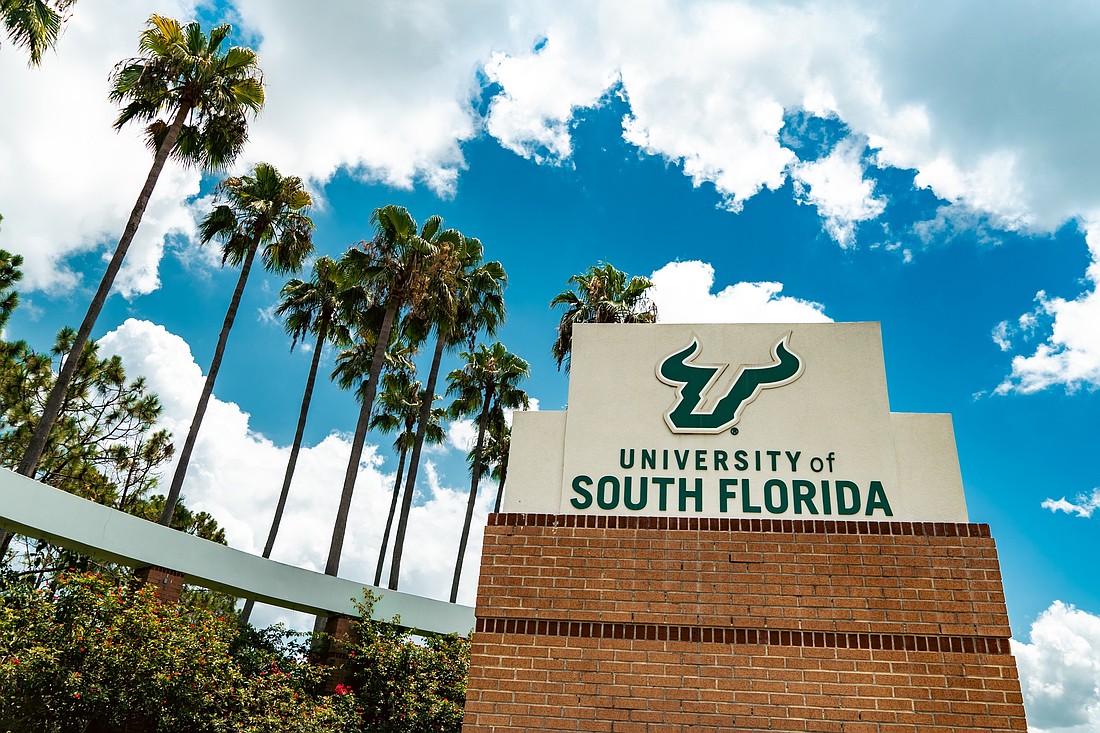
The University of South Florida’s economic impact on the state economy is now nearly $10 billion each year, a new report shows. Roughly $7 billion of that figure represents a direct economic impact in the Tampa Bay region, the report says.
USF conducted the new study with labor market analytics firm Lightcast, according to a release, using data from the 2024 fiscal year. The findings, released as the university celebrates its 70th anniversary, show that USF generated $9.8 billion in added income to the state, which includes $6.6 billion in added income specifically for the Tampa Bay region.
The report frames USF not only one of the largest employers in the region, but one of the largest economic engines across the state.
“The University of South Florida plays a vital role as an economic engine by preparing students for successful careers, driving innovation, supporting jobs and enhancing the overall quality of life for our communities,” President Rhea Law says in the release.
According to the report, much of USF’s economic impact is the result of its research efforts, alumni earnings and health care operations.
More than 80% of USF’s graduates remain in Florida, contributing an estimated $7.3 billion to the state economy, $3.9 billion of which stays within the Tampa Bay region.
Those who graduate from USF with a bachelor’s degree earn an average of $27,900 more per year than Floridians who only hold a high school diploma or equivalent, the report says.
Perhaps the biggest economic driver, though, is USF’s continually evolving academic and research initiatives, including recent investments and formations of the Bellini College of Artificial Intelligence, Cybersecurity and Computing, the Global and National Security Institute and the USF Health–Tampa General Hospital partnership.
USF received $738 million in research funding during the 2023-2024 fiscal year, up nearly 7% from the previous year and 35% since the 2021-2022 fiscal year. In 2025 alone, USF achieved a record-breaking $750 million in research funding.
The report does not account for two major projects the university says will significantly elevate its economic impact in the coming years.
USF’s 35,000-seat, on-campus stadium will host football games and other events throughout the year and is scheduled to open in fall 2027. At the same time, construction is set to begin this year on the first phase of the Fletcher District, a mixed-use community combining residential, retail, dining, hospitality and academic and research facilities located on 27 acres of campus just north of Fletcher Avenue.
This story has been updated to reflect the correct amount of research funding USF received in 2025.