- February 28, 2026

-
-
Loading
Loading
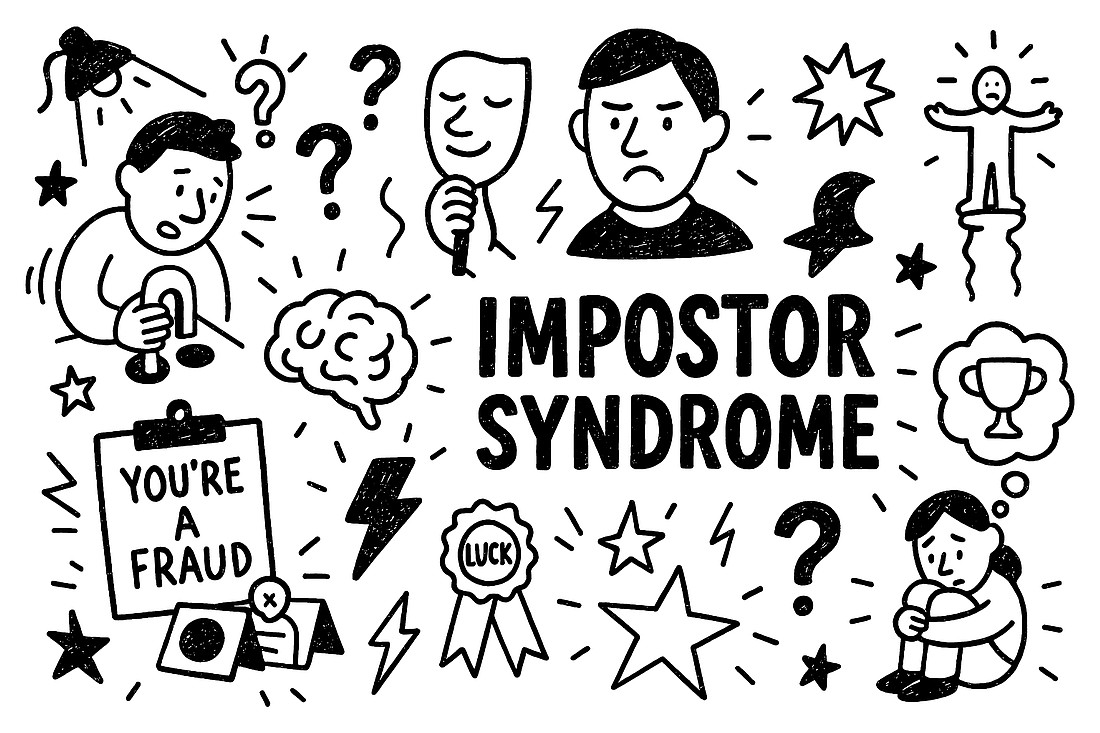 Photo by FriskySloths
Editor's note: This is part two of a three-part series on impostor syndrome: what leaders can do.
In Part 1 of this series, we explored the internal experience of Impostor Syndrome: how a persistent narrative of fraudulence often appears in high performers, and how reframing these thoughts as signals rather than setbacks can strengthen resilience, coachability and learning agility. We introduced a three-step process to help individuals identify their impostor “driver,” understand its impact and set growth-oriented goals.
Now we widen the lens. Because while self-awareness and mindset shifts are critical, the responsibility for overcoming impostor syndrome (and thus fueling performance) cannot fall on individuals alone.
As we shared in a previous column on psychological safety, when expectations, safety or belonging are unclear, self-doubt flourishes and performance stalls. In other words: You might feel like an impostor not because you are one, but because the environment is signaling you might be.
Reducing impostor syndrome requires leaders to address root causes, not simply coach individuals on coping strategies. Your role is to create a learning culture in which individuals feel secure enough to grow. Below are three-steps to kickstart your efforts.
Leaders often look outward before looking inward. But reflexivity - the ability to examine one’s own assumptions, behaviors, and impact — is critical. Reflect on:
Leaders cannot fix what they cannot see. Lean into curiosity to ask:
You don’t need a large budget or major restructuring to reduce impostor syndrome. Most solutions are low-cost, high-impact behavioral shifts that clarify expectations and normalize learning.
Clarify what “done” looks like. Ambiguity fuels self-doubt. Over-communicate success criteria for projects, behaviors and communication. When assigning work, ask:
Normalize learning over perfection. Create norms that reward curiosity, iteration and intellectual humility. Try:
Build strengths-aware teams. Positive psychology emphasizes strengths spotting — helping employees name and apply what they naturally do well. This enhances performance and buffers against self-doubt. Use prompts such as:
Create equitable input and visibility. Confident voices often get more airtime, but they don’t always hold the best ideas. Try:
Impostor thoughts thrive in silence, ambiguity and inconsistent expectations. But leaders can rewrite the story — not by fixing people, but by re-architecting the environments where people work. Environments grounded in clarity, fairness and trust not only lessen impostor syndrome — they improve performance. Teams perform at their best when they experience humble confidence — the belief that they are capable, learning-oriented and worthy of belonging.
In Part 3 of this series, we’ll zoom back in and explore how individuals can build self-trust and resilience, even when the environment is not perfect.