- January 9, 2026
Loading
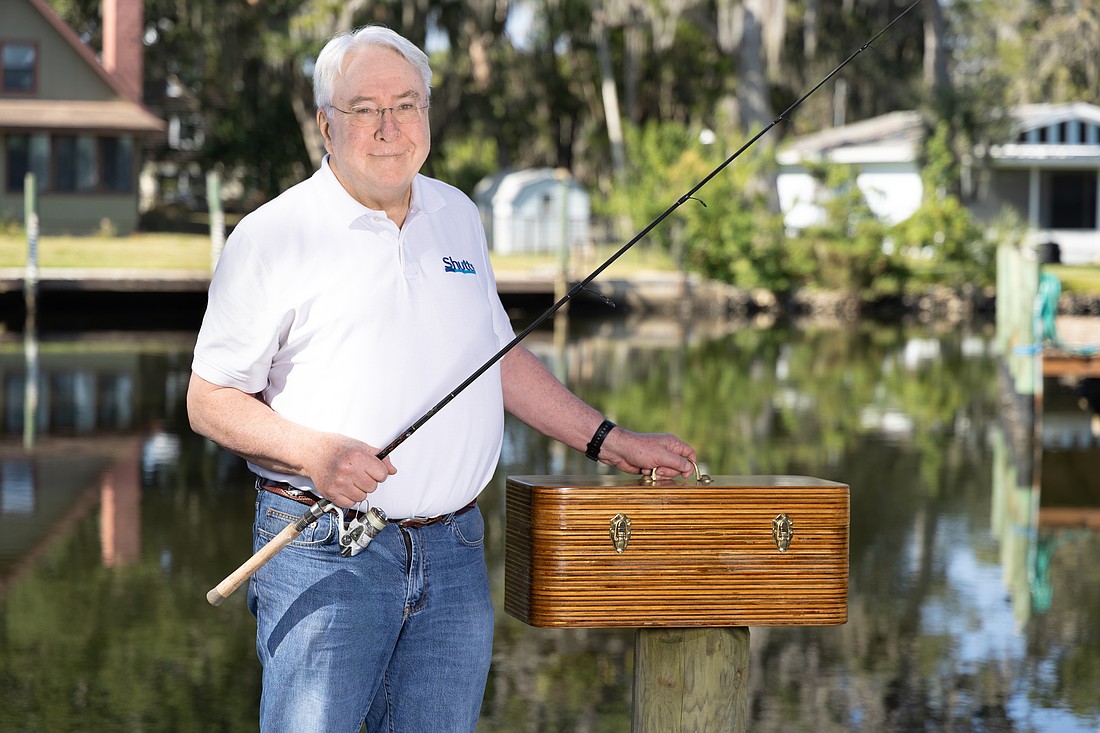
Alan Higbee, a former managing partner at Tampa law firm Shutts & Bowen LLP who now serves on the firm’s executive committee. During his three-decade legal career, Higbee has specialized in business law, working with U.S. and international companies on matters including contracts, corporate governance, franchising, mergers and acquisitions, public financial reporting and more.
Woodworking: The son of a cabinetmaker, Higbee, 67, was exposed to woodworking at a young age while growing up in Stuart, on the east coast. His bedroom in his family’s modest home was right next to his father’s workshop, and he was awakened every morning by the sounds of saws and hammers. He began learning the craft when he was eight and jumped back into it about 15 years ago, after his son and daughter had grown up and left home, leaving him with more free time. “It’s addictive,” he says of the hobby. “As you start making things, the addiction is watching them grow.”

Start simple: Higbee says he’s always loved animals of all shapes and sizes, so his father eased him into woodworking by having him carve simple appendages, such as arms, legs, feet, wings, etc., and attach them to coconuts, which served as the body of animal figures. It was a simple yet creative approach to teaching, he recalls.
“A lot of woodworkers stick to the book,” Higbee says. “He wasn’t afraid to do different things. I made things such as a roadrunner — I’d cut the wood pieces, paint them and put them together on the coconut. I must have had 50 of them by the time I stopped.”
In the beginning: For aspiring woodworkers, Higbee recommends a similar path: start small. “If you’ve got a hammer, a chisel and a saw, you can do a lot,” he says, “but you’ve got to learn the basics first. It becomes a natural progression once you've learned the basics. At some point it becomes, ‘How much space do you have? How much money do you want to spend?’”
Mental break: The law, to Higby, is a service industry, and one that includes long hours, difficult clients, working weekends and other mental and physical stresses. Woodworking is his haven, a refuge from the daily grind of briefs, motions, contracts and meetings. “It takes your mind completely off work,” he says, “because you can’t [mentally] be halfway in the shop, or you come back with no fingers. You have to focus.”

(No) go fish: Higbee has tried other hobbies, such as fishing, but always comes back to woodworking as his port in the storm. “So, I’d go fishing, and the whole time I was fishing, I’d be thinking, ‘Well, how is this deal going to close? We should be able to get this done,’” he says. “I don’t think about that in the shop.”
Disaster strikes: Hurricane Helene in September 2024 dealt a deathblow to Higbee’s 1,000-square-foot workshop, which was in the basement of his riverside home in Homosassa. He says the Homosassa River had flooded the residence on three prior occasions, but Helene was like nothing he’d experienced before. There was “six feet of water in the shop, which destroyed about half the equipment I had,” Higbee says. So, as opposed to rebuilding again and hoping for the best, he went another route, buying a piece of land about eight miles away and 84 feet above sea level. “My shop won’t flood until Disney World floods,” he adds. The new workshop spans some 4,500 square feet, allowing him to accumulate and store more lumber and buy more and bigger equipment.

Feels right: Higbee doesn’t sell his work and has no plans to turn his hobby into a business. For him, it’s about the sheer pleasure of the creative process, and the joy his work brings to others when he gives them a finished product. He especially relishes repairing treasured items for the people in his life, such as a fellow partner at Shutts & Bowen who came to him with a challenge. “She said, ‘I have an antique toy chest that my great-grandfather made,’” he recalls. “‘When the movers moved it, they broke the legs off the bottom. I've looked all over the country trying to find somebody who will make new legs for me for this.’ Well, I did it in about an hour.”
Wood cause: Once his new workshop is complete, Higbee plans to use his work to support animal welfare causes and organizations. “I’m going to make stuff for their auctions, let them use it as fundraisers,” he says. “Some of this stuff could bring a decent price, because you can’t find it anywhere. I think that might be a way to help.”