- March 27, 2026

-
-
Loading
Loading
While the real estate picture in some places and price points in Florida is, at best, murky, other segments are hot.
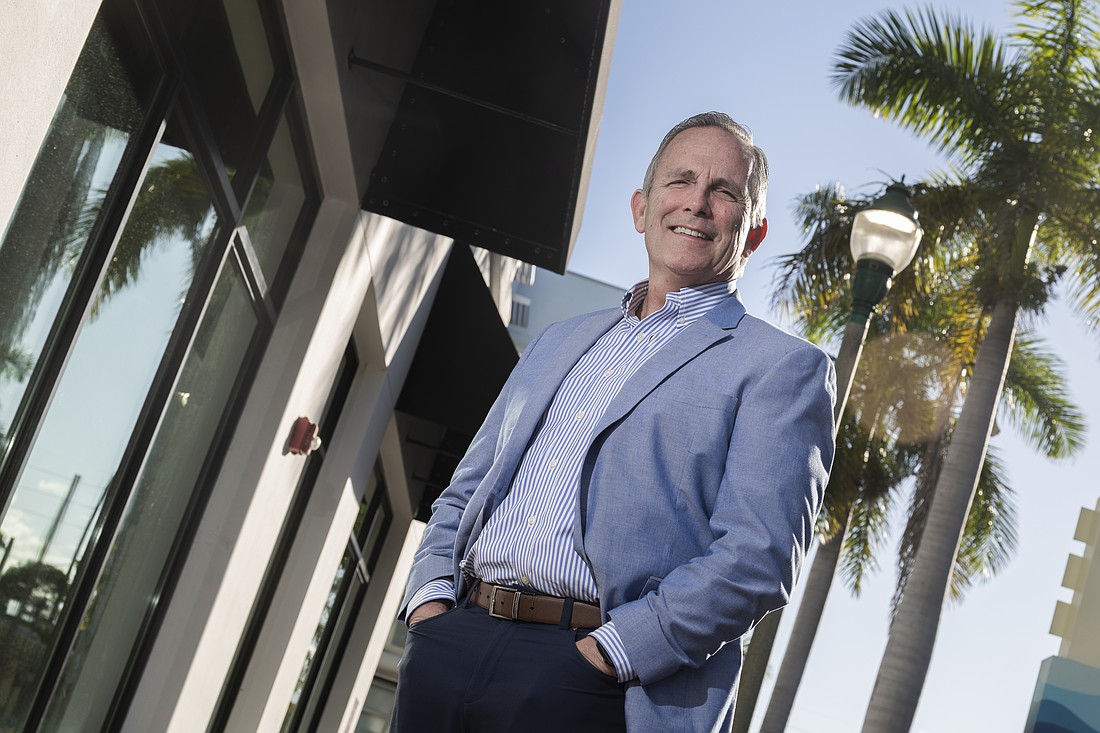
Consider Delray Beach-based Kolter Urban in the second, warmer, category. With numerous developments in the works from Tampa to Naples, the company is “bullish” about the west coast of Florida, according to Senior Vice President Ed Jahn, who oversees Kolter's sales and marketing divisions.
Hot and bullish enough where one of those projects, in Naples, is a six-story condo tower with a mere 12 units where prices start at $30 million. That project, with estate-sized homes coming in over 10,000 square feet, is dubbed Olana. It is scheduled for completion late next year.
Another case in point is the Ritz-Carlton Residences Sarasota Bay, a 20-story tower with 78 units scheduled to be completed in the fourth quarter. “We’re seeing a lot of interest there,” Jahn says. “Over the last 30 days [late December to late January], we’ve done $25 million in sales. That is an example of a very hot project that is being received very well by the marketplace. That’s a project where you have $3.5 million to $12 million and $13 million residences.”
Recently, Kolter Urban opened an office in Naples to oversee three projects in that area, Jahn says. The company also operates offices in Sarasota and St. Petersburg. It has more than $3.2 billion invested in developments on the Gulf Coast. In addition to the Ritz-Carlton Residences, other notable works in progress include One Tampa and The Island at West Bay Club in Estero.
Jahn recently spoke with the Business Observer about the state of the market on Florida’s west coast, Kolter Urban’s strategy for development there and milestones for some of its latest projects. Edited excerpts:

Currently, we have seven active projects selling on the west coast of Florida. The overall outlook is very positive. Early signs this year, from a traffic perspective, are noticeably up at all of our projects, which is a good sign. We have a lot of interest. [This is] across the board, whether a $1 million to $2 million unit or in the millions. We have received many new offers and gone under contract at many of our projects early this year. It gives me a great boost of confidence that the 2026 season is going to be a return and an uptick from what we saw in the last few years. People had an interest, but they just didn't have the confidence in buying, because they didn't know where the bottom of the market was. Confidence in the buyer market is picking up. There's no doubt.
The majority of our buyers are nearing retirement or have retired, typically because of the price point of our product. But we also have buyers who are young professionals that have done well. It might be their primary or their secondary home. But traditionally, the crux of our sales are to Baby Boomers right now and/or retirees looking for a second home. Many are deciding to make it their primary home because of the beneficial tax base in Florida, with no state income tax.
It all centers around location. We look for a couple of different things: water — whether we're right on water or have views of water, whether it’s ocean or bay — and then walkability, particularly the walkability score. A lot of our developments are in a more urban setting — St, Pete, Sarasota, Tampa — that have great walkability scores, that have either waterfront parks, downtown museums, an array of restaurants [or] sporting events that people can walk to; because in the urban environment and urban living, you don't necessarily want to get in and out of your vehicle and find a place to park when you're not in the building. So the urban setting with great walkability scores are key when we're looking at a piece of property.
All of our product is going to be built to the current building codes, including requirements that relate to hurricanes. In other areas that we're building, we may be in a flood zone. Those will bring on different components that we have to incorporate into the project. And yes, it will increase the cost, because the design has to accommodate for those needs. Being on the coast, you're going to have higher insurance costs, one, because you have to get flood insurance, and two, the likelihood that a hurricane could hit.
Conveniences. Individuals today want convenience and easy access. Within a five- to 15-minute walk, they're going to be at the museum. They're going to be at a sporting event. They're going to be able to go to the marina, whatever it happens to be. Not to mention the amenities that we have in our in our buildings — whether it is state-of-the-art fitness center, sports simulators (golf and IndyCar simulators), private dining rooms that we have in our buildings that can be can be reserved to bring in a private chef…It's more than just providing a residential unit. It's a life experience, just like if you're building a master-planned community in a golf club. We want to provide those things to our buyers.
On the development side, challenges always are costs. You want to be able to deliver a good product at a fair and reasonable price. Once we went through COVID, construction costs with supply chain issues really increased the cost per square foot of buildings. On the sales side, today's buyer is not just looking at the west coast of Florida. They're also looking at the east coast of Florida in their review of the Florida market. Before, say, 10 years ago, a buyer either went to the west coast or they went to the east coast of Florida — not anymore. So the competition has increased.
We're very bullish on St Pete, Sarasota, Tampa and all the cities we're building in right now. We're seeing good signs. I personally anticipate that we'll continue to develop where the opportunities present themselves, [at] sites that meet what the current buyer is demanding.