
-
-
Loading
Loading
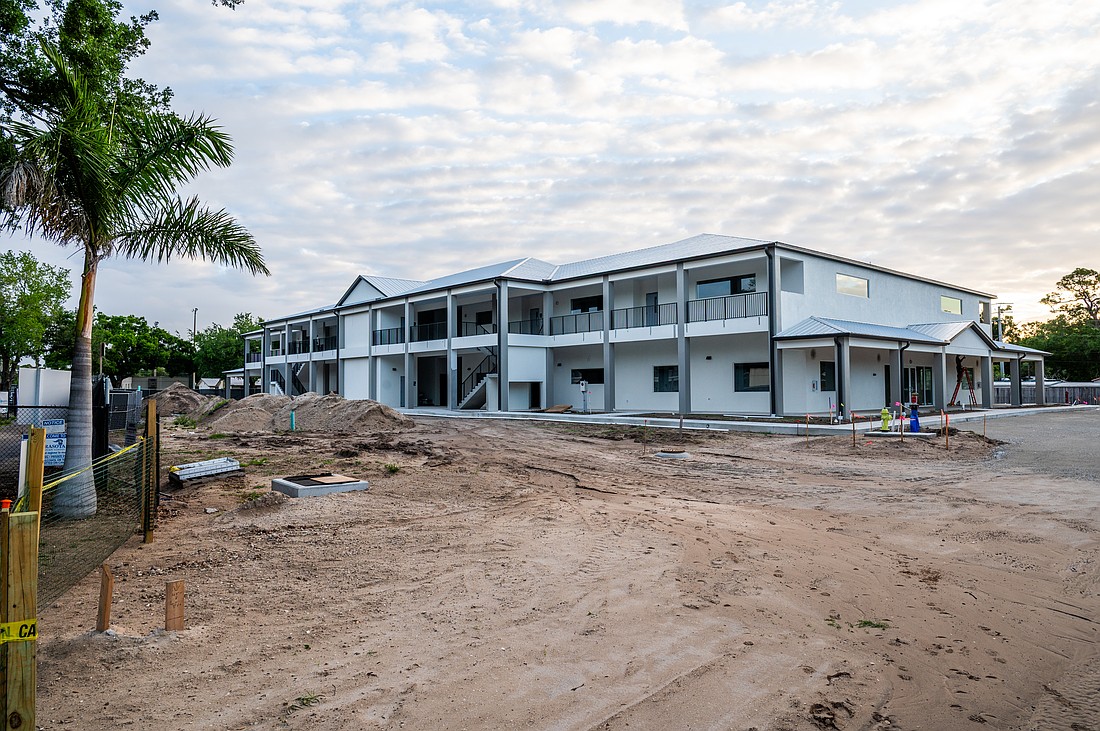
Sarasota Christian School is experiencing tremendous growth, filling all available educational space on campus. To help meet the current enrollment demand from the community, improve overall student retention, and continue to plan for future enrollment, the decision was made to build and expand the school facility footprint.
Operating since 1958 and serving students from Pre-Kindergarten through 12th grade, the school is ready for a dedicated building for its high schoolers.
“Historically, we’d lose a significant number of students making the leap from 8th to 9th grade,” says Justin Scholl, Chief Financial Officer at SCS. “Kids that age need their own experience, different from middle school and elementary school students, and it wasn’t uncommon for those students to transfer to other local schools that had superior high school facilities.”
Until recently, this wasn’t cause for concern. The overall size of the student body didn’t fluctuate much from year to year, and growth was steady and predictable. But that all changed after the pandemic.
“Demand for private education exploded in Florida,” Scholl says, attributing some of that spike to funding that had recently been made available by state government. The school grew so quickly after Covid that space became a real issue.
“In May of 2020, we had 395 students,” he says. “18 months later, it was 525. And we’re expecting 840 for the 2026-27 school year.”
This wasn’t the first time the idea of a high school building had come up—in fact, it was the third time in the past 20 years. “For various reasons, previous leadership groups chose not to move forward with that challenge.”
Luckily, Scholl knew just the people he could turn to: Gulfside Bank.
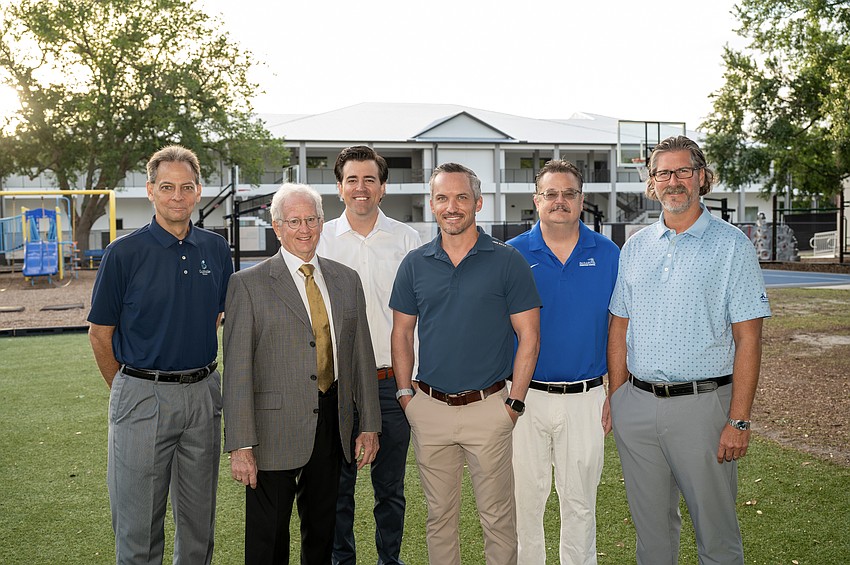
Scholl knew Sean Powers, the Senior Vice President of Commercial Lending at Gulfside, from Powers’ time at a prior Bank, when they worked together to build a new elementary school building at SCS in 2020. But it was coincidence that brought them together again for this new project.
“I was at a hockey game with another client,” Powers remembers. “I was in line for food, and I noticed this guy waving at me. I didn’t recognize him at first, but it turned out to be Justin.”
They exchanged pleasantries and went back to their seats—which turned out to be next to each other.
As they got to talking, Powers quickly grasped the scope of the issue and began brainstorming ideas to resolve it.
“We talked about different funding structures we could use to get it done,” he says. “In an ideal world, there’s a donor somewhere in the community, maybe an alumnus, who wants to help them make this ambition a reality. But until that person is found, we needed to come up with a loan facility to bridge that gap.”
They settled on a line of credit that could be used on an as-needed basis. “They’ve had a great demand for students, they’ve been managing their growth, and they’ve got a great asset in the property itself,” Powers says. “This was a reasonable option that worked well for both of us.”
“Gulfside is so relatable and so understanding of who we are as an organization,” Scholl says. “We never had to jump through hoops hoping to impress someone. We are super grateful.
We could not have done it without Gulfside. Period.”