- April 13, 2026

-
-
Loading
Loading
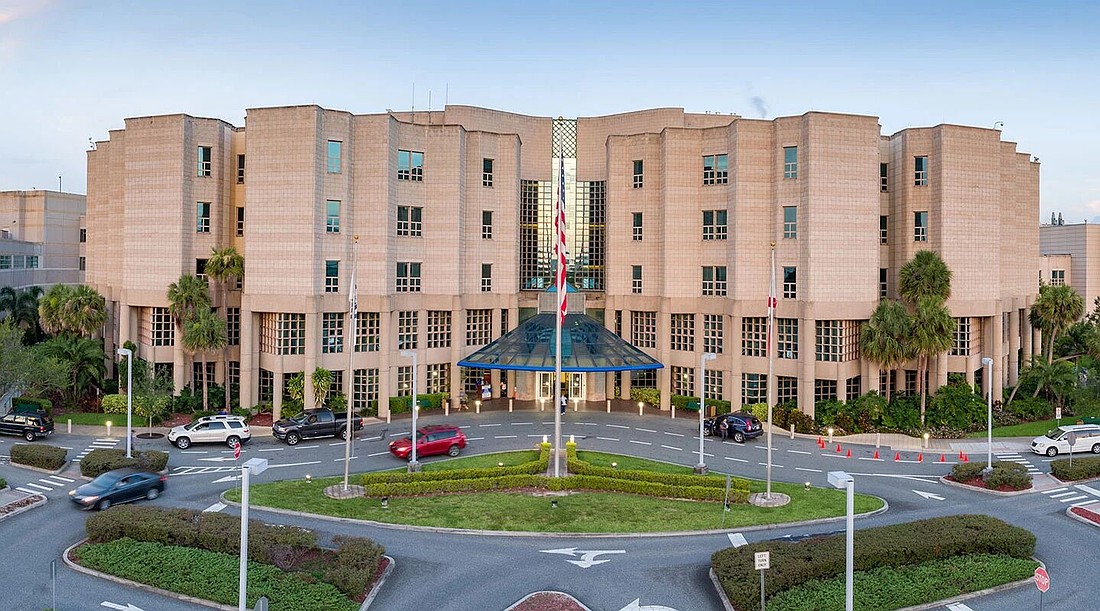
Hospital: Moffitt Cancer Center, Tampa
Size: 346 beds
Budget: $2.89 billion in annual operating expenses; $3.02 billion in annual operating revenue
Technology: Early detection of DCIS breast cancer through AI and biopsy samples.
Ductal carcinoma in situ, aptly named “stage zero,” is considered one of the earliest stages of breast cancer, in part because it’s a diagnosis that indicates that the patient’s cancer cells are generally confined to the milk ducts of the breast.
Yet despite its name, DCIS is thought to be a precursor to invasive breast cancer and is roughly 20% of the mammography-detected breast cancers in the United States, generally discovered at a size so small that it cannot necessarily be palpated within the breast. About 20% of these patients initially diagnosed with DCIS will go on to develop invasive breast cancer. And, perhaps most worryingly, it’s on the rise in both women ages 40 to 49 and Black women, studies show.
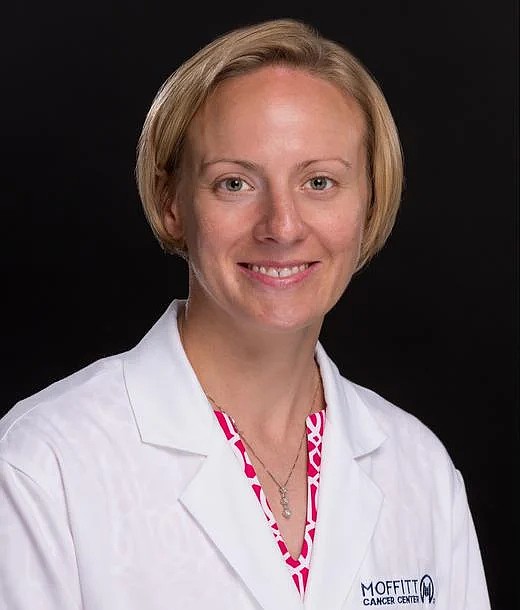
What doctors and researchers at Moffitt now hope to understand, using technology, is what makes a patient more or less likely to develop invasive cancer after DCIS. The current recommended treatment for the condition is generally surgery and radiation to the breast, says Dr. Bethany Niell, section chief of Breast Imaging at Moffitt and principal investigator. That’s often followed by oral endocrine therapy for some years after the diagnosis.
Research trials are now evaluating an active monitoring method, but there is little substantive treatment difference for those who may go on to progress more severely and those who may never progress to invasive cancer at all.
“We do think that there might be some women who are at very low risk, and if we could identify the women who were at low risk, maybe we could offer them a less aggressive treatment option,” Niell says. “On the other end of the spectrum, maybe if we could identify the patients at very high risk of being upstaged to an invasive cancer, we should not offer them active monitoring and we should be offering them surgery and radiation, because that would be in their best interest.”
Niell’s research team is already in its fifth year of a grant from the National Institutes of Health’s National Cancer Institute. The project’s task is to examine and analyze both breast MRI imaging and specific biological markers on the biopsy sample, which Niell says is usually the size of a “piece of long grain wild rice.” In addition, clinicians are also looking at standard factors that generally separate a less serious case from a more serious one.
Researchers are working to build predictive AI models based on previous clinical cases to find clear patterns in the data. This is useful for two reasons — the ability to sift through large amounts of data and the ability to notice details in medical imaging that perhaps the naked eye cannot see.
Yet despite five years of research, clinicians are roughly seven to 10 years out from being able to turn these findings into something used routinely in a medical setting.
“The health care providers and physician scientists like me wish it could be shorter — we want to get it to patients faster,” Niell says.
For Niell, the end result is personal. Years ago, her mother was diagnosed with a small invasive breast cancer on a screening mammogram — she died recently after years of remission. It’s a large part of the reason why this project is so important to Niell.
“If we can figure out which subset of these patients with DCIS will be upgraded to an invasive breast cancer, not only could we personalize their care,” she says, “but we will decrease their risk of dying from breast cancer.”