- April 10, 2026

-
-
Loading
Loading
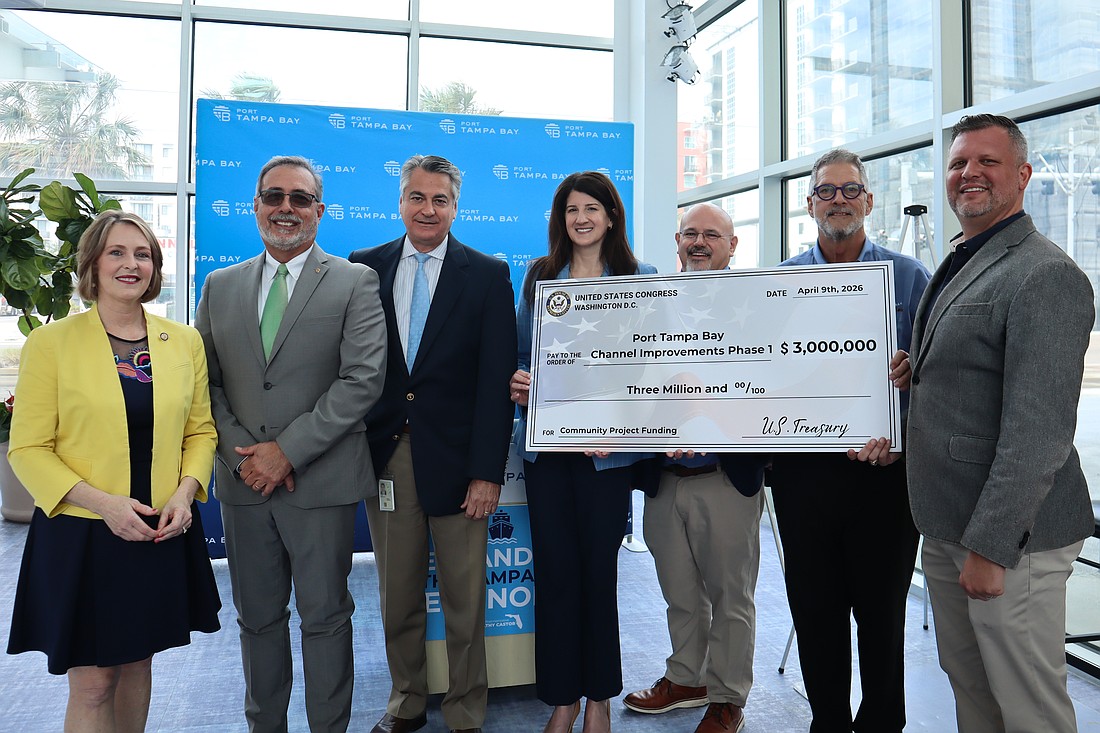
Port Tampa Bay is already considered Florida’s largest and most diversified seaport. Yet a new $10 million federal grant, announced Thursday by Rep. Kathy Castor, D-Tampa, will fund efforts to deepen its shipping channel, attracting even larger ships and expanding cargo capacity.
The federal funding to support the Tampa Harbor Navigation Improvement Project comes in two parts, according to a release. An initial $3 million grant secured by Rep. Castor through Fiscal Year 2026 community project funding requests will help fund Phase 1 of the project, which includes planning, engineering and designing the channel’s expansion.
The remaining $7 million comes from “general-use funding” through the U.S. Army Corps of Engineers, the release says, bringing the total federal investment to $10 million.
“Port Tampa Bay is Florida’s largest, most dynamic port. It is absolutely vital to the economic well-being of all of our neighbors across the region and across the state,” Rep. Castor says in the release. “I couldn’t be prouder of the partnership I have with Port Tampa Bay and to deliver a significant federal investment to deepen their channel and continue expanding their economic impact. This is what investing in our community looks like — to help everyone, with an eye to the future.”
Authorized by Congress in late 2024, the Tampa Harbor Navigation Improvement Project is the largest infrastructure initiative in Port Tampa Bay’s history. The project will deepen the shipping channel from 43 feet to 47 feet along a 42-mile stretch, allowing the port to safely and accommodate larger, more modern vessels. The improvements will also enhance navigation safety in the port, expand cargo capacity and “strengthen supply chains across Florida,” the release says.
“We are grateful to Congresswoman Castor and the Florida delegation for their leadership in securing this funding,” says Raul Alfonso, executive vice president and chief commercial officer at Port Tampa Bay, in the release. “This investment moves a generational project forward. It’s one that will expand capacity, improve efficiency and strengthen the supply chains that Florida’s economy depends on.”
Dredging the channel will improve access to global markets, reduce transportation costs and attract new business and investment to the region, the release says. It will also enhance the port’s ability to handle increased cargo volumes and maintain its competitive position along key international shipping routes, including those connected through the Panama Canal.
Construction could begin as early as 2027, the release says.
Port Tampa Bay serves as a primary gateway for fuel and essential goods for consumers across the I-4 corridor, from Tampa to Orlando. It spans more than 5,000 acres and is also considered a top 10 U.S. cruise port, welcoming more than 1.5 million cruise passengers annually while simultaneously handling a wide range of cargo and serving as a major center for shipbuilding and repair.
A key economic driver for the region, Port Tampa Bay supports more than 192,000 jobs and generates about $34 billion in annual economic impact, according to the release, advancing Florida’s growth across maritime, logistics, manufacturing, energy, construction and tourism sectors.