- April 9, 2026

-
-
Loading
Loading
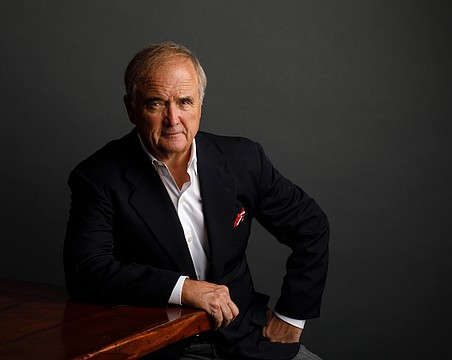
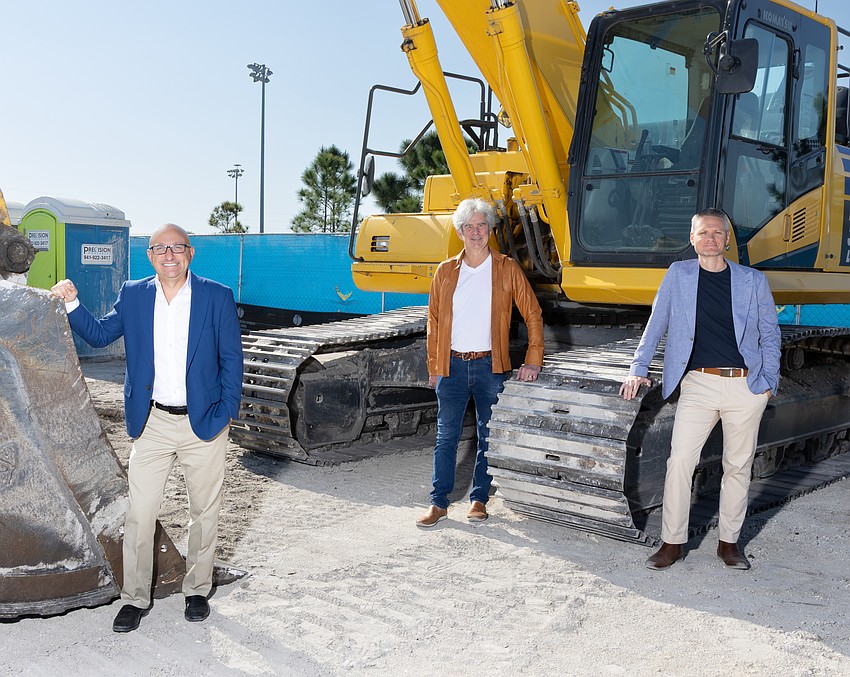
About 12 years ago, St. Petersburg real estate developer Angelo Cappelli says he found himself amid a “midlife crisis the size of South Dakota.”
Then 44 years old, he found relief by volunteering through his church with St. Vincent de Paul ministries, helping to feed, clothe and support the homeless and impoverished at the ministry’s shelter on 34th Street. Were it not for this self-imposed penance, of sorts, Cappelli says he likely never would have noticed the old lumber warehouse down the street, nor convinced its owner (former state Sen. Jeff Brandes, R-St. Petersburg) to let the company Cappelli founded with his two best friends redevelop the site into St. Petersburg’s largest affordable housing complex: the upcoming Fairfield Avenue Apartments.
“I begged (Brandes) not to sell it, to give us a couple years and I could guarantee in a couple years we would get this thing done,” Cappelli says. “Fortunately, I knew this site was good and fortunately the Brandes family allowed us to have the time to do it and fortunately we had nonprofits get involved in helping us with the pursuit.”
Another stroke of good fortune: a 2020 state law, HB 1339. It allows affordable housing units to be built on property zoned for non-residential use, like Brandes’ lumber yard.
These factors, along with several others, combined to help form what is now Fairfield Avenue Apartments. It is a 264-unit project and something Cappelli and his co-founders at St. Petersburg-based HP Capital, which developed the project, say is the first affordable housing complex in Florida to take advantage of the bill.
All told, the story of Fairfield Avenue Apartments — some of it was detailed at a recent ULI Tampa Bay breakfast event — is one of steadfast resolve, some timely shifts in strategy and public-private cooperation to help put a dent in what nearly every leader in the region agrees is a thorny issue: a lack of affordable housing supply.
"This is arguably the first project in the whole state of Florida that actually took advantage of the ability to convert industrial land to affordable housing, which is such a great accomplishment,” Cappelli says. “Ultimately, even given all the hurdles we faced, this development... is such a success story and will really serve as a model going forward for more projects like this to be built in the future.”
Still, it took some time — about four years — for the development firm to raise the funding and obtain the demolition, construction and sitework permits needed to turn the old Tibbetts Lumber Company site at 3300 Fairfield Ave. South into 264 affordable housing units. The project, valued at $93.75 million, is expected to be completed in 2028.
The city of St. Petersburg on March 3 approved the final $2.33 million sitework permit, records show, allowing construction to finally begin after a groundbreaking ceremony was held in January. West Palm Beach-based Kast Construction is the general contractor.
The city of St. Petersburg approved permits in December for two five-story buildings holding 94 units each, one six-story building with 81 units and one community building. The complex will offer 74 one-bedroom apartments, 162 with two bedrooms and 28 with three bedrooms.
Of the 264 total units, 53 will be reserved for households earning at or below 50% of the area median income, 67 for those earning up to 80% and 144 are earmarked for those earning up to 120%.
That’s a range that developers and city officials say is increasingly difficult to accommodate in today’s housing market.
A new housing study by the Tampa Bay Partnership tracks rising housing costs, lagging housing development and affordable housing deficits throughout Tampa Bay’s tri-county region of Hillsborough, Pinellas and Pasco counties. Together, the counties are facing a deficit of 81,000 units to accommodate households earning less than 80% of the area median income, equivalent to $69,500 for a household of four, the report found.
The situation is primed to get even more challenging: the Tampa Bay region expects an additional 564,000 residents by 2035, with a need for 1380,000 new units, says Bemetra Simmons, President and CEO of the Tampa Bay Partnership. Between 2018 and 2023, the region added 99,675 households while building only 82,000 housing units.
Similarly, regional wage growth has not kept pace with rising housing costs. From 2018 to 2023 the median rent for new leases in the region increased by 48%, the report found, while median hourly wages only rose by 29%.
The average monthly rent in Hillsborough County, for example, rose from about $1,000 per month in 2017 to nearly $1,600 in 2024, the study found. Rents in Pinellas and Pasco counties for 2024 were slightly lower than Hillsborough, averaging just over $1,400 in Pinellas and close to $1,500 in Pasco.
“The private market is not going to be able to do this alone,” Simmons says. “This is going to be a group project. With rising construction costs, rising interest rates, rising insurance costs, there’s going to be fewer entry level homes available, and with housing affordability at all levels important to our economic development, it's important that we get this right.”
House Bill 1339 made the Fairfield Apartments possible, but implementing it wasn’t without complications. In 2021, HP Capital received bipartisan support from both the city and county for the Fairfield Apartments, but in order to make it work with the city’s comprehensive plan, city officials first needed to write an ordinance allowing the residential units to be built on industrial-zoned land.
That process took nine months, during which the project’s cost rose an estimated 30% due to inflation and interest rates, says HP Capital partner Nick Hansen. That meant the funding HP Capital received from the city and the county were no longer sufficient to build the project.
“That partnership with the county and with the city to put the ordinance into place really was a labor of love,” says Hansen. “Any developer will tell you time is really what sets a project back because, at that point, all our assumptions were now in the trash can and everything we thought we could do was no longer possible.”
The team went back to work. It had received $22 million in grants from the city and the county’s Penny for Pinellas tax proceeds, but knew that number needed to be doubled. And even then, that wouldn’t be enough to complete the apartment complex — especially with its hefty property tax bill. The landlord needed to be a nonprofit, the team decided. So they called in the Pinellas County Housing Authority.
“I gotta tell you, we don’t get a lot of phone calls like that, saying ‘Hey, we’d like to give you a 264-unit, seven-acre project and we’d like you to own it and no, you don’t have to put any money in right away’,” says Pinellas County Housing Authority Executive Director Neil Brickfield. “We refer to this development as a unicorn because it checks every box, and when you find a unicorn, you grab it by the tail and don’t let it go.”
HP Capital Group, Brandes and his family formed Fairfield Avenue Apartments LLC, purchasing the nearly 7-acre site for $6.18 million in 2024. Then, the Pinellas County Housing Finance Authority bought the property for $6.2 million so it could lease it back to the group as a trust with a 99-year affordability commitment.
That allowed the group to ultimately secure a $64 million construction loan from the Department of Housing and Urban Development, along with $12.4 million from Pinellas County, $9.7 million from the city of St. Petersburg and $7.65 million in developer equity.
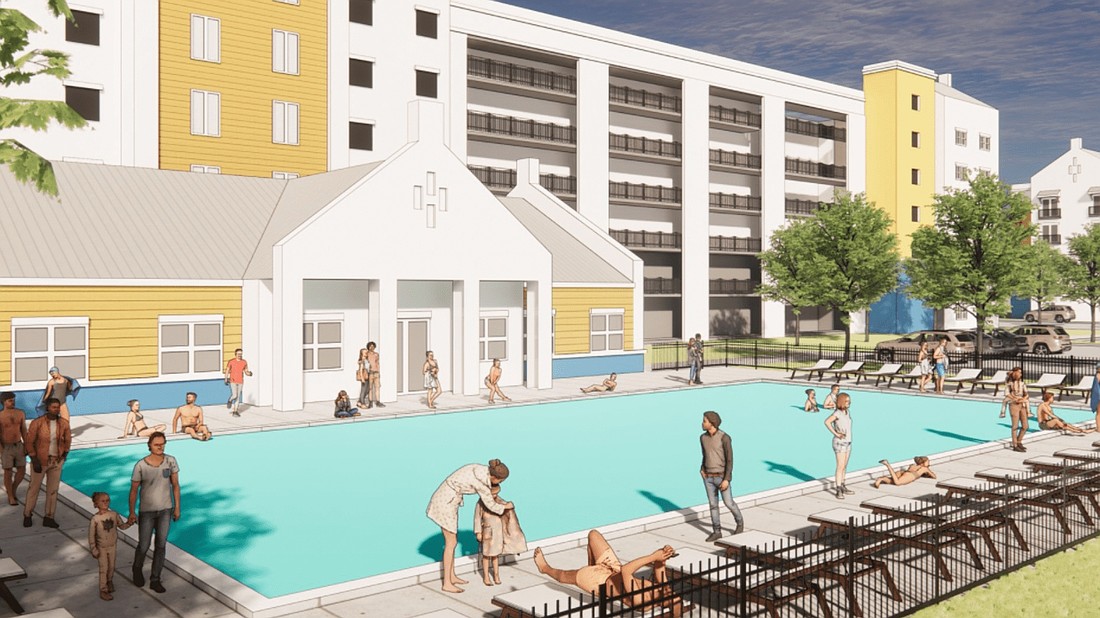
The Fairfield Avenue Apartments is under a Downtown Development Authority (DDA) and lies within a Community Redevelopment Area (CRA) and an Opportunity Zone, adjacent to the Pinellas Trail and Gibbs High School and a major bus line on US 19. Permits have been submitted to build a pool on site, and designs feature multiple outdoor barbecue areas, computer labs in each residential building and even a bike repair shop and bike corral. (A CRA is a special district created by a local government; a DDA is a special taxing district created by the state legislature.)
“Despite all the stress of putting all these deals together, the silver lining here is that the crucible we went through on this development has not only informed us on pathways forward for future projects for the housing authority and this expanded partnership … but also we learned things about HUD loans, how Penny for Pinellas works and all these other things we can now use in future projects,” Cappelli says.
“We’ve been given the tools that a lot of developers, if they’re willing to open up their books a little bit and be transparent, can find really creative ways to get to the finish line on these very difficult but necessary affordable projects.”