
- April 7, 2026

-
-
Loading
Loading
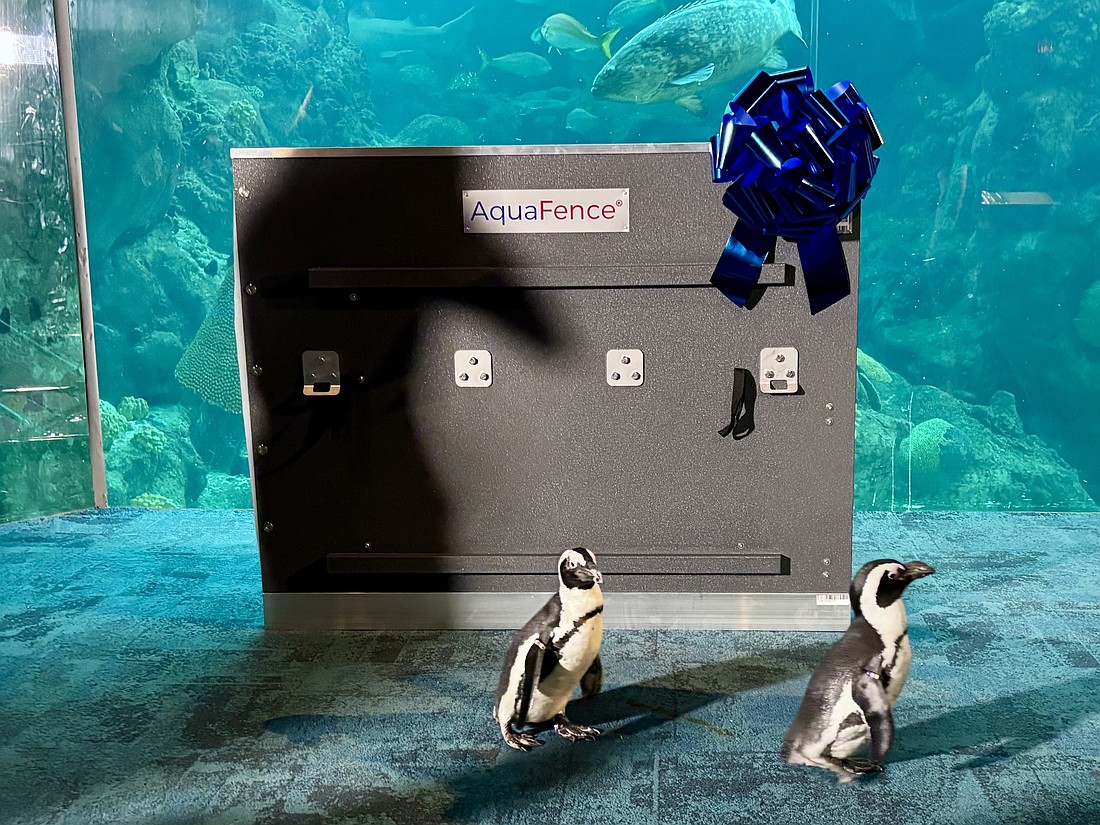
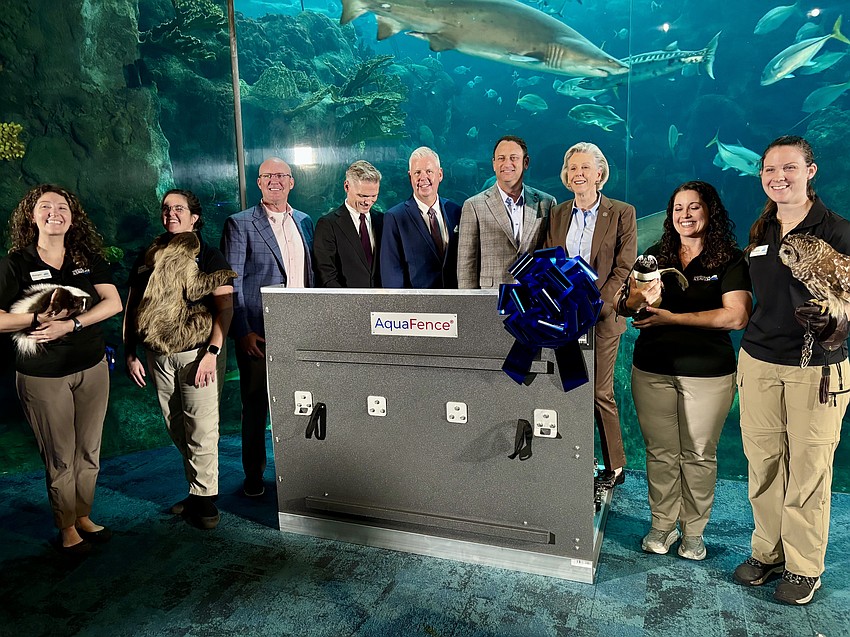
On a rainy Monday morning, surrounded by sea life, a sloth and seven school field trip groups, Tampa’s mayor and local officials gathered inside the Florida Aquarium to announce it will be the latest downtown institution equipped with an AquaFence — the viral flood mitigation barrier system that protected Tampa General Hospital from heavy storm surge during Hurricane Helene in 2024.
The aquarium’s new AquaFence is a gift from the Norwegian-born company, says chief revenue officer Patrik Hansson. Tampa General Hospital and Strategic Property Partners also provided financial support to install the aquarium’s new AquaFence, Hansson says, although the estimated cost was not disclosed during Monday’s event.
When Hurricanes Helene and Milton struck Tampa Bay in 2024, floodwaters surged through the Florida Aquarium’s doors, forcing staff to evacuate both marine life and other species, including reptiles and penguins to higher ground.
Installing an AquaFence around the building will eliminate the need for emergency animal evacuations and excessive sandbagging around the waterfront aquarium, which anchors Tampa’s Channelside district.
“After hurricanes Milton and Helene, it became clear that the aquarium is very vulnerable and needed additional layers of protection to safeguard the animals, the habitat, the staff and, of course, its mission,” Hansson told the audience at the event Monday. “We are honored to extend Tampa General Hospital-level of protection to one of Tampa’s most beloved institutions.”
Founded 26 years ago, AquaFence’’s namesake product is a rapidly-deployable, modular and reusable flood barrier system engineered to protect infrastructure from storm surges and floodwaters up to 15 feet high. The company’s waterproof barriers use the weight of encroaching floodwater to stay upright and secure to the ground. AquaFences protect some of the most well-known infrastructures in the world, from Tampa General Hospital to One World Trade Center in Manhattan, Hansson says, along with global airports, nuclear power plants and transportation hubs. The list of AquaFence users includes the Allegro condominium building in Naples, which went through an extensive process last year to get it installed.
And it was the company’s experience working with TGH and Tampa officials that convinced AquaFence to open its Water Street office last May, Hansson says. Now, the company is in the process of relocating its U.S. headquarters there.
“From the moment that we arrived in Tampa, this community welcomed us with open arms,” Hansson says. “In a short amount of time we’ve built meaningful relationships with city leaders, organizations and partners who all share the same commitment to protecting what makes Tampa special. That hometown spirit matters.”
While The Florida Aquarium was rushing to relocate its animals during Hurricane Helene, TGH President and CEO John Couris says the hospital’s installed AquaFences allowed business operations to continue as normal across the roughly 30-acre waterfront campus.
“Evacuation wasn’t a real option for us because of the complexity of the patients — it would be more dangerous to transport them than to keep them in place and protect them — so we needed a flood mitigation strategy," Couris says. “We conducted 30 surgeries throughout Hurricane Helene, including one kidney transplant surgery to a patient that needed to be transplanted that night. The hospital never stopped functioning, never stopped providing for this community, in big part because we were protected by AquaFence.”
The Florida Aquarium cares for more than 20,000 animals every day and is run by 300 staff members and more than 400 volunteers, says Roger Germann, president and CEO. For the past 30 years it has operated from its waterfront home at 701 Channelside Drive, Germann says, not only paying host to the millions of visitors who come through its doors each year, but also conducting conservation efforts and groundbreaking research on marine and wildlife species and their habitats. The nonprofit had $60.58 million in assets and $40.58 million in revenue in its most recent fiscal year, public tax filings show.
The AquaFence will be installed at the aquarium just before it breaks ground later this summer on its two biggest expansions ever — part of a $45 million capital campaign that will bring a puffin exhibit along with habitats for California sea lions and penguins, Germann says.
“We want to protect these animals because some of these are on the front lines of species survival,” Germann says. “Now, I can look every one of our donors in the eyes and say we’re building one of the greatest expansions in our history and your investment is safe because we have AquaFence.”