- April 2, 2026

-
-
Loading
Loading
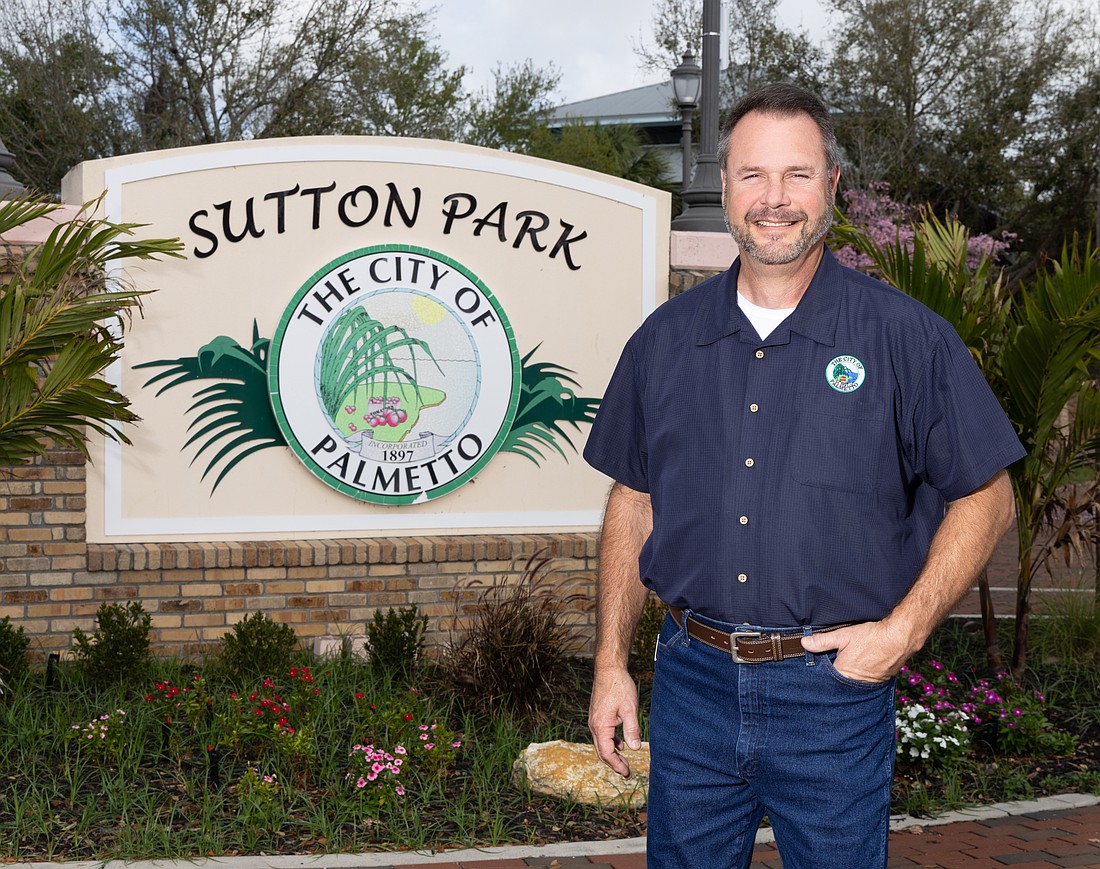
Sitting just off the Manatee River, about a mile north of Bradenton, is the city of Palmetto.
It’s a small place off of both U.S. Highway 41 and Business 41. Seven square miles, it has about 14,000 residents.
Founded in 1868 and declared a city in 1897, today it is undergoing a transformation that will change the quiet former agricultural town into a modern Florida city with thousands of new residences and a big push for commercial redevelopment.
This change is happening — and encouraged — under the watchful eyes of city leaders who are simultaneously working to hold on to the character they say makes the city special and a need they see to make Palmetto’s presence known to the world.
In how many different directions is Palmetto being pulled as it tries to perform this balancing act?
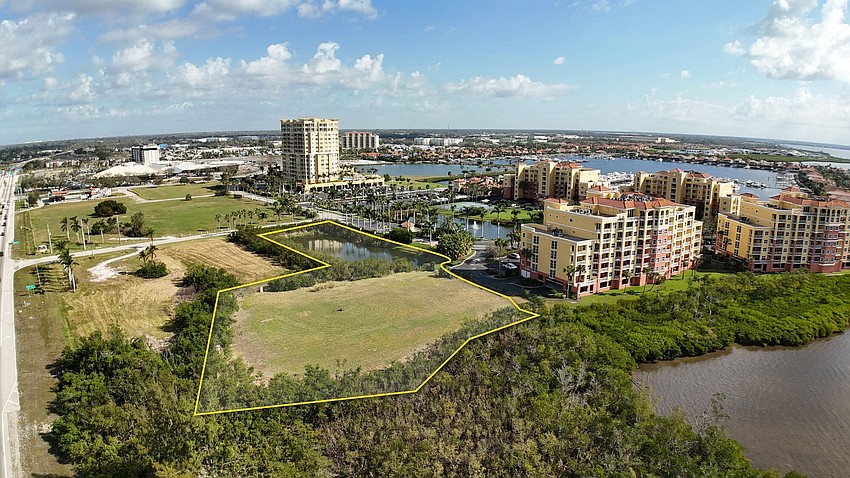
In just the past month, the city’s Community Redevelopment Agency won approval to sell off four parcels to a developer planning to build a six story, mixed used development with 152 apartments and the city’s government began having conversations about creating a branding campaign to redefine its image far outside Manatee.
Amid that growth, Palmetto held a heritage festival in early March to celebrate its past as an agricultural hub in the state at its historical park, which includes the city’s first post office, built in 1880.
That’s Palmetto these days: a city trying to balance the old and the new as it works toward respectability.
And it’s not just a conversation. As the city enters the new era, these goals are its guiding principles.
“It’s always been my thing that you don't know where you're going, so you have to know where you've been,” says Palmetto Mayor Dan West. “I’ve heard other people say it and I do believe that. We need to know our history because sometimes you can learn the good and the bad, right? You know there's both that comes with it. But a lot of that good stuff we can take with us into the future.”
Palmetto was founded by Samuel Sparks Lamb in 1868 and got its name from his home state of South Carolina — the Palmetto state.
According to West and the city’s website, Lamb imagined his property could one day become a village and donated land for a cemetery, three churches, a public library, the Woman’s Club and a park.
The big change for the city happened in 1902, when the railroad came. With the Manatee Lemon Co. being founded in 1892 and Atwood Grapefruit Co. planting 16,000 grapefruit trees along the river starting in 1897, the arrival brought in a new era, which lasted into the 1980s.
West says that while the entire county had a hand in agriculture, Palmetto became the local hub because of the railroad, bringing packing houses and an ice plant.
“It was unbelievable what was going on here,” he says.
Today, there is some agriculture left but it has been heavily affected by the decline of the citrus industry, which has taken a massive hit across the state due to freezes, strong hurricanes and, especially, greening. (Citrus greening is a bacterial disease that attacks the vascular system of plants.)
“Back in the 1980s, everywhere around here would be smelling of citrus bloom right now,” says West. “You would go around anywhere and there were little groves here and there.”
That's not the Palmetto of today.
Coming into the city from the south across the Manatee River, the first business you see after a digital welcome sign is a consignment boat dealership. The road turns into Eighth Avenue and becomes a commercial district. There are banks and auto repair shops. Restaurants. Hair salons and barbershops. And convenience stores.
A half a block off of Eighth Avenue, about a quarter of the way into town, there is a five-story building with the name Your CDB Store inscribed at the top that casts a shadow over the single-story City Hall next door. An early learning center is at the front of the building.
That is the Palmetto most people know. And it’s a shame this one strip is the only impression most people have, some locals say.
“There’re a lot of great, great things going on here, but people drive by on Eighth and don't take a moment to look,” says Matt Kezar, a local resident and a broker active in the city for Ian Black Real Estate.
“What we're asking is for people to stop and take a moment to look because there is so much more here.”
The overlooked piece is just a couple of blocks west of Eighth Avenue, where the Palmetto Historical Park sits along a quiet downtown with a small main street shopping district and local library that all dead ends at the city’s waterfront on the Manatee River.
A little beyond that area, older homes line the streets — a stark juxtaposition from a few blocks away, where the housing is made up of mostly little run down houses and one-story apartment communities.
This, the area near the downtown district, is the Palmetto that locals want highlighted, enhanced and protected.
While it’s no small feat, Kezar points at other localities — St. Augustine, Charleston — that have managed to both hold onto their character while growing.
Those cities “maintain what made them what they are, and yet expand upon that,” he says.
To that end, Kezar says Palmetto is working on numerous restoration and revitalization projects, including the development of a multimodal Riverwalk and 14th Avenue Park, and on improvements to 10th Avenue, including the possible addition of cobblestones.
The city has also undertaken a $6 million infrastructure project to, in part, increase the capacity of its sewage systems to adjust for growth.
That growth is both planned and already in the works. Kezar says 2,000 waterfront homes are under construction in Riviera Dunes, one of the largest master-planned communities in the area, and the Florida International Tradeport industrial park in the city plans to add 1 million more square feet.
Kezar’s interest in making the balancing act work in Palmetto is both personal and professional.
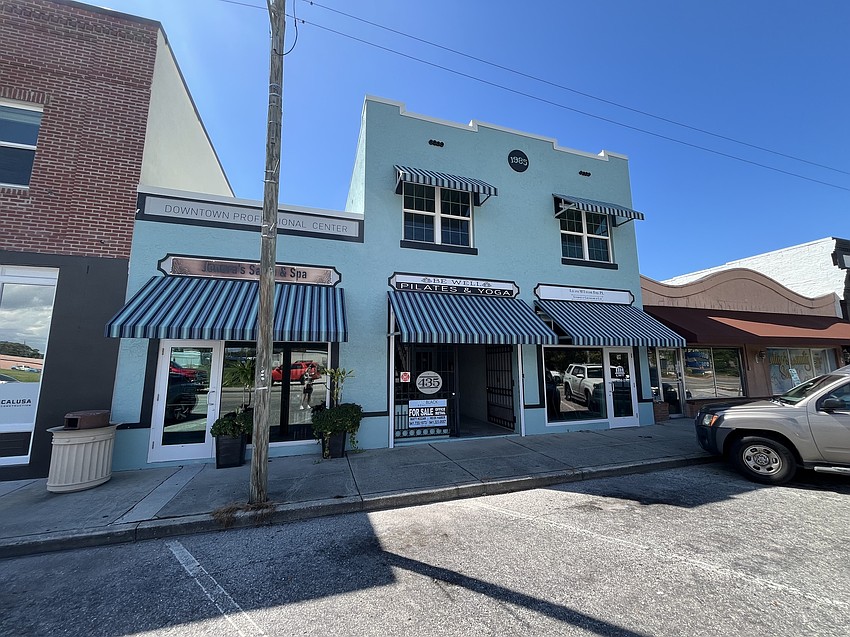
In his role at Ian Black, he is listing — and has listed — several properties in the city. Driving around it feels like his name pops up on a for sale sign every few hundred yards.
The Your CBD Store building? He’s listed it for $6 million. He also has the listing for a building at 435 10th Ave. in the downtown area, having sold another a few doors down at 449 10th Ave. The latter is a renovated office building that’s now the home of Eleanor’s Coffee & Cakes.
“We all know each other. We all deal with each other. Our kids go to school together. You really want to take care of the community you live in,” Kezar says.
“That said, Palmetto has some gaps, and it needs both public and private investment to make, what I think, could be the perfect community.”
Probably no one is better suited to look at what Palmetto was, is and can be than Tony DeRusso.
DeRusso is managing director and a minority owner of the Palmetto Marriott Resort & Spa, a newly built eight-story, 252-room hotel that opened in 2024 alongside the renovated Bradenton Area Convention Center.
When DeRusso first heard about the idea for the hotel, he was working in Northern California for the developer, Improvement Network Development Partners.
When he looked at the idea for the project on his laptop in his office just outside of Silicon Valley, he considered “the normal things you look at for a large real estate development project,” the metrics that are part of the due diligence process.
DeRusso examined the population, the demographics, the local income and immediate points of interest.
He was not impressed.
“They all failed, to be honest with you. They didn’t pass,” DeRusso says.
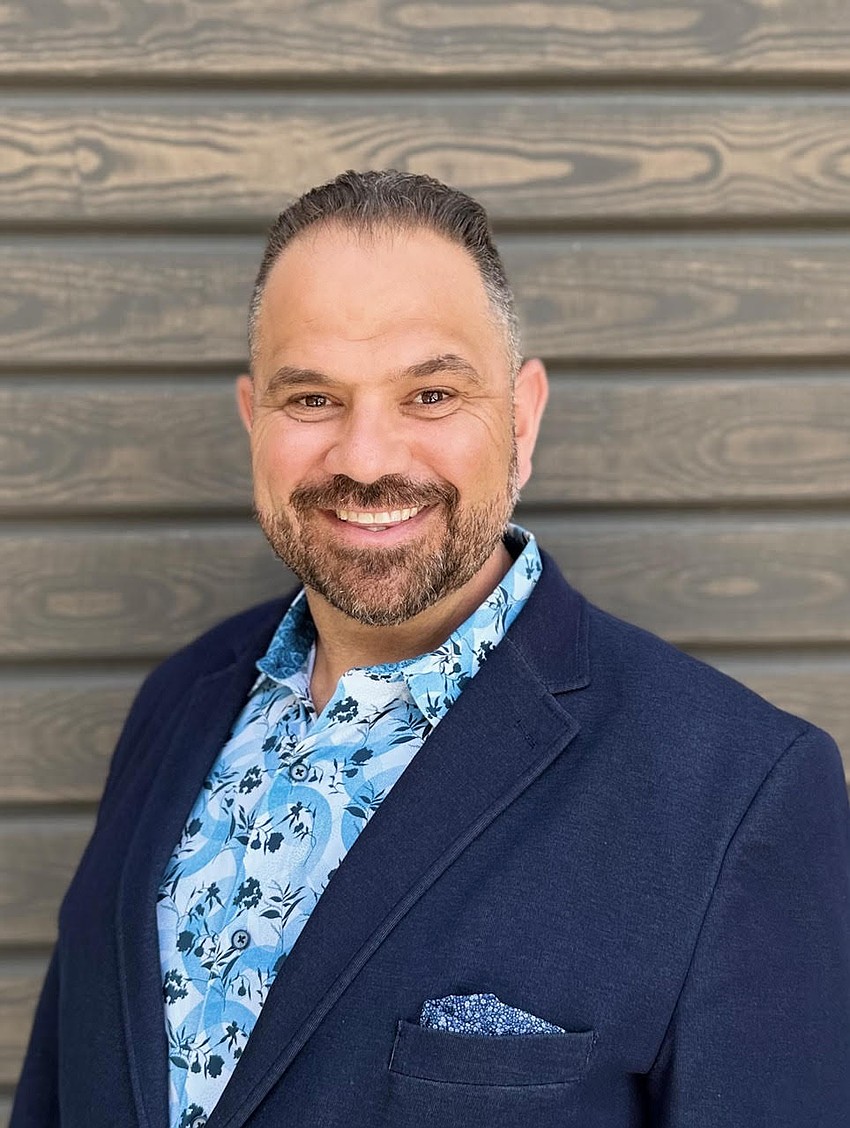
“So, I closed my laptop and I walked into the then-CFOs office and I said, ‘Not only no, I don't think that it's really worth me getting on a plane.’”
DeRusso did get on the plane, though, and found a place where he could make the hotel and resort work.
What helped changed his mind was finding a quaint, hospitable community where he could build an approachable luxury property right on the water. That’s what he did.
He now has plans to improve the hotel and resort, bringing micro-retail and other concepts to help draw crowds to create a community gathering spot that attracts locals and folks from other places.
And, DeRusso says, eventually there could be a second full-service hotel built on the property.
He also found a home.
DeRusso now lives in Palmetto and is heavily involved in the community. While it’s not Silicon Valley, he says there is room to spread out and one can still connect to anything on the Gulf Coast of Florida.
As for the city itself, he says “we do need to elevate it a little bit, but I think we've got a lot of the infrastructure and a lot of the right people in place to really help Palmetto reach its full potential.”
As for Mayor Dan West, he is uniquely qualified for his role. A native and local citrus farmer, he spent eight years as a Palmetto High School agriculture teacher and 17 years managing the Manatee County Fair. He was elected mayor in 2024.
Having a conversation with him one feels as if the conversation is with a history teacher, not a politician. He talks at length about the city and its past, the founders and its early agricultural history.
West credits this passion on his grandmother, Nora Groover, who taught him about his hometown by driving him around as a child and showing him the important places.
But for all his talk about the past and the importance of honoring it, he believes the city needs to make changes and that growth is not antithetical to honoring what was there before.
And that is a key strategy behind the plan to rebrand Palmetto.
West says the goal is to better communicate what the city is today while honoring “where we came from.”
That includes both addressing the perceptions outsiders have of Palmetto and making sure those in the city — residents and businesses — have a clear understanding of the direction and growth.
“We have to let people know the history. I think they like to embrace it. Even when they're new here, I think they like to embrace where they're going to live,” he says.
He adds: "The community is evolving, and we want to make sure that is reflected in how we tell our story.”