- December 5, 2025
Loading
On Saturday night, as the Tampa Bay Rays completed the first inning of a game the team would eventually lose to the Boston Red Sox 6-3, a video flashed up on the outfield screen of George Steinbrenner Field in Tampa.
It was a 98-second tribute to Stuart Sternberg, the man who has owned the Tampa Bay Rays for 21 years and who helped build one of the most successful on-the field franchises of the past two decades.
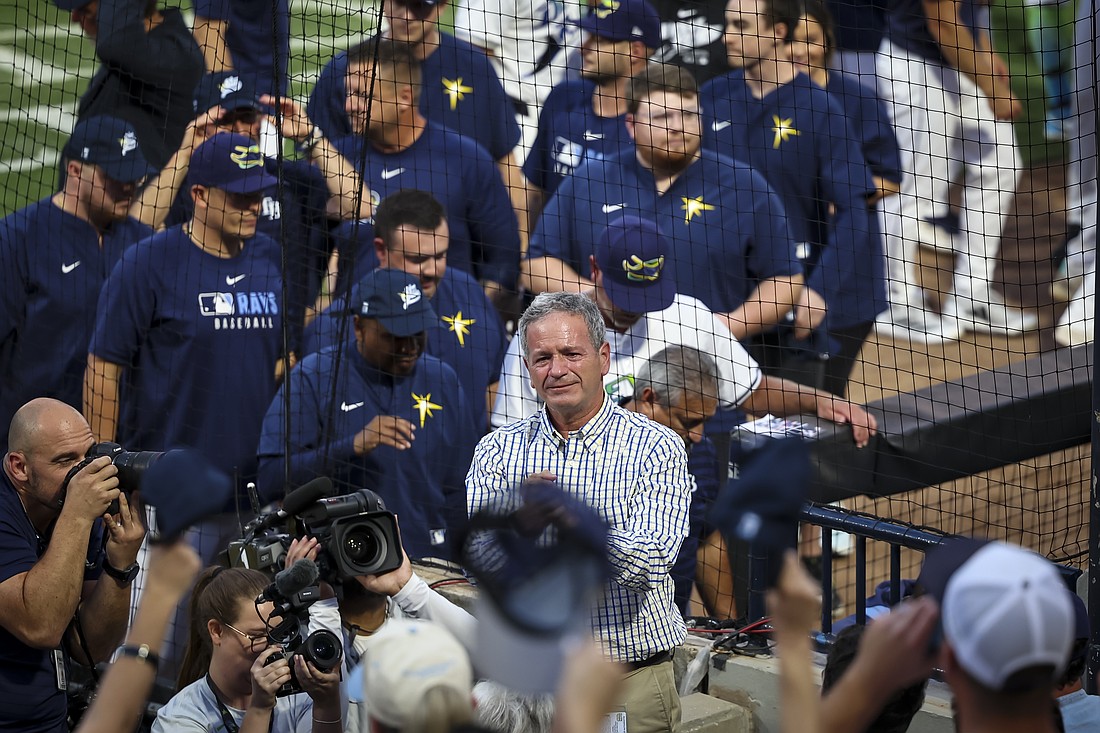
As the video wound down, players and coaches, led by manager Kevin Cash, tipped their hats — the ultimate sign of respect in baseball — to Sternberg, who sat along the first baseline nearby.
Sternberg, who joined as a general partner of the franchise in 2004 and became its principal owner after the 2005 season, stood and acknowledged the crowd and his team — likely for the last time.
That's because Sternberg — the man who transformed the then-Devil Rays into a perennial winner — has sold the team. The deal is on the verge of officially closing, with Major League Baseball approving the sale Monday.
The new ownership group is led by Jacksonville homebuilder Patrick Zalupski; the Rays have reportedly been valued at $1.7 billion.
The Rays, through a spokesperson, declined to comment on the amount or provide an update on the transition. The team also did not respond to a request to interview Sternberg.
In a statement on Sept. 17, though, it said “information about the sale and new ownership group will be shared after the transaction is completed.”
With Sternberg’s imminent departure as owner, the attention now turns to the future ownership and the largest question to be answered is where the team will play next.
For now, the plan is for the team to return to Tropicana Field in St. Petersburg next season, where there is an existing lease until 2028.
But Zalupski’s group faces similar revenue constraints Sternberg did and the reality is Tropicana Field is highly unlikely to be a long-term solution.
Ownership has committed to staying in the area and Major League Baseball officials have said the league does not want it to move.
The question is where that stadium will be built.
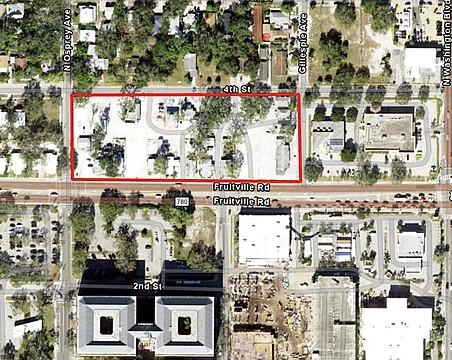
There has been chatter about Ybor City and the site of Hillsborough Community College as potential places for a new stadium. There has even been talk that the team would buy and build on the site of Westshore Plaza, a 53.3-acre mall property on the market off of Kennedy Boulevard just off Interstate 275 and the Howard Frankland Bridge.
Ybor City, where the Rays once planned to build a new ballpark, is a favorite. But the question there is where in the neighborhood could a stadium be built?
One of the most wished-for parcels is part of the 33-acre mixed-use development Ybor Harbor on the Ybor Channel, just south of Adamo Drive, that developer Darryl Shaw is building.
However, Shaw, the developer behind Gas Worx, has said the Tampa Bay Sun FC, the women’s soccer team he owns, is looking to build a stadium on that property. And he recently told the Business Observer, in an interview unrelated to the Rays sale, to not take speculation that the baseball team would build there too seriously, saying talk about the possibility is coming “not from me and not from the team.”
Shaw says he didn't know much about the sale and wasn't involved in the process.
One big obstacle for building a new ballpark will be the use of public funds.
When the Rays agreed to build a $1.3 billion ballpark in St. Petersburg last year, the agreement, which eventually fell apart, included $312.5 million from Pinellas County and $280 million from the city.
And that deal included the $6.5 billion redevelopment of the Historic Gas Plant District.
Tampa Mayor Jane Castor's spokesperson says the mayor has had a “couple conversations with the new owners but they did not talked about any specific, like a proposed site or financing plan."
“That plan, and whether it makes good sense for taxpayers and community members, will determine the level of political support.”
But the team staying put in St. Petersburg is also not out of the question. At least not as far as Mayor Kenneth Welch is concerned.
While his main focus remains the redevelopment of the historically Black neighborhood razed to make way for Tropicana Field in the 1990s, he says in a statement that “Once that process is complete, we look forward to engaging in good-faith conversations with any new ownership group about the future of Major League Baseball in St. Petersburg beyond 2028.”
“St. Petersburg and Pinellas County have a rich baseball history and a strong, diverse community that has consistently supported the Rays. We’ve been counted out before, but we continue to show our resilience, vision, and value.”
As for the organization, the Rays announced team co- presidents Matt Silverman and Brian Auld will step away once the sale closes. (Auld is staying on as a senior advisor.)
But, there has not been any public statement about the future of the team’s baseball operations so far.
That could change once the season ends Sept. 28. The team has failed to make the playoffs for a second consecutive year and it not unusual for new owners to come in with a new vision.
The new owners will also have the difficult task of drawing fans to wherever the Rays play. Despite all its success, the team has failed by all measurable accounts to increase the number of people in the seats, a fact Sternberg and his staff have bemoaned publicly.
This season the Rays, who were playing in a Tampa ballpark with about 75% fewer seats than at Tropicana Field, drew 786,750 fans for the season. In a stadium that holds 11,026, it averaged 9,712 fans per game.
For now, though, as the season winds down and the sale nears completion, the focus will be on Sternberg’s tenure as the team's owner.
While his failure to secure a new stadium and poor attendance is what will be focused in the short-term, a generation of fans are likely to remember the big moments on the field.
On that Saturday night of the hat tip, Sternberg, 66, thanked players, staff and fans, waving and blowing kisses into the stands.
Team employees wore hats with a broken window detailed on one side, a nod to Sternberg’s philosophy: “break some windows; don’t burn down the house.”
On the other side of the hat was an image of Sandy Koufax, the Brooklyn and Los Angeles Dodgers legend, one of Sternberg’s favorite players growing up.
Koufax, one of the greatest pitchers to ever play the game, retired at just 30 because of injuries, leaving many to speculate how much more he could have accomplished if not for the setbacks.
As the sale of the Rays nears, one has to wonder if years, decades, from now baseball aficionados won’t be asking the same question about Sternberg.
Anastasia Dawson contributed to this report.