YIGBY picture gets clearer as Gulf Coast localities work on adoption

Yes in God's Backyard is a tool to spur the development of affordable housing by allowing religious organizations to bypass zoning rules to build on their land.


  • By Louis Llovio
  • | 5:00 a.m. September 16, 2025
  • | 2 Free Articles Remaining!
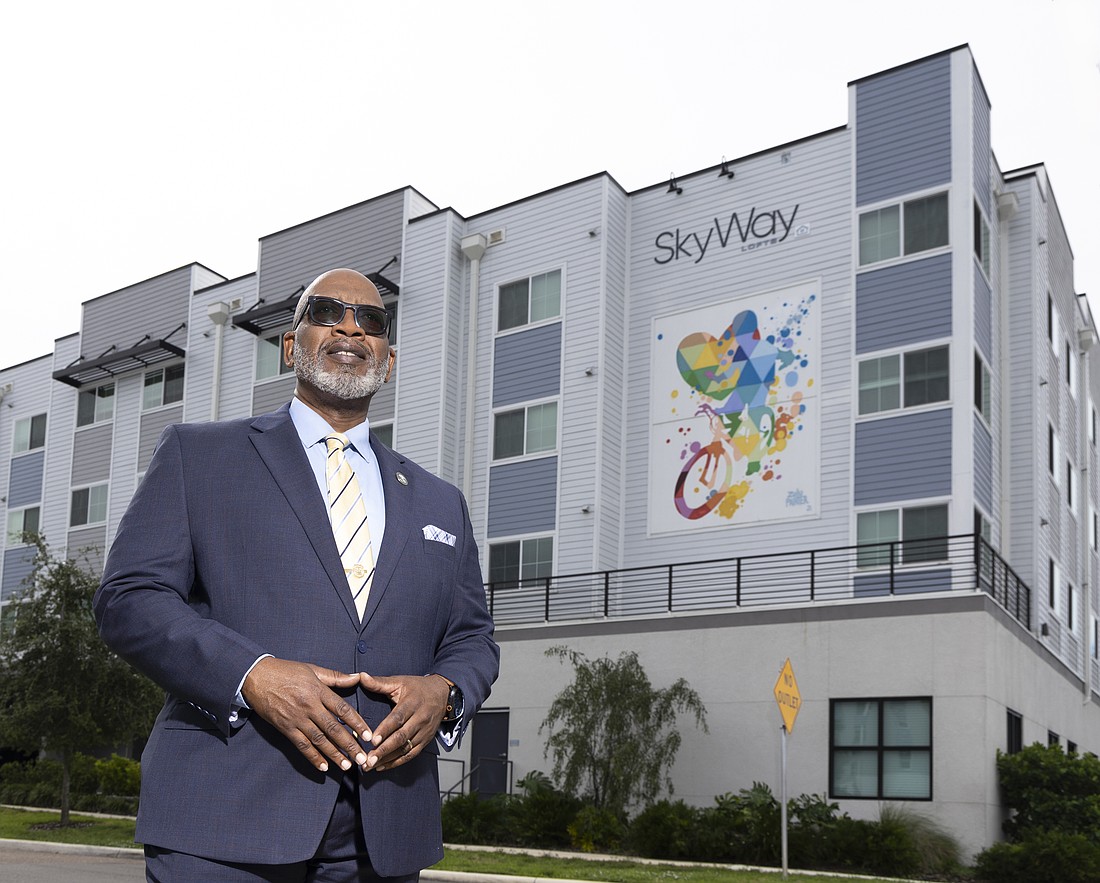
Kenneth T. Welch, St. Petersburg's mayor and a strong advocate for affordable housing in the city, stands outside the Sky Way Loft apartments at 34th Street South.
Photo by Mark Wemple
  • Florida
  • Share

Just a few months after a new statewide affordable housing rule went into effect, localities in the region are in the early stages of figuring out how to implement a policy that could help address one of the most pressing issues facing Gulf Coast communities.

The simple rule upends how some affordable housing projects move forward. It also uses a name that upends the negative connotation that building new housing has to be adversarial by putting a positive spin on a negative term.

The law, which was approved by the Legislature with bipartisan support and went into effect July 1, is known as YIGBY, which stand for Yes In God’s Back Yard.

The legislation, SB 1730, updated the Live Local Act and joined Florida with several other states that have approved YIGBY laws. The law is meant to help spur affordable housing development statewide as costs continue to be a barrier for many residents.

What YIGBY does is allow religious organizations to build affordable housing projects on land they already own, even land that isn’t zoned residential. (The land needs to either have a house of public worship on it or be connected to a parcel with a house of public worship.)

The idea, says the statewide nonprofit Florida Housing Coalition, is that this will allow congregations wanting to build housing on their land to avoid what can be a costly, slow, and uncertain rezoning processes.

It is also gives localities another way to tackle affordable housing problems.

YIGBY gives cities and counties the authority to set development standards for these projects — as long as 10% of the homes are considered affordable to households at or below 120% of the area median income.

And it opens up a vast amount of land that can be used for affordable housing projects. The Florida Housing Coalition estimates that if all local governments in the state participate in YIGBY it could unlock more than 30,000 parcels for affordable housing.

“It’s a tool in the toolkit,” says St. Petersburg Mayor Kenneth Welch, one of the leading proponents of the YIGBY law as it moved through the Legislature this past session.

“Knowing the faith-based community very well, I know that many churches, and not all of them are wealthy, have land that could be used. Whether it's for 10 duplexes or something larger, they can contribute to a larger solution.”


Get started

But as with all laws, there is a catch. It is not a mandatory requirement.

Cities and counties must choose to use it and can either approach the projects on a case-by-case basis or adopt ordinances to set rules.

As of right now, local governments around the region are working on how to proceed.

“The law is still in its very early days, so no local government has implemented it locally yet,” says Kody Glazer, chief legal and policy officer for the Florida Housing Coalition.

“The City of Miami is set to likely be the first jurisdiction to adopt a YIGBY policy in late September/early October. Many others are aware of the law and considering activating it — we have been beating the drum statewide to educate folks on what the law is and how it can better communities.”

The coalition is hopeful that localities adopt ordinance with guidelines because they will “provide clarity, consistency, and transparency for both developers and the public.”


Across the region

St. Petersburg has begun developing rules on how it will administer YIGBY, and has also started an outreach mission with local congregations.

It’s critical, says Welch, for faith-based organizations to sit down with their leadership and with experts who know how the development process works to make sure they are making the right decisions. “They’re not in this line of business, right?”

To that end, Welch says the city’s housing team is advising faith organizations on what the possibilities are for their land and making introductions to proven developers.

Qualifying land owned by religious institutions
CountyNo. of parcelsTotal acresMedian parcel size
Charlotte99 to 104541.34 to 558.454.22 to 4.29
Collier190 to 197826.43 to 831.642.57 to 2.59
Hillsborough1,722 to 2,2195,064.66 to 5,754.620.59 to 0.90
Lee566 to1,0242,162.88 to 2,306.800.41 to 1.86
Manatee424 to 4811,279.52 to 1,383.210.68 to 0.87
Pasco368 to 3701,794.91 to 1,824.131.57 to 1.81
Pinellas898 to 8992,100.31 to 2,309.390.85 to 0.95
Polk1,243 to 1,4492,991.77 to 3,816.260.56 to 0.74
Sarasota3231,472.42 to 1,540.242.66 to 2.88

George Smith, St. Petersburg’s chief equity officer, says the city plans to begin holding workshops by January that will connect congregations with experts in financing and consultants.

The goal is to give the religious organizations clarity on the process and what it would entail so they can be sure of what they are getting into moving forward.

“We want to make sure that they understand that this is housing development — which is a very complex, complicated undertaking — and not to come in thinking they can just walk in and a check could be given to them,” Smith says.

“That's not what this is about. This is heavy lifting. So, we want to support them, but we want them to be armed with all the information they need.”

Elsewhere in the region, Sarasota’s city staff doesn’t plan to propose an ordinance and will approach YIGBY projects as it does any other that needs a majority vote for approval, officials say. Sarasota County’s Planning and Development Services Department says there haven’t been discussions about an ordinance and that it will evaluate projects on a case-by-case basis.

The affordable housing advisory committee in Manatee County has had discussions but no ordinances have been drafted as of yet.

Across Tampa Bay, Pinellas County commissioners are set to review the issue at a work session next month and in Tampa “we’re ready to roll with this, and already have a process in place for the city council to approve these projects,” says a spokesperson.

Fort Myers’ Community Development Department says, through a spokesperson, that “it’s not something we’re for or against per se. It’s a state mandate so we are required to follow the statute.”

And in Lakeland, a spokesperson says the City Manager’s office and the City Commission haven’t had any discussion on YIGBY and that no applications have come through yet.


author

Louis Llovio

Louis Llovio is the deputy managing editor at the Business Observer. Before going to work at the Observer, the longtime business writer worked at the Richmond Times-Dispatch, Maryland Daily Record and for the Baltimore Sun Media Group. He lives in Tampa.

Latest News

Sponsored Content