- December 13, 2025
Loading
It was a chance phone call that led Dr. Miguel Rivera to his professional passion. He was figuring out his next steps after his Sarasota-based integrative health practice had failed to take off when he got a phone call from Dr. Bruce Robinson, chief of geriatrics at Sarasota Memorial Hospital.
Rivera had rotated through Robinson’s service during his psychiatry residency training at the University of South Florida, where the latter had been a professor at the time. Now Robinson wanted to see if he’d do some consultations at local nursing home facilities.
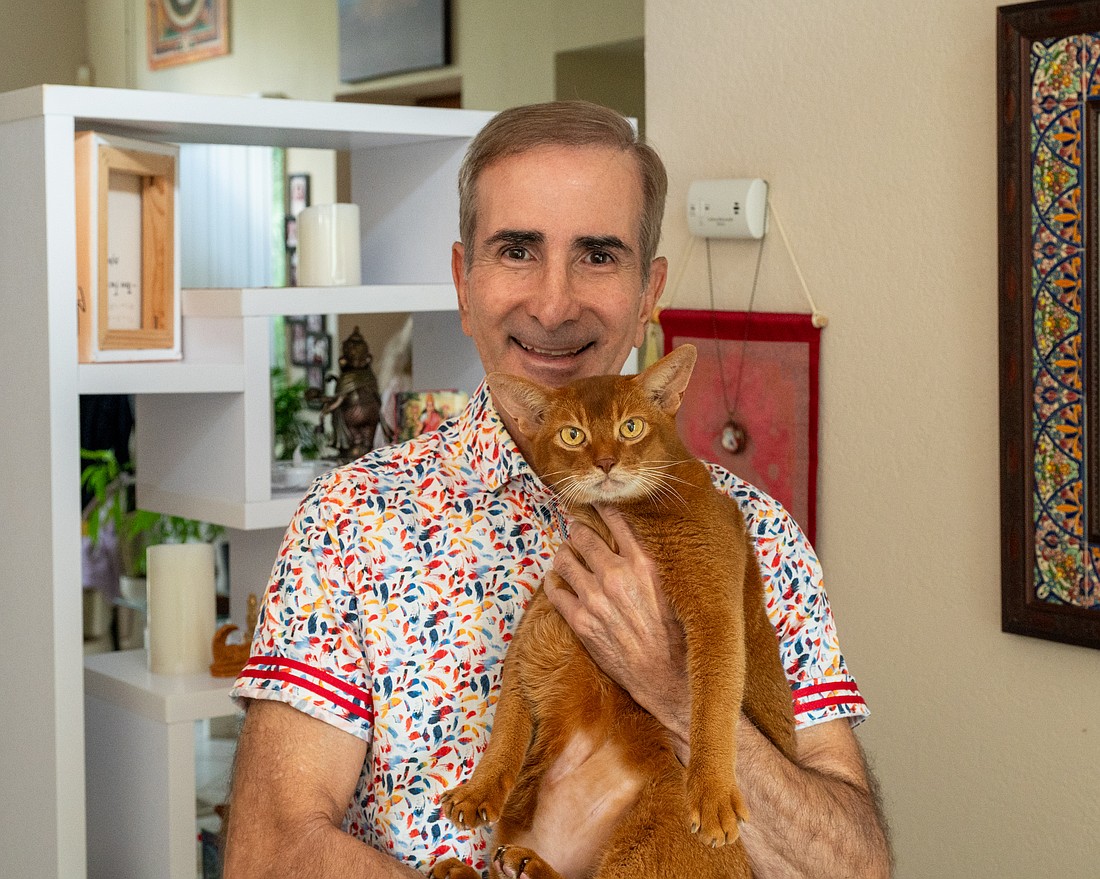
That was how Rivera began treating people with dementia in the Sarasota-Manatee area — and it’s remained his focus for almost two decades, where he’s picked up the nickname “Dementia Doc,” working both out of his Lakewood Ranch office and as a mobile physician.
“All these people were like my grandpa and my grandma,” he says. “I just felt this connection to them. Through the years I’ve gotten very close to so many of my patients and their families. For me, it hasn’t been just seeing a patient. It’s definitely that connection that develops with the patients with dementia that’s been instrumental in me continuing to do this kind of work.”
Beyond specific patients, Rivera has also facilitated some changes in dementia care, from a renewed focus on caregivers to the legal side of helping patients. He has an active YouTube channel, Dementia Doc, with videos on topics such as brain fog, medications and how sleep impacts cognition. Rivera also has spoken worldwide about dementia management, caregiving and prevention, according to his website, traveling across the U.S. and in Europe, China, Japan, India and Taiwan.

When seeing patients, Rivera, 62, typically starts by assessing the medications they are taking. Sometimes a medication for another condition can have impacts on a patient’s cognitive functioning. “I am always looking to minimize the use of medications and trying to identify medications that could conceivably be making things worse,” he says.
He also incorporates holistic and alternative therapies with patients. He first explored aromatherapy, massage and music after the FDA issued a “black box” warning around the use of antipsychotic medications in the elderly — the most serious warning placed on a prescription drug’s label.
“I remember opening up that email and being a little bit floored, going ‘What am I going to do?’” he recalls. “It was just this upending in the way in which I’d been taught to manage all these things. So I immediately, right then and there, got on the computer and Googled holistic ways to manage dementia-related symptoms.”
Hearing familiar and favorite songs, especially from their youth and other happy times of their lives, has helped his patients relax, communicate and receive necessary care. “There is definitely something magical about music,” says Rivera.
Aromatherapy has also proved helpful for many of his patients (and maybe even for other health care staff who work with them). While these kinds of holistic interventions don’t take the place of antipsychotic medications, Rivera notes that they can decrease the frequency at which they are prescribed.
Rivera’s work became personal when his father was diagnosed with Lewy body dementia. “I have firsthand knowledge of this disease, having been a caregiver for my dad and now for my mom [who’s experiencing some dementia-related issues],” he says. “And what I always share when people ask me about my experience is that being a dementia practitioner did not prepare me for how difficult and challenging it was to transition into being a dementia caregiver.” (Rivera’s dad died in 2018 at 86 years old, according to the physician's website.)
That’s why he emphasizes dementia is a family disease, and that family members need just as much support as the patients themselves. “I think the biggest challenge was that I stopped taking care of myself,” he says. “My wholehearted recommendation for anybody whose loved one is diagnosed with dementia is to get some help…Acknowledge that in order to be able to take the best care possible of your loved one, that you need to take care of yourself.”
While Rivera wants people to understand that dementia is “relentlessly progressive,” he also encourages family members and other caregivers to notice changes in patients and mention them to their medical team. “It is so much easier to take care of a problem that is just starting as opposed to letting things ride and then having an emergency on your hands,” he says. “An early intervention gives the opportunity for better outcomes.”
He also sees the need for further education about the cognitive condition for first responders, emergency room staff, law enforcement and others. He saw this need firsthand when he did a consultation for a patient who was being mistreated by a caregiver. But because she had dementia, no one she’d told prior had believed her.
“I just feel that it is so important as the Baby Boomer generation continues to age and more people will be diagnosed with dementia,” he says. “I think sensitivity training or something along those lines is so important as our society continues to age.”