- January 27, 2026
Loading
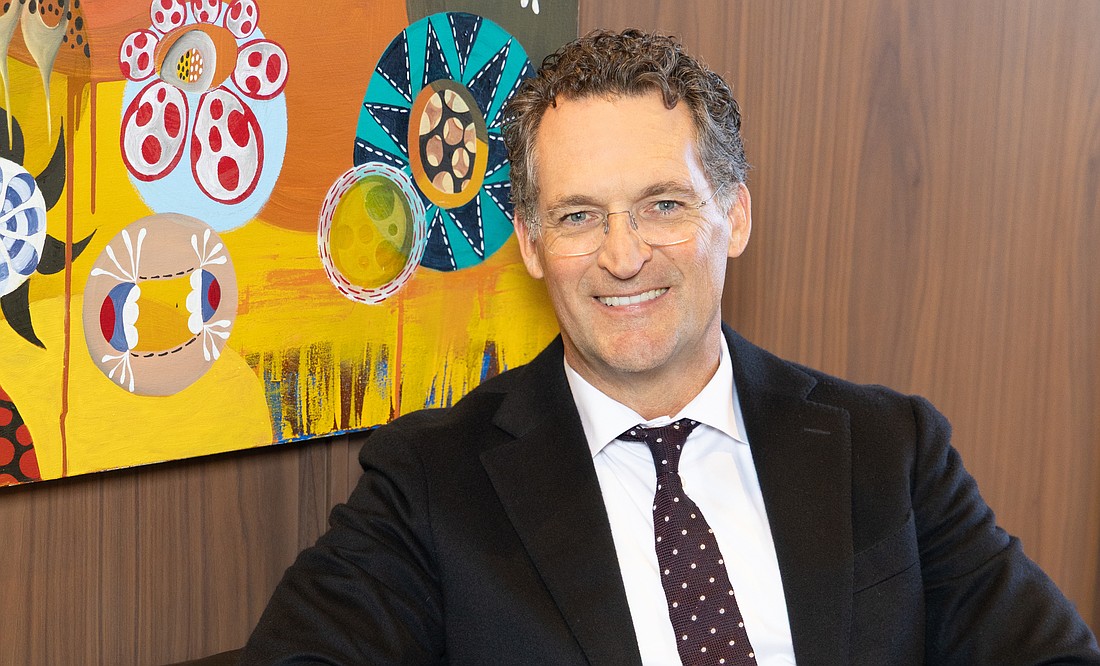
Phillip Smith, with degrees in architecture from Auburn and Harvard universities, checked out Florida in 2005 for a North Carolina architecture firm looking to expand in the state.
Smith had a descriptive — albeit not exactly a Chamber of Commerce-esque —first impression. "When I saw downtown Tampa, it was like I was looking at a beautiful smile that was missing a bunch of teeth," Smith says. "There were so many incredible opportunities to revitalize this city, from a riverfront that had yet to be recognized to spaces where we could link West Shore to the downtown area to the I-4 corridor. I just saw all these beautiful bones of a city with all this rich history and yet it was still a city that had yet to really come into its own."
Tampa, obviously, has come into its own, dramatically, in the past 20 years.
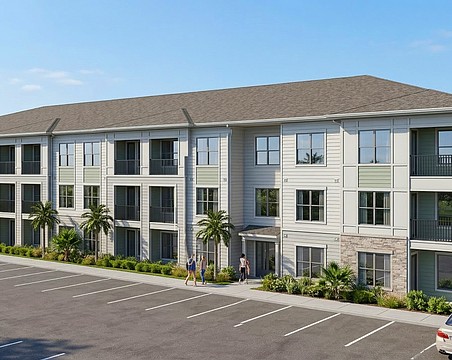
Smith has been a part of the growth. In 2011 he founded a company, Framework Group, that develops multifamily housing communities statewide. And now Smith will get a close up view of the area's continued surge: he was recently elected chairman of ULI Tampa Bay, a prominent voice in land use and real estate development across the region. Smith's term for the organization — with nearly 700 members across seven counties, from Citrus to Sarasota — lasts for two years, until June 30, 2027.
In addition to UI Tampa Bay, Smith serves on the board for Tampa’s Westshore Alliance and founded and leads the Porchlight Foundation, a nonprofit that provides development and construction management services for other nonprofits with housing needs.
Smith recently spoke with the Business Observer about Tampa’s explosive growth, the city’s biggest challenges, and his goals for ULI Tampa Bay during his term as chairman. Edited excerpts:
I came here from Boston to open an office for a Charlotte-based company that wanted to grow into Florida. They said, ‘Travel around the state and tell us what you think is the strongest market — where’s the best place for a multifamily development operation to begin?’ So I did travel all over Florida and Tampa Bay (this was in 2005, by the way) was a standout to me...That’s what brought me here — I was excited about the urban potential of Tampa and it has been so fun to be a part of bringing that to fruition with ULI.
My stated goal for this two-year term is to really be the key resource for our elected and public officials, being very intentional about fostering those relationships and making ourselves available. There are so many complex, land use related issues on their desk, not to mention urban planning and growth management and transportation and infrastructure and housing — all those things that ULI members have made our day jobs. As an organization, we really represent all the people who touch all of those disciplines. And so one of the things I think we can do a whole lot better than we've done in the past, is to offer those resources and subject matter expertise to the public officials charged with deciding the fate of these projects.
That’s a big question, and the answer I think is different when you talk about each of those subject matters. Certainly, Tampa has the farthest to go in terms of our transportation infrastructure. We are the farthest behind. There are many, many cities across the country that are light years ahead of us in terms of their transportation infrastructure solutions that we can look to as models. I also think we can do a lot better when it comes to affordable housing. I think we can be more forward thinking about kinds of tax incentive structures to encourage affordable housing. We've done that successfully in many municipalities around the state and I think it could absolutely work on a broad scale.
I'm not sure it’s something that we can kind of get over or unwind. I think we learn. We learn that, as cities and regions, it’s imperative that our leadership develop a master plan to guide growth. As a region, smart growth principles ask us to be critical of that and to plan ahead and lay out infrastructure as cities and counties so we can guide growth, as opposed to simply being reactive. Now, we tend to say, ‘Hey, lets go build out in this greenfield’ and when it’s too late to turn back we go, ‘Oh crap, now we have to go build new water lines.” Cities and counties should, as part of their master plans, tell us where to go and have a plan for these developments before they break ground.
It’s interesting. Obviously, because of COVID-19, fewer people are wanting to come back to those older office buildings of the 80s and 90s that used to really define a city. That’s not where people want to work, and so you’re not going to see many new office buildings unless they’re really high-end, live-work buildings like the ones in Water Street or Midtown. Historically, the office building has been the driver and that’s come at the expense of some other things, too. If you looked at Tampa in the 80s and 90s, Tampa was vacuous after 5pm because nobody was living there. If you turn the clock back even further, to the early 20th century, you see a much better balance between commercial and residential, and that’s kind of where we’ve returned. I’m not so sure that Water Street, for example, lacks an anchor so much because it’s got that balance of places to live and work and eat and play all in proximity to each other. Of course the ultimate anchor for any development would be a ballpark in Tampa, but that’s just my personal bias. I don’t want to see the (Tampa Bay) Rays go anywhere. I think they would be very successful here.
I look at Armature Works as a perfect example. It's one of the earlier urban revitalization projects, sort of a little experiment, and it really kicked off the revitalization we’re seeing throughout Tampa today. First the food hall came, then you got some retail and some housing, and still I think it’s remained very accessible to people on many different price points. When I go there it’s like a perfect cross-section of Tampa — you see families, kids, people of all races just playing in the splash pad or lounging by the river outside, and to me it’s a very strong reflection of what we hope to achieve with these new developments. Obviously, prices are going to vary from neighborhood to neighborhood in any city, but we have to keep revitalizing. When I see the Gasworx project and Water Street, these used to be industrial wastelands and now they are economic engines that help fund the city and help make it better for everyone. I think as long as we keep bringing life back to these pockets of the community that have gone overlooked for so long, the demand will be there from people of all walks of life.