$18.5M historic Ybor City building restoration in final stages


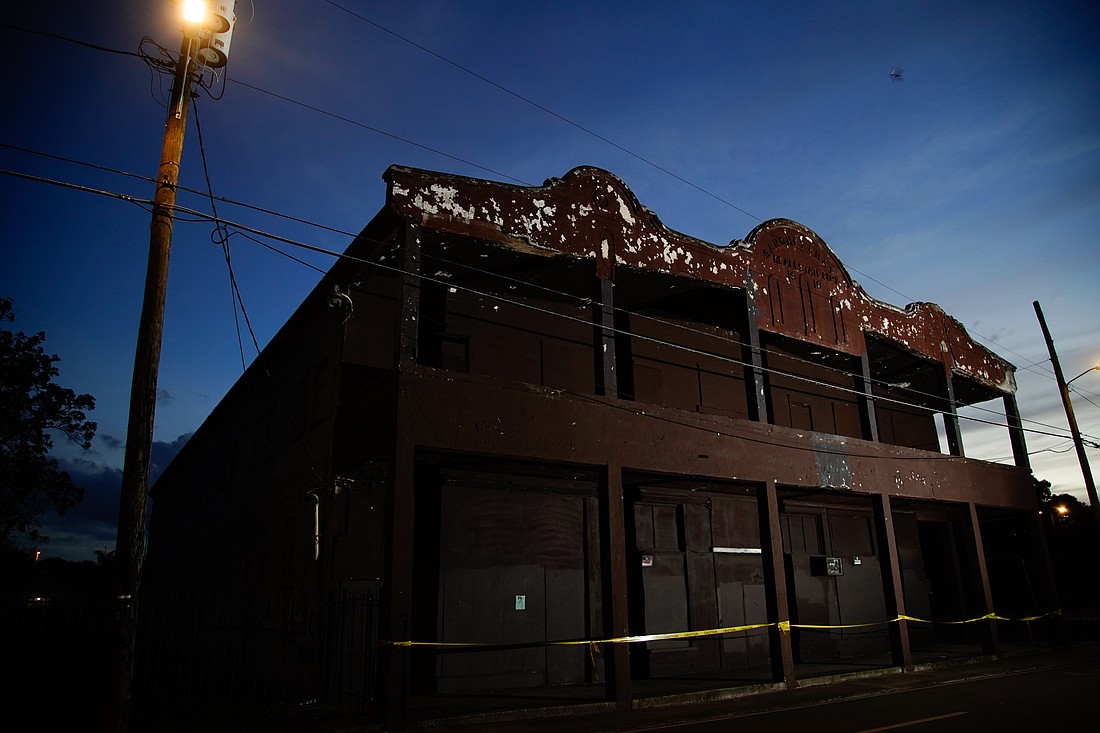
The defunct Sanchez y Haya hotel in Ybor City will be restored by J.C. Newman Cigar Co.
Courtesy image

  • Tampa Bay-Lakeland
  • Share

It has been a grocery store, a distillery, a coffee mill, a knitting shop and even a speakeasy during Prohibition. In its final years, it was a seedy, often bloody dive bar called the Chip-Inn. But for the past few decades, the 115-year-old Sanchez y Haya building has simply been a crumbling, empty relic of Ybor City’s cigar-fueled heyday.

That was before the building caught the attention of its neighbor across the street, the owner of the iconic “El Reloj” clocktower factory of the J.C. Newman Cigar Company. Now, the Newman family, which operates the oldest working cigar factory in the U.S., is entering the final stages of an $18.5 million restoration effort of the Sanchez y Haya property that began in 2023, they say. 

By next October the historic building, at 1601 Columbus Drive, will once again be restored to its former glory, when it was a bustling, two-story hotel and restaurant where tourists, travelers and cigar factory workers mingled over cups of cafe con leche. 

City council members, community leaders, and U.S. Rep. Kathy Castor, D-Tampa, joined in a ceremonial groundbreaking for the project Tuesday. When it reopens to the public late next year, the Sanchez y Haya building will look like it did in 1910, the Newman family says, with a restaurant, bar and cigar lounge downstairs and a small hotel upstairs. 

“To be clear, restoring this building was never in our plans,” says Drew Newman, general counsel and part of the fourth generation in his family’s cigar business. “We saw it as observers from across the street, and we saw it sit vacant and just deteriorate … In 2020, the building was so bad we thought it was just going to fall down and we realized if we didn’t try to go in and save it and restore it and preserve this piece of Tampa’s history, nobody else could or would. So we did, and here we are.”

The Newmans’ goals for the building were deceptively simple: bring the Sanchez y Haya building back to life following the best practices of historic preservation. Doing so, however, has been a slow and laborious process. The building, constructed in 1910, was the first in the city of Tampa to be built with rebar and reinforced concrete. That meant workers had to manually repair the concrete beams, ceilings and columns of the building, patching the 115-year-old rebar frame by hand with more than 1,400 bags of concrete, Newman says.

Now that the building’s structural repairs are complete, the team is ready to begin the final phase of the project, restoring historical features and “making it beautiful again.”

“When we walked through the building with the National Park Service staff about 18 months ago, one of them commented offhand that this was the second worst building in the state of Florida that they've ever seen anyone try to bring back,” Newman says. “I still don't know if that was meant to be a compliment or just a statement that we're just crazy to do this, but it does speak to how much effort it has taken to bring this building back to life.”

J.C. Newman Cigar Co. received a $600,000 grant for the project from Hillsborough County, $2.3 million from the National Park Service and a recent $5 million infusion from the East Tampa Community Redevelopment Agency. 

“Tampa is bigger than its buildings,” Castor told the crowd during Tuesday’s ceremony. “Tampa is its history, its people, the cigar workers of 100 years ago who came here from Spain and Italy and Cuba and all lived and worked together and lifted each other up.That’s what gives Tampa this special Latin flair and this unique history.”

While Ybor City may be named for cigar magnate Vicente Ybor, it was his friend and business rival Ignacio Haya who is remembered as the man who first brought the cigar industry to Tampa. Born in 1842, Haya immigrated from Spain to New York and started the Sanchez y Haya Cigar Co. with his business partner, Serafin Sanchez. 

The turn of the century brought a boom to the cigar industry, and Tampa — then a small fishing village with a population under 1,000 people — aimed to cash in by offering incentives to manufacturers such as no-rent leasing, affordable land and monetary bonuses, Newman says. Sanchez y Haya were among multiple cigar manufacturers and real estate developers to relocate to Tampa, and on April 13, 1886 they produced the first cigar in Ybor City. 

From the 1800s to the 1920s, roughly 200 cigar factories sprung up in what became known as Cigar City. 

“When you cast an eye to the next decade or two, what do we want Tampa to be? We want it to be a city that retains its uniqueness, this flavor of ‘Cigar City,’” Castor told the crowd. “Tampa is a city with people from all backgrounds who come together and lift each other up, and that’s what we’re recreating here, by continuing to invest in our community to make sure that is the case for years to come.”


author

Anastasia Dawson

Anastasia Dawson is a Tampa Bay reporter at the Business Observer. Before joining Observer Media Group, the award-winning journalist worked at the Tampa Bay Times and the Tampa Tribune. She lives in Plant City with her shih tzu, Alfie.

Latest News

Sponsored Content