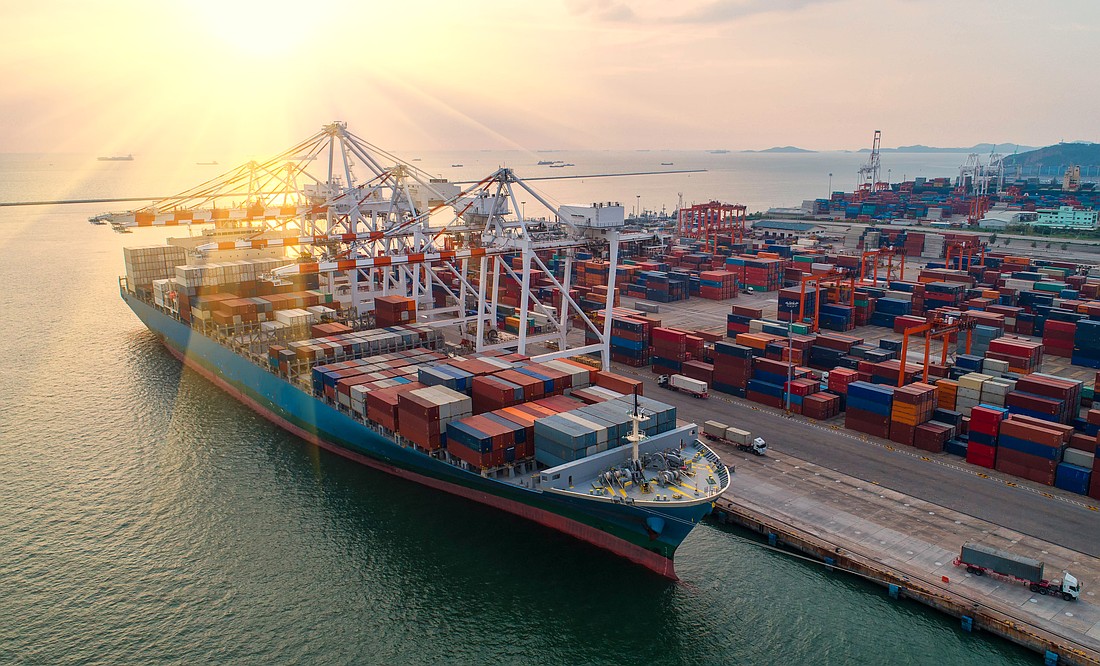
As a major hub for imports and exports, shipping, tourism, and other industries vulnerable to the winds of global trade policy, Florida businesses are finding themselves uniquely exposed to the impact of tariffs.

Fortunately, there are some preliminary steps that businesses in the Sunshine State can take—in collaboration with their commercial banking partner—to counter the impact that tariffs may have on their business:
- Working Capital Modeling: Not understanding the complicated and ever-changing tariff rules is completely excusable. It can also be extremely costly. For example, if a business is hit with an unexpected duty that eats into working capital, it can negatively impact cash flow and other areas of the balance sheet. Synovus’ experienced international banking team and treasury management consultants work with clients throughout the state to assess their working capital and build models that predict how tariffs and other forces could impact profitability and operational stability.
- FX and Multi-currency Accounts (MCAs): Savvy use of foreign exchange and MCAs is another approach companies can employ to offset cost increases due to tariffs. Multi-currency accounts, for example, can be used as a tool to hedge against currency fluctuation and mitigate risk. The best way to implement such programs is to work with a seasoned international banking team that has dedicated foreign exchange consultants with the expertise and analytics to help a business take full advantage of favorable exchange rate fluctuations.
- Supply Chain Diversification: Another tactic being employed by businesses in and beyond Florida is reducing reliance on single countries or suppliers heavily impacted by tariffs. Businesses are actively seeking alternative sources for materials and components, both domestically and from countries with more favorable trade agreements. This might involve shifting production or procurement to nations in Latin America, the Caribbean, Southeast Asia or Europe, even if it entails new logistical challenges or slightly higher initial costs.
- Cost Absorption and Price Adjustments: Many businesses initially try to absorb a portion of the increased costs to remain competitive and avoid alienating customers. However, this is often unsustainable, especially for small and medium-sized enterprises with tighter margins. Over time, a common response is to pass on some, if not all, of the increased costs to consumers through higher prices. This can lead to a delicate balancing act, as companies must gauge consumer willingness to pay more.
- Inventory Management and Advanced Procurement: Some businesses are strategically front-loading or increasing their inventory of goods before new tariffs take effect or in anticipation of future price hikes. This allows them to lock in current prices and provides a buffer against immediate cost increases.
- Contract Renegotiation and Clauses: Companies are revisiting existing contracts with suppliers and customers to address the impact of tariffs. This includes negotiating better payment terms, volume discounts or cost-sharing arrangements. For prospective contracts, businesses are incorporating terms that allow for greater flexibility.
- Exploring New Markets: Recognizing the challenges in traditional export markets affected by retaliatory tariffs, Florida companies are actively seeking out new opportunities in regions with less volatile trade relationships. This involves exploring emerging markets in Europe, Latin America and Southeast Asia.
The unpredictable nature of trade policy makes long-term planning difficult. The ability to diversify, innovate and maintain financial flexibility will be key to resilience in this evolving global trade environment. Above all, it is critical to engage a commercial banking partner with a dedicated relationship team that includes international trade and foreign exchange expertise.
Mike Walker is Executive Director of Middle Market Banking at Synovus Bank in Ft. Lauderdale.
Jeffrey Beisler-Snell is Head of International Banking at Synovus Bank.