Insider: Elimination of solar tax credits will lead to job losses, price increases

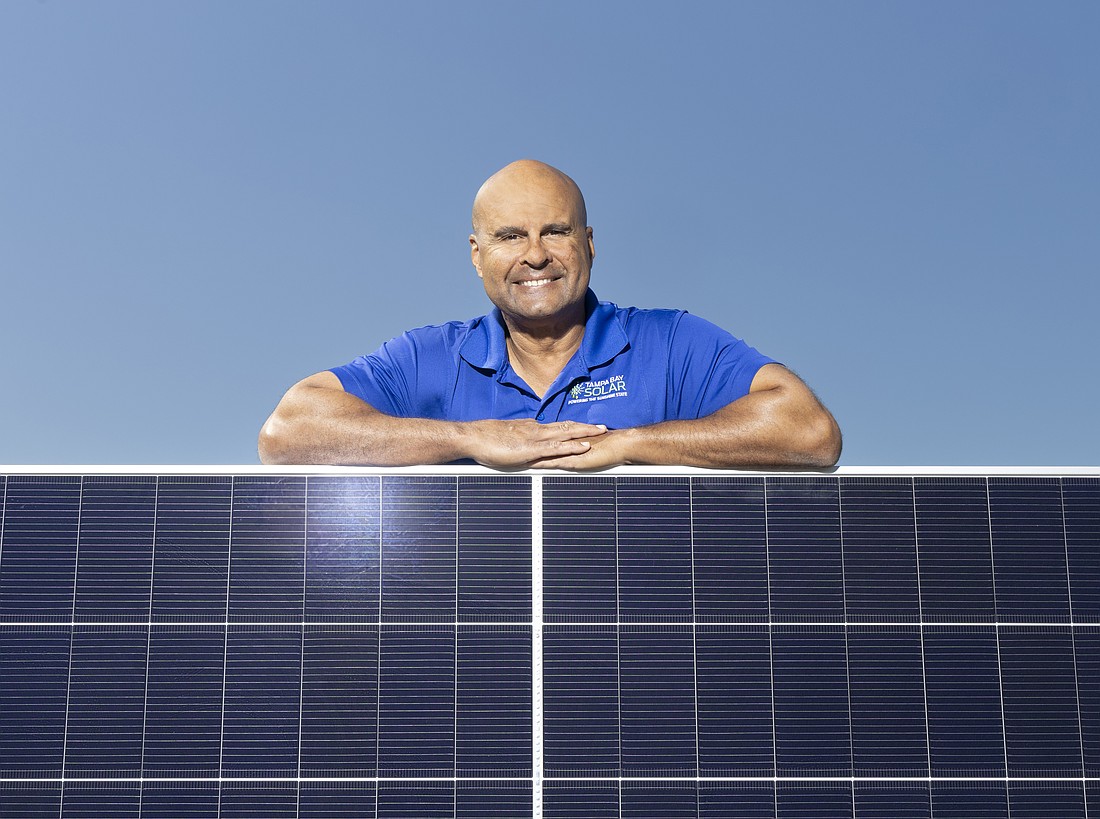
Tampa Bay Solar owner Steve Rutherford of discusses the ramifications of changes included in the "Big Beautiful Bill."


  • By Louis Llovio
  • | 5:00 a.m. July 17, 2025
  • | 2 Free Articles Remaining!
Steve Rutherford is a former U.S. Navy Commander who discovered the benefits of solar power while serving and founded Tampa Bay Solar after retiring.
Photo by Mark Wemple
  • Tampa Bay-Lakeland
  • Share

Solar industry entrepreneur Steve Rutherford believes the federal legislation dubbed the Big Beautiful Bill approved by Congress and signed into law July 4 will upend both the industry and his own business — costing jobs and slowing progress.
His biggest concern is the phasing out of a 30% tax credit. That was a major selling point in convincing people to go solar, making the transition more affordable to homeowners and businesses looking to capitalize on opportunities.

Under the new law, the residential tax credit will be phased out at the end of the year. On the commercial side, to qualify for the tax credit the law requires developers begin work on projects that have a solar component within a year of the passage and for those that don't, they must finish the project by the end of 2027.

Rutherford, the owner of Tampa Bay Solar, a company that designs, builds and installs residential and commercial solar power systems, says the new rules will stifle the growth in the industry and cost him, and others, business. Not everyone, he says, will survive.

“I don't see me closing shop in a year or two years, but I can tell you this, I will see a significant reduction in employees,” he says. The company, with annual revenue of more than $10 million, has 34 employees. (According to a June report from the Solar Energy Industries Association, eliminating the tax credit will lead to 21,800 industry job losses in Florida by 2030.)

“I anticipate a future loss of business; much lower margins, of course; much less reinvestment back into our communities; and a much slower pace of growth in the solar industry," he adds. "That I can pretty much guarantee.”

The backers of the bill, of course, see it differently, predicting that ending the tax credit will be a boost to government coffers. Their argument got a boost in a June 12 letter from the Congressional Budget Office that says, in part, “the termination of clean energy credits, including credits for commercial and consumer clean vehicles, residential clean energy, and energy-efficient home improvements” will increase revenue by about $175 billion.

Founded in 2010 right after Rutherford retired from the U.S. Navy, Tampa Bay Solar has worked on projects for the Manatee School for the Arts, the Florida Aquarium in Tampa, a senior living facility in Miami, a defense contractor in Fort Walton Beach and a Sarasota County Courthouse and Dunedin City Hall.

Rutherford spoke with the Business Observer about the legislation and how he believes it will affect the industry and his company. Edited excerpts: 


What has the legislation changed?

With the Inflation Reduction Act they had extended the tax credit until 2032 and it was going to sunset in 2034. That gave industry, businesses, homeowners, everyone, predictability as to what to expect. If you want to build a manufacturing facility in your state, you know what you can expect because you’ve got some consistent planning with tax code that you can work off of. It gave customers predictability. You’re going to be able to buy this year or next year and you're going to be able to get your tax credit.

Our customers, all customers, had predictability in that when they purchased a system, that they were going to get a 30% tax credit, which allows them, based on current day pricing, to be able to pay off that system in less than 10 years, some six to seven years.

It gave municipalities, churches, nonprofits predictability in the fact that if they went solar, they could be able to pay off their solar in a short period of time.

It also included production and manufacturing. Any foreign company that may have been making panels overseas who decided they were going to come to America and build manufacturing facilities, they had some level of predictability that they're going to have a market once they start building their product. Because of the tax code, they could project what their market was going to look like in two or five years.

So those are the things that were written into the previous code.

Now come this this bill that was...in my opinion, very mislabeled, that had nothing beautiful for the solar industry, as well as many other industries, but this one in particular. The solar industry got a very short end of the stick.


How does the loss of the credit affect Tampa Bay Solar, specifically?

We're going to lose a tremendous, a huge, future customer base in the solar industry because we just saw prices go up 30% at a minimum at the end of this year. And I can tell you that a 30% change in price is going to have a drastically negative effect on my industry, on my business.

No one has a crystal ball, but I can tell you, you put a 30% hike on any product and you're not going to sell more of it.


How do you adjust as a company?

The immediate thing that's happened is we just got a huge amount of customers. I'm trying to figure out how I can answer the mail before the end of this year. I know it has 100% to do with the impact of this bill being passed. These customers have a fear of missing out. We're barely advertising more than we ever did in the past and we’ve got more customers coming to us than we've ever had before.

But at the end of December, that's going to drop off and that's where we're going to see the immediate impact of what this bill has done. If I could do 10 installs more a month, I would do it. But I don't have the employee base to do that. And I can't ramp up employees and then tell them, ‘Well, you're going to get fired in February next year.’ That's not fair to them. 


Were you surprised by the legislation and do you know why lawmakers decided to do away with the credits?

I've been fighting this fight since I got in the industry. I mean, Florida has had its own rounds of trying to cut back the pace of solar, but we were fortunate in the state to maintain the status quo. We were fortunate to get the Inflation Reduction Act several years ago and get the tax credit extended.

We've been putting out fires for years.

But this is the first really big blow to the industry on such a drastic level and so quickly that, I can tell you, it's just not something we were expecting.

Obviously, I've been traveling around the state and going to Washington, D.C. to try and get people's attention and awareness of this, of the challenge that we're potentially up against. I tell folks it's a real loss for the consumer. The ones who have been thinking about solar and haven't gone solar yet, those are the folks are really going to be missing out on the potential here.


What happens to commercial projects, like the Manatee School for the Arts, the firm is currently working on?

They’re down the road far enough where they're not going to see an impact. But anyone who's looking at this example saying, ‘Well, we want to do this at our school next year, we want to plan this into our budget a year or two years from now’ that's not going to happen. They’re not going to get that the same benefit that Manatee is getting. They basically have a very short window to get a contract signed right now, to be able to have a deposit in place, to be able to maintain that tax credit once that window closes in a very near future. Any municipality, or any nonprofit that wants to go solar, they're going have to pay the full price.


Are you deterred about the future of solar?

No, I'm still committed to the cause. It's just a huge disappointment and it's sad for the industry.


author

Louis Llovio

Louis Llovio is the deputy managing editor at the Business Observer. Before going to work at the Observer, the longtime business writer worked at the Richmond Times-Dispatch, Maryland Daily Record and for the Baltimore Sun Media Group. He lives in Tampa.

Latest News

Sponsored Content