Newsmaker

Alico continues to reinvent itself year after it exits citrus industry

The Fort Myers company, which had been planning its transformation to a diversified land company for two years, reports progress after walking away from citrus production.


  • By Louis Llovio
  • | 5:00 a.m. December 25, 2025
  • | 2 Free Articles Remaining!
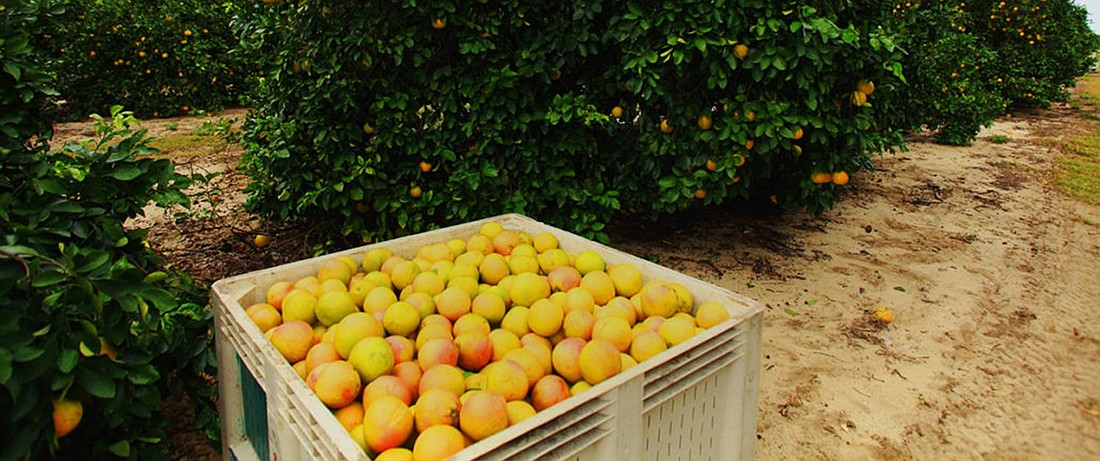
Alico Inc. in Fort Myers began planning its transformation to a diversified land company about two years before shutting down its citrus production.
Image via Alicoinc.com
  • Charlotte–Lee–Collier
  • Share

Just shy of a year after announcing it was exiting the citrus business, Alico Inc’s President and CEO John Kiernan says the Fort Myers company is well prepared to move into the next phase of its transformation.

Kiernan, in a Nov. 24 statement announcing earnings for the publicly traded company for the fourth quarter and the fiscal year, says approximately 25% of the company’s land holdings have been identified for strategic development and that 75% remain in diversified agriculture. With this balance, he says, “we've created a balanced platform for both near-term returns and long-term growth.”

“Our goals during the next phase," he adds, "are to optimize the agricultural leasing programs on all of our landholdings in the near term, continuing to maintain rigorous corporate and operational cost controls and enhancing our properties that have strategic development potential as quickly as possible.”

Despite the momentum from the transformation, the company did report that for the fiscal year, which ended Sept. 30, it had a net loss of $147.3 million. That comes off revenue of $44 million. 


Productive use 

Alico Inc. traces its roots back to early 20th century Florida, when it formed as the Atlantic Land and Improvement Co. From the start, one of its primary businesses was the citrus industry. And it grew into one of the largest citrus companies in the Southeast. 

But in January of 2025 the company announced that it would shut down its citrus production after finishing one final harvest.

It said at the time that the citrus division had been facing increasing financial challenges from citrus greening disease and environmental causes for several years. Officials came to the conclusion it was not economically viable to stay in that business.

Alico, instead, would transform from a traditional citrus producer to a diversified land company.

In a follow up call with investors Nov. 25, Kiernan says since the transition began the company has negotiated lease agreements for approximately 5,250 acres with third-party citrus growers and that it sees interest from cattle operators, sugarcane growers and soy producers.

The leases, Kiernan says, allow Alico to generate revenue during the transition and “also maintains productive use of our agricultural lands while preserving optionality for future development or continued agricultural use.”

Kiernan told investors that the company completed $23.8 million in land sales, finished the fiscal year with $38.1 million in cash and reduced its net debt to $47.4 million. This, he says, is “providing us with the financial flexibility to fund operations through fiscal year 2027 while advancing our high-value land development projects.”


Long process 

Chief among those projects is Corkscrew Grove Villages.

The company, in March, announced plans to build the 4,660-acre master-planned community on a former grove on Corkscrew Road in northwest Collier County near the Lee and Hendry County lines.

The plans call for two 1,500-acre villages, with the possibility of 4,500 homes and 280,000 square feet of commercial space in each village.

There will also be 6,000 acres of permanent conservation area.

In June, Gov. Ron DeSantis signed legislation to create the Corkscrew Grove Stewardship District. The district will work with the company to finance infrastructure, build and oversee the master-planned communities and manage natural areas on the property.

At the time of the governor’s signature, the company called the district’s creation “a key milestone in implementing Alico’s strategic transformation.”

Then, in November, Alico entered into an agreement with the state’s Department of Transportation to help fund the design and construction of a wildlife underpass along State Road 82 in eastern Collier. It committed about $5 million to the project, which will connect to a planned wildlife corridor within its Corkscrew Grove Village development.

The creation of the district and the underpass are just steps in the process, however.

Kiernan says in the earnings statement that regulatory approvals are still needed from the Collier. The company filed a development application for the first of the two villages in March and expects s final decision in 2026.

Construction on the first village could begin in 2028 or 2029 if all approvals are granted.


More projects

In addition to the Corckscrew Village, it is planning a development on Bonnett Lake in Highlands County.

(The company does not disclose details of that project online, but according to published reports it is seeking approval to build 2,125 houses on the site. Kiernan, in the earnings statement, says the entitlement process for that project “is also progressing well.”)

“This has been a truly transformational year for Alico,” Kiernan says in the call with investors.

“Fiscal year 2025,” he adds, “will be remembered as a milestone year in Alico's 125-plus year history. We delivered on the commitments we made to you, our shareholders, and demonstrated the disciplined execution that defines our approach to this transformation.”


author

Louis Llovio

Louis Llovio is the deputy managing editor at the Business Observer. Before going to work at the Observer, the longtime business writer worked at the Richmond Times-Dispatch, Maryland Daily Record and for the Baltimore Sun Media Group. He lives in Tampa.

Latest News

Sponsored Content