Immigration program provides $47M toward Bradenton apartments

EB-5 has been targeted by the Trump administration. But for now, the sometimes-complicated program is helping to fund an apartment community being built on the site of DeSoto Square Mall.


  • By Louis Llovio
  • | 5:00 a.m. August 28, 2025
  • | 2 Free Articles Remaining!
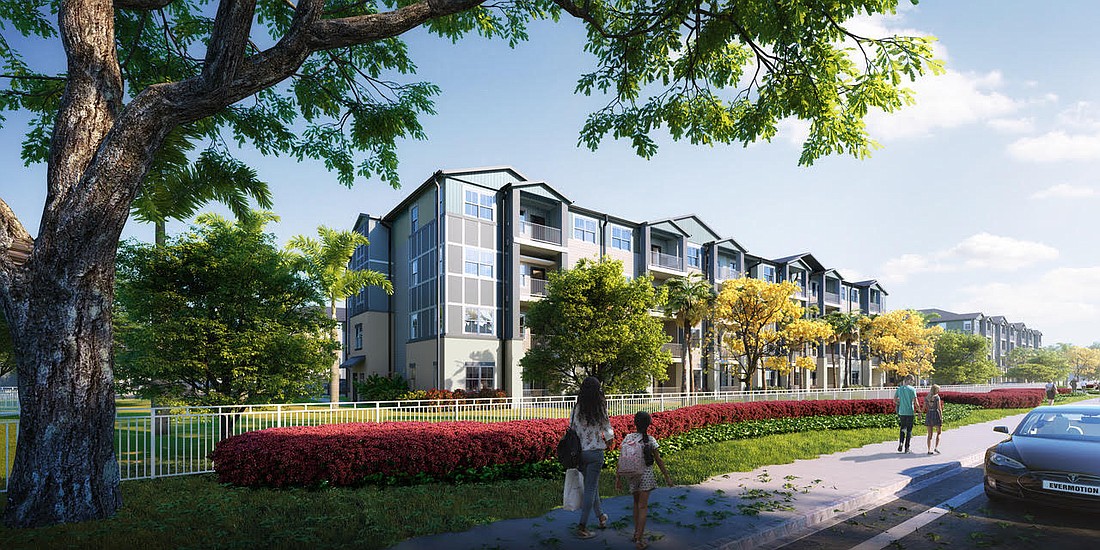
A North Carolina developer will build 240 apartments on property that was once part of DeSoto Square Mall.
Courtesy image
  • Manatee-Sarasota
  • Share

The lender behind a new apartment community to be built on the site of the former DeSoto Square Mall in Bradenton will finance the project, in part, with help from a federal program that allows it to solicit investments from individuals in foreign countries in exchange for a promised green card.

Atlanta-based Peachtree Group, which is originating the financing for the 204-unit Madison Bradenton for the developer Madison Capital Group, just won approval from the U.S. Citizenship and Immigration Services to include the community in the EB-5 Immigrant Investor Program.

Charles Talbert is the director of communications for Atlanta-based Peachtree Group.
Courtesy image

The program will provide $47 million in financing for the project.

The EB-5 approval comes at a fraught time for potential immigrants facing uncertainty as the Trump Administration tries to control the flow of people coming into the country. The future of the EB-5 program itself may even be uncertain as Trump has floated the idea of replacing it with a system where a foreign-born person would pay millions for a green card.

Whether his proposal can be implemented or hold up is far from clear so for now EB-5, based on job creation, is safe.

Peachtree’s approval allows it to seek investments as high as $800,000 for the project from people living overseas. In exchange for that investment, when the apartments are completed and open, the investors will be issued a green card to live in the U.S.

“It's at times a complicated program but it's something that is certainly beneficial to foreign investment as well as, from our standpoint, helping lower the cost of capital in some of our investments,” says Charles Talbert, director of communications for Peachtree.

The EB-5 program is designed to open international markets for commercial projects. It was created in the early 1990s and grants lawful permanent residence to investors who make a qualifying investment, their spouses and unmarried children under 21 years of age.

The catch is the investment, according to USCIS, must create or preserve 10 permanent full-time jobs. The investment minimum is $800,00 or $1.05 million in non-Targeted Employment Areas.

“It's a very good program, from the standpoint that they're investing into projects that create jobs and create economic growth,” says Talbert.


Is there a future?

The EB-5 program was renewed in 2022 by Congress and remains in effect until at least Sep. 30, 2027. According to USCIS, the law allows for 10,000 EB-5 visas per year.

But, like much in the realm of immigration right now, there are questions about the EB-5 program’s future.

In February, Trump proposed ending it and replacing it with a so-called Gold Card visa that would grant citizenship for those who pay a $5 million fee.

But making that change may not be so easy.

The law firm Shumaker, in a February alert to clients, says that president would need congressional approval to end end the program. 

That the 2022 reauthorization passed with bipartisan support, writes Shumaker attorney Wilka Toppins in the alert, “demonstrated Congress's recognition of the program's economic benefits, particularly in job creation and foreign investment in the U.S. economy.”

“Ending EB-5 requires Congressional action, and any new investor visa introduced through executive authority could be reversed by future administrations,” adds Toppins.

“Just as Biden's humanitarian immigration policies are being undone, a future leader could dismantle a ‘Gold Card’ visa if it lacks statutory backing.”

The Washington, D.C. libertarian think tank The Cato Institute says in a paper on its website that there are benefits to the Gold Card and that it is “an improvement over the overly bureaucratic and restrictive legal system.” But it too says Trump cannot unilaterality eliminate one program and create the new one.

It also warns about the economic impact of eliminating the EB-5 program.

The program is meant to boost foreign investment, particularly in low-growth areas in the U.S., and the “proposal eliminates any economic upside other than deficit reduction," says The Cato Institute. 

“Moving from a minimum requirement of $800,000 to $5 million would be a dramatic change,” the institute writes. “EB‑5 projects are already struggling to obtain investors at the lower threshold with the possibility of repayment.”


A funding alternative

While Madison Bradenton is the fourth project Peachtree will use EB-5 investments on, Miami-based developer Starlife Group is trying it for the first time at a luxury development in Hollywood, on Florida's east coast. 

Gevorg Shahbazyan, the company’s CEO and founder, says the advantage of the program, and one reason Starlife applied to participate, is that it opens up a new funding options without having to go deeper into debt. Plus, the interest it repays to investors is lower than traditional construction and mezzanine loans.

21 Hollywood is a 14-story mixed-use development that will include 200 rental residences and 10,000 square feet of ground-floor retail space in South Florida.
Courtesy image

The firm is building 21 Hollywood, a 14-story mixed-use development that will include 200 rental residences and 10,000 square feet of ground-floor retail space.

Shahbazyan expects to raise $20 million, about 20% to 25% of the total project cost, through the EB-5 program.

“From the developer’s perspective, it's very flexible funding,” he says.

As for the investors, they are part of the project and their investment is guaranteed by the property.

Gevorg Shahbazyan, the company’s CEO and founder of the Starlife Group.
Courtesy image

Starlife has begun marketing internationally with materials in several languages — Hindi, Mandarin, Spanish, French, Arabic, Russian, Hebrew, Armenian, Vietnamese — and plans are to fly to Latin America to pitch accredited investors. Starlife is also looking for investors in Africa and Europe. 

Its pitch is the age-old American dream sales job that has lured millions to the U.S. for generations — opportunity. But at $800,000, EB-5 isn’t for 'your tired, your poor, your huddled masses.'

“Think of it this way,” says Shahbazyan. “If you are an investor somewhere in a foreign country and you’ve always dreamed about living in the U.S., coming here with your family, or having your kids go to school, this is one of the fastest ways of obtaining a U.S. residency.”


DeSoto reinvented

Back in Bradenton, the apartment project will join three others Peachtree has participated in since launching its EB-5 program in 2023.

Those include a Home2 Suites by Hilton in Boone, North Carolina; a SpringHill Suites by Marriott in Bryce Canyon, Utah; and TownePlace Suites by Marriott in Palmdale, California.

It is waiting for approval on a Tribute by Marriott in Gatlinburg, Tennessee.

According to Peachtree, the EB-5 loan amount for Madison Bradenton is $47 million and will be funded by 58 investors, each putting in $800,000. (Peachtree is also investing $600,000 in the project.)

It will fund a loan on the project for the same amount announced last year.

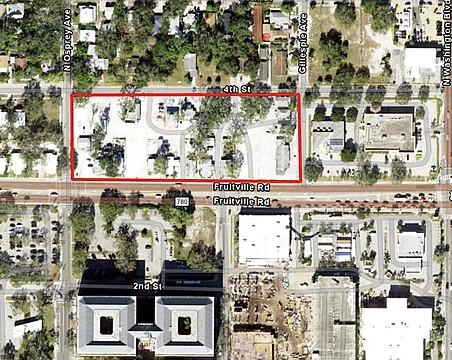
Madison Bradenton is being built on 10.7 acres once part of the DeSoto Square Mall. The mall closed in 2021 and was sold first in a bankruptcy auction and later to a Tennessee developer.

It will include five four-story, elevator-serviced apartment buildings and one two-story carriage-style building, along with a clubhouse and several garage structures.

Peachtree says the community will include 120 one-bedroom, 100 two-bedroom and 20 three-bedroom residences, averaging 1,027 square feet.

The firm projects it will create 992 total jobs. That, it says, translates to 17.1 per investor.


author

Louis Llovio

Louis Llovio is the deputy managing editor at the Business Observer. Before going to work at the Observer, the longtime business writer worked at the Richmond Times-Dispatch, Maryland Daily Record and for the Baltimore Sun Media Group. He lives in Tampa.

Latest News

Sponsored Content