- April 2, 2026

-
-
Loading
Loading
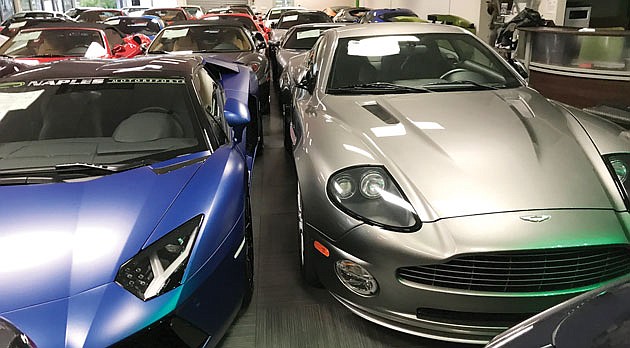
When individual items in a company's inventory weigh several thousands pounds each, preparing for a hurricane can present problems.
Todd Rosenthal, owner of luxury car dealership Naples Motorsports, says in advance of Irma he had a little more than 80 vehicles in inventory with a value of about $18 million.
He kept most of the cars in the showroom and service department of his dealership, even raising some cars up on the lift. He kept a $4 million car and $2 million car in another building the company owns.
Rosenthal also brought 17 cars to his house, about 12 miles away. “We were able to squeeze them in really tight,” he says.
With Rosenthal in Baltimore, where he had evacuated, dealership operations continued remotely.
Luckily, Rosenthal says, after Irma, the dealership only faced small roof leaks, a lost sign and no power.
With his general manager starting to move cars back into their regular positions, Rosenthal says, “It should only take us five full days to get everything somewhat situated.”
The lost work time, he says, will “cost us a bit of money.” But he's focusing on the bigger picture. “We're just fortunate no one got hurt. There was a chance we would get 15 feet of water. Things could be a lot worse.”
— Grier Ferguson
The hardest part for Naples-based Crawford Landscaping was right after the storm passed.
“The initial conditions on the ground in the first 48 hours were really troubling,” says Crawford Landscaping co-owner Blake Crawford. “There was no gas, no power, no water, no labor. It was very difficult to get crews deployed.”
Crawford describes the scene as “like a war zone.” He says, “The biggest problem for us is the cell phone service. From a coordinating standpoint, it's been a big problem.”
The key, he says, is morning planning. When crews arrive at Crawford's office, managers pass out makeshift route sheets and a list of what needs to be done at each site.
“We've been doing a lot of triaging,” Crawford says. “The first order of business is life safety, the second order of business is removing anything that could cause future damage, then it's cleanup.”
The company, which maintains master associations and homeowners associations, fueled up vehicles and equipment before the storm, so crews were able to deploy.
But to enter some communities, teams had to cut their way in. “In many cases, we're the first on-site,” Crawford says. “Our guy will get out with the chainsaw, cut it up and move on.”
That was the routine lately, with Crawford's crews working “as long as there's light and beyond.”
But one of the biggest Irma lessons applies to everyday business, too. “Organization is important,” Crawford says. “Otherwise you end up going to the guy who is screaming the loudest, and he might not have the biggest issue.”
— Grier Ferguson