- September 28, 2026

-
-
Loading
Loading
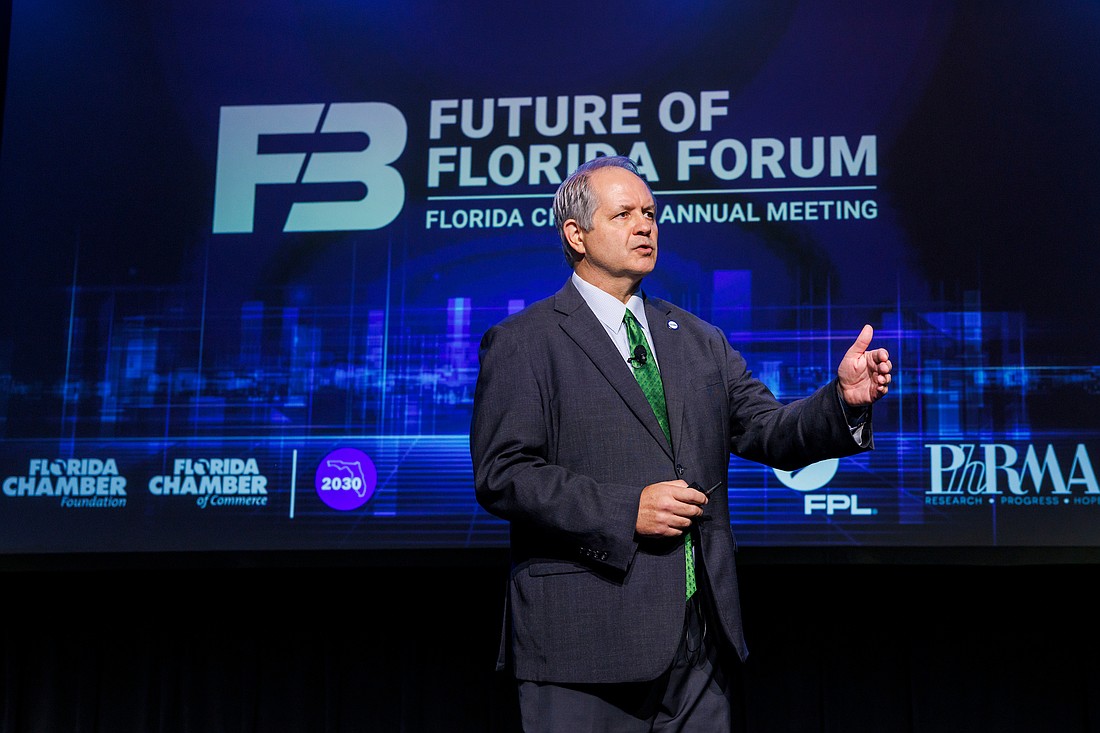
Over 150 articles are talking about Florida recently becoming the world's 14th-largest economy. This didn’t happen by accident.
Today, Florida ranks as the world's 14th-largest economy because we have remained committed to free enterprise, innovation, job creation and long-term thinking. Businesses continue choosing Florida. Families continue moving here. Entrepreneurs continue investing here.
Those achievements are worth celebrating. They are also worth protecting.
That's exactly why the insights provided in the Florida Chamber Foundation's newly released 2026 Florida Business & Economic Mid-Year Report are so timely. While Florida remains strong, the economic landscape is changing. Population growth has slowed. Inflation continues to affect businesses and families. Employers are competing for talent. National economic uncertainty has caused many to question what comes next.
The headlines may change from one day to the next, but the data tells a different story. Florida is getting more expensive, particularly in some of our fastest-growing markets, but affordability is relative. Statewide, the median home listing price in Florida is $423,900, compared with $689,000 in New York. Median rent tells a similar story: $1,502 a month in Florida compared with $2,011 in New York. Florida has work to do on affordability, but the data makes clear that the Sunshine State remains a more affordable place to live than New York.
Consider what a little analysis indicates. Florida continues to welcome more than 551 new residents each day, compared to a net loss of 115 per day in New York. Despite predictions of a housing downturn in Florida, the state’s single-family home sales have increased year-over-year for 10 consecutive months. Meanwhile, industries like aerospace and aviation continue creating high-wage careers, with employment up 31% since 2020.
These trends reinforce a simple truth: Florida's future competitiveness depends on connecting economic growth with workforce readiness.
Florida's position as the world's 14th-largest economy was earned through decades of leadership, sound public policy and an unwavering commitment to creating opportunities for job creators and Floridians. If we expect to become a top 10 global economy by 2030, we must continue making the investments that made Florida successful in the first place.
That means strengthening our talent pipeline so employers can find the skilled workers they need. It means investing in infrastructure that keeps people and commerce moving. It means supporting innovation and emerging industries that will create tomorrow's high-wage careers and keep talent in Florida. It means preserving a business climate where entrepreneurs can take risks, businesses can grow and families can build better lives.
Long-term, it means making decisions based on facts rather than fear or what’s popular.
Florida has proven free enterprise works. It has helped transform our state into one of the strongest economies in the world. But competition never goes away. Every day, other states and other countries are competing for jobs, talent and investment. We must solidify Florida’s value proposition as the best place to live, work, visit, raise a family and grow a business.
Florida's success has never been about luck. It has always been about leadership, long-term planning and the courage to make decisions that strengthen our future. If we stay focused on the fundamentals that brought us here, there is no reason Florida cannot achieve its mission of becoming a top 10 global economy by 2030.
Mark Wilson is the president and CEO of the Florida Chamber of Commerce and Foundation


